TBE: entrepreneurs future or one more step for transnationals?
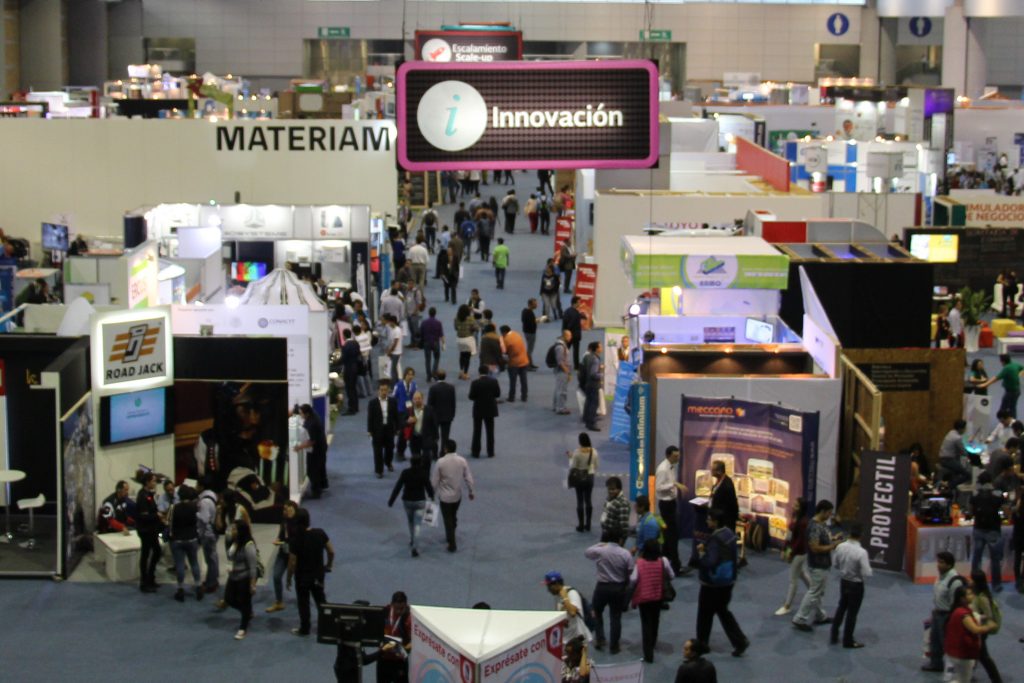
Recently we have witnessed the emergence of tens of new business related to technological matters such as software development, research on biotechnology, exploitation of renewable energies, enterprises that have even become responsible of launching new products to the market. Certainly the aforementioned are some examples of technology-based enterprises (TBE), but the story of these organizations is not as recent as you may think, since, according with Humberto Merritt (in his 2012 publication titled «Mexican enterprises of technological basis and their innovation capabilities»), since 1977 a study made by Arthur D. Little Consultancy allowed to define TBE as independent enterprises, of less than 25 years old, that base their operation on exploiting a technological invention or innovation that involve a substantial technological risk. As their name expresses, TBE have new technological-scientific discoveries as main foundation of their activity and with them they raise awareness in the market new and distinct products, processes or services, this is, they include innovation in its functioning. Although this is no it yet, you may wonder how TBE emerge, if not by spontaneous generation. This CTI Wednesday we will have an answer those exposes, in addition to an idea, an institutional support and more useful knowledge to materialise a TBE. What is a TBE and which elements determine its essence? Summarizing, there is a group of small and medium-sized enterprises that operate by means of intensive usage of technological knowledge. During the last years TBE have become an example of successful collaboration between industry and academy. It should be highlighted that there are other types of enterprises, less traditional, that relate with TBE, namely: the so youthful and well-known spin-offs and start-ups, business and enterprise models focused on offering solutions to people, from a perspective based on research and development. Among the 50 start-ups with more future we have examples like these: new platforms for e-commerce like eComMarketing.click, that help to make catalogues profitable without having to keep personnel for it, since everything is managed from a web platform; another case is Emotion Research Lab, dedicated to facial acknowledgment applied to know microexpressions emotions of consumers while they watch an announce; likewise exist TBE like Exovite, that is dedicated to the design of 3D printed splints meant to be directly placed on the patient by the moment the plaster is substituted and include a microstimulator to accelerate the recovery… As well as countless more solutions. Spin-off enterprises function in such manner that they are focused on transferring to society university technology generated through specialised knowledge of researchers belonging to the institution. For its part, start-up enterprises also are of recent creation and they turn their scientific-technological knowledge into new products or processes for the market, they focus on very specialised niches like biotechnology, information and communications industry, precision instruments and fine chemicals. Benefits, desirable conditions and… risks? As we already said before, TBE’s virtues are astonishing, because they are related with benefits translated into resources thanks to the strengthening of research activities, relationships entrepreneurs create with universities, generating human resources prepared to research and work fields, obtaining financial resources and, above all, establishing a TBE network that allow the continuity of this kind of undertakings that facilitates universities to keep on generating resources to continue with these. Among the benefits stands out the creation of research groups, the support to entrepreneurs and university researchers, as well as the universities. Having said that, we must specify that, in order to consolidate the creation of a TB}e, there are some desirable conditions needed: Technology that might be protected (intellectual property), have different applications and be totally developed and tested to be leaded to a wide market. Team conformed of an entrepreneur leader, managers with business experience, a top-ranking technical team and a multidisciplinary team. Business plan in which be captured the steps to be followed for the enterprise’s viability at medium and long terms. Investors interested on investing in the new enterprise for the commercial exploitation of technology. There are also distinct barriers or risks that in some cases can appear: lack of entrepreneur character, financial barriers, lack of experience in the promoting team, as well as in the matter of legal issues. Clear examples of support to TBE in Mexico and the world A clear example of TBE being strengthened by research centres around the world is the entrepreneurship fair annually organised by Russia at the scientific-technological park of Skolkovo. This event, named Start-up Village, is dedicated to undertakings and advances on innovation, science and technology; its duration is of two days and is considered world-class, since it gathers hundreds of entrepreneurs, investors and curious visitors belonging to different parts of Russia and the world. A similar example is given in Mexico, during the National Week of the Entrepreneur, annually organised by the Secretariat of Economy and the National Institute of the Entrepreneur. This is an event bound to entrepreneurs and businessmen, as an effort to encourage scientific-technological applications in new businesses, TBE essence is complemented through the recently implemented Innovation Ecosystem, oriented to processes that aim this kind of enterprises to be created in shorter time and with a cost of cero. How TBE are fostered in Mexico In his article of 2012, Merritt assures: «… it is important to emphasise that the TBEs concept is closely linked to the enterprises incubators and scientific-technological parks model, since these instruments have played a fundamental role in the development of small technological businesses by giving them both the necessary infrastructure and accompanying services for their start and consolidation. Thus, is no causality that many TBE tend to have a regional impact, since they seek to transfer the results of their collaboration with incubator universities to their own markets». In Mexico, there is work being done for the implementation of policies and government programmes that allow to national small enterprises turn into TBE through the strengthening of their «intellectual capital» (this term is used by some of the authors to refer to intangible or knowledge assets, and is
PIT-UAS’ General Director will develop in Germany a project on applied research
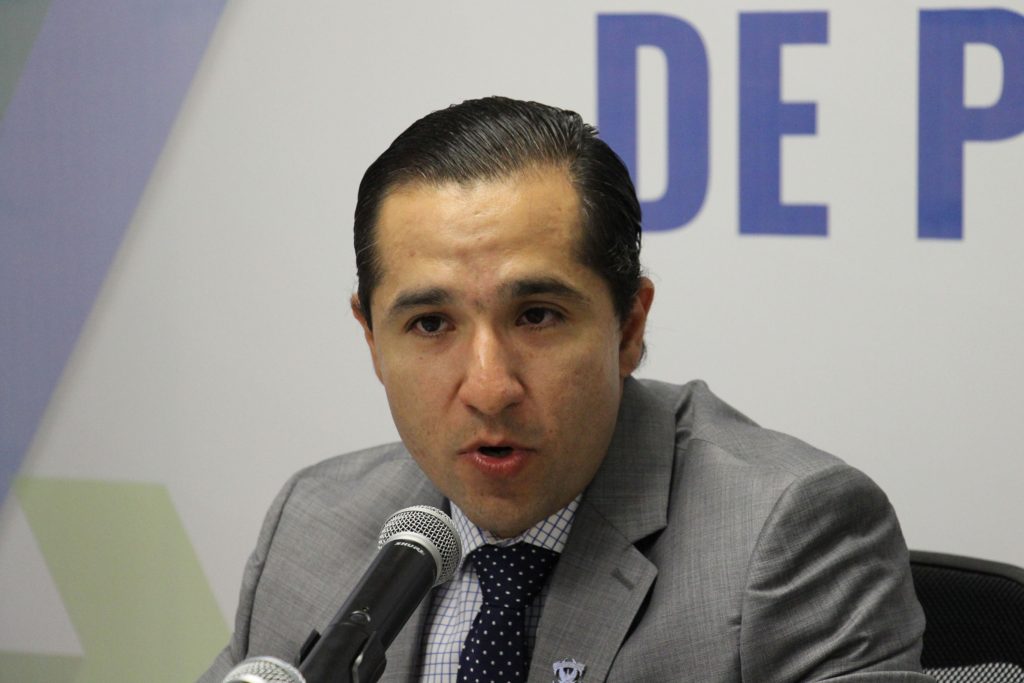
The General Director of the Technological Innovation Park (PIT), belonging to the Autonomous University of Sinaloa (UAS), obtained a scholarship from the Intensive Blended Learning University Leadership and Management Training Programme (UNILEAD), which is proper to the Carl Von Ossietzky University (Oldenburg, Germany). The master of Business Administration José Ramón López Arellano specified that his work, Internal administration of applied research projects, was 1 of the 25 chosen, among the 400 international proposals that were sent. In addition, just two Mexican universities were accepted in the programme and the UAS is the only public institution of higher education in. «The objective is to promote innovative projects in the field of organizational and administrative development … Specifically in my case, the research I’m going to participate with is about internal administration within the framework of applied research projects, in developing countries», declared. He explained the transcendence of such initiative, due to the great experience of the Carl Von Ossietzky University, internationally one of the most important in projects administration issues, field this institution has being working already for over thirty years. The MBA emphasised that coursing this academic programme will serve so, in a near future, a culture of applied research is promoted within the UAS, as well as relationships with national industry, intellectual property and, also, an academic culture of entrepreneurship and intra-entrepreneurship for the creation of new sustainable technology- based enterprises. López Arellano mentioned that the UNILEAD is going to have a duration of 10 months, during which he will work online; in complementation, he will make two stays and the first one is to be carried out from February 28th to March 18th: «We are going there to adjust the project; and we will continue applying the recommendations they are going to give us. Then, on September we will go back to Germany to expound the final project», detailed. Finally, it is noteworthy that the expenses of research and academic stays in Germany are paid by the institutions that jointly develop the initiative: Carl Von Ossietzky University, German Academic Exchange Service and Nelson Mandela Metropolitan University. Written and Translated by Belem Ruiz (Edition and Communication, PIT-UAS).
At the PIT-UAS is developed mobile app for smart parking lot prototype

As part of the Smart Eco-Park PIT-UAS project, which consists on the innovative design and implementation of a building prototype that integrates diverse models oriented to incorporate both sustainability and the Internet of Things (IoT) in urban complexes, an homonymous mobile application has been developed, such app complements the functions of the high technology parking lot built in the facilities of the Technological Innovation Park (PIT, Parque de Innovación Tecnológica), belonging to the Autonomous University of Sinaloa (UAS, Universidad Autónoma de Sinaloa). The aforementioned mobile application fulfils three functions, allowing the users to: 1) control vehicular access remotely, 2) visualise the location of available parking spaces in the high technology parking lot, in the previous moments of the arrival to the place, 3) automatize the vehicular access, by lifting, via mobile telephone, the parking lot’s electric barrier gate. Therefore, with this system the ingress of automobiles is secured to be controlled and organized. Thanks to the IoT’s incorporation to its functioning, such system offers the possibility of knowing in real time, even previously to the ingress in the parking lot, the availability of the parking spaces. This, through an interactive map that shows the information about the occupied and available spaces. Smart Eco-Park is nowadays executed in this university research center and its design and implementation were on charge of an interdisciplinary team composed of a software architect, programmers, graphic designers, electronic engineers, among other specialists. By last, it is noteworthy that the interdisciplinary collaboration, one of the PIT-UAS’ methodological pillars, facilitates the execution of such innovative sustainable project, same which sets the technological basis for its implementation on a broad scale and marks the beginning of its adoption in Sinaloa and in Mexico. Written and translated by Belem Ruiz (Edition and Communication, PIT-UAS).