Staff of the Japanese Company Hioki gives training at the PIT-UAS to analyze electric power quality
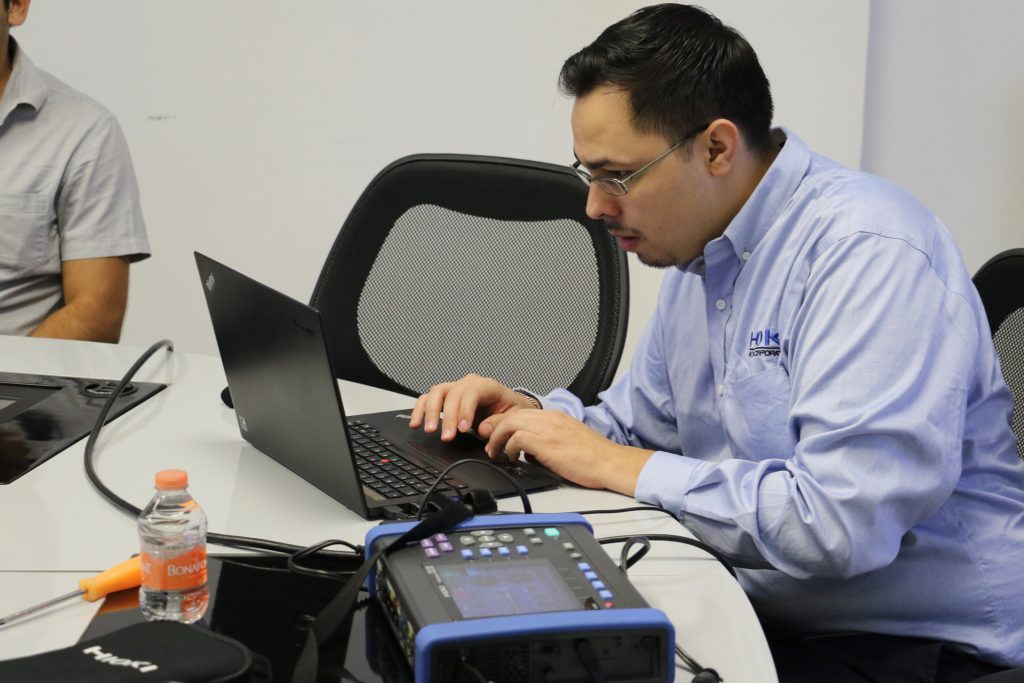
The engineer Román Leal, regional representative of the Japanese company Hioki, visited the facilities of the Technological Innovation Park (PIT, Parque de Innovación Tecnológica) of the Autonomous University of Sinaloa (UAS, Universidad Autónoma de Sinaloa) to give training about the use of the PW3198 power quality analyzer, 22 people met on the Videoconferences Room; PIT-UAS’ collaborators participation stood out, as well as students and teachers of the Technological University of Culiacán and employees of the resident company HunabSys. The PW3198 is used to know power quality problems in the main network currents, either once it leaves the substation to the company or when it is sent to its application. In an interview, the representative of Hioki specified some functions of the device: «Monitoring the good or bad energy quality the facilities have, correcting the low power factors, the bases imbalances… This will be used to save in power costs, to save in predictive maintenance, to avoid making infractions by the electric supplies in CFE with low power factors. Besides, you can do analysis in solar panels, in machines for power and consumes and to see the alterations that the same devices that they have here generate in the energy». The training consisted in explaining the functions that the device can perform and the performance it can give, also it was explained the installation of the PW3198 and the results it generates in the work field. Definitely, the performance of the excellent team with which the PIT-UAS counts in its Smart Eco-Park would be benefited with this device, which would be of great help to guarantee a better use of the energy not only in the facilities of the PIT-UAS only but also at the Rosalina House (UAS) in general. Likewise, it is important to note that the PIT-UAS will maintain contact with the Company Hioki so that, in the future, other devices can be available for the benefit of the Park’s operation. Written by Alfredo Careaga (Communication and Diffusion, PIT-UAS), translated by Belem Ruiz (Edition and Communication, PIT-UAS).
Talleres de alta especialización: lugares para la innovación y la creatividad
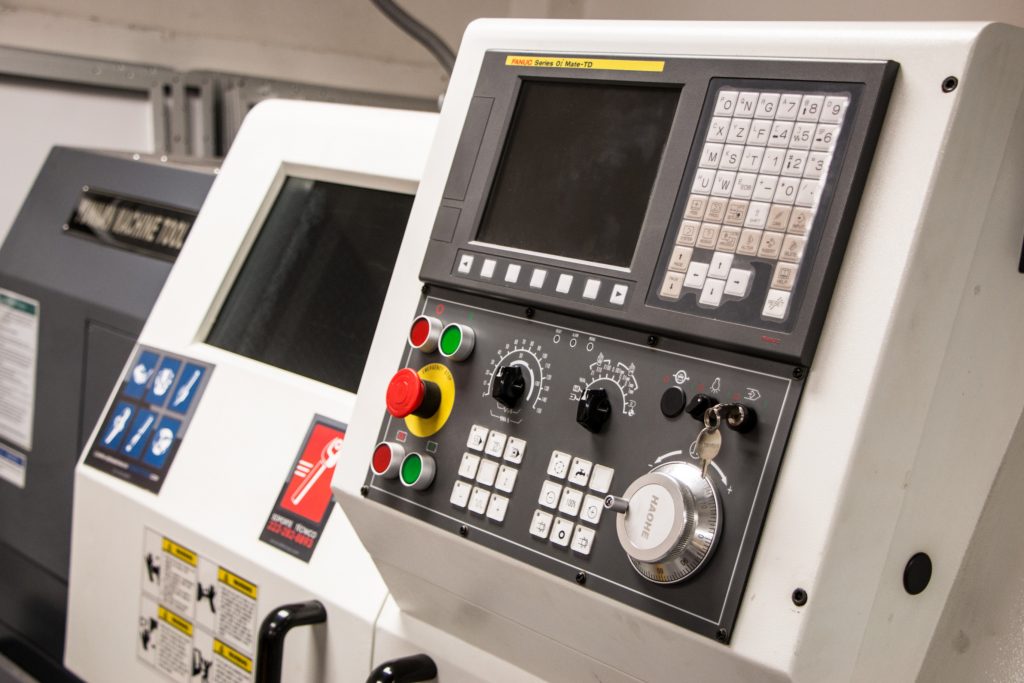
Desde su concepción, los talleres de alta especialización, también conocidos como fab labs (del inglés fabrication laboratory) representan un gran logro en el impulso a la innovación tecnológica. Es indudable que la labor que los fab labs pretenden promover en el campo científico permite aumentar el nivel de competencias en distintos proyectos que combinen el buen desempeño y la creatividad. En este sentido, lo primero sería preguntarse: ¿qué es un taller de alta especialización o fab lab? En principio, se puede entender como un espacio competente para la elaboración de prototipos innovadores que establezcan un futuro interés comercial o personal. Para esto, un taller de alta especialización necesita estar capacitado con distintas máquinas que ayuden en la concepción y consecuente producción de los modelos por desarrollar. Equipos primordiales en un taller de alta especialización Entre las diferentes unidades y maquinarias que conforman un taller de alta especialización, encontramos principalmente: Impresora 3D: es un dispositivo capacitado para la creación de piezas o modelos en tercera dimensión (3D) a partir de diseños hechos por computadora. Fresadora de precisión: es una máquina encargada de realizar cincelados sobre materiales metálicos. Cortadora láser: se utiliza para realizar variedad de incisiones a distintos materiales de mediana densidad. Plotter de vinilo: es un aparato que efectúa cortes y diseños en materiales elaborados principalmente a base de vinilo, un tipo de plástico de amplio uso industrial. Así también, en un fab lab son necesarios distintos softwares de programación en computadoras que reciban instrucciones humanas y coordinen eficazmente el uso de la maquinaria. Primeros atisbos de los talleres de alta especialización El concepto esencial de los fab labs surge dentro del Instituto de Tecnología de Massachusetts (Massachusetts Institute of Technology, MIT) en el año 2001, bajo el padrinazgo de Neil Gershenfeld, , científico estadounidense, profesor titular y actual director del Centro para Bits y Átomos (Center for Bits and Atoms, CBA) de la misma institución. «Estamos justo al borde de esta revolución digital en la fabricación, donde los resultados de la computación programen el mundo físico», ha comentado. En otras palabras, el propósito cardinal de los fab labs reside en aplicar la tecnología digital en la elaboración de objetos físicos: transformar los bits en átomos. Esto determina favorablemente un nuevo camino en el devenir de la creación de productos personificados, atendiendo así, en primera instancia, la creatividad y el ejercicio lúdico de la ciencia. De esta manera, el valioso fomento a la innovación que es inherente a la utilización de estos «laboratorios a pequeña escala» se entiende como una propicia inversión de papeles: el laboratorio pasa más a ser un taller técnico para alumnos y primerizos ejecutantes que un recinto sostenido en la erudición y la complejidad de los expertos; incluso, los fab labs pretenden funcionar desde una faceta microempresarial y ecológicamente sostenible, para así dejar de lado los daños de la contaminación ambiental y los peligros económicos de la sobreproducción propios de las grandes industrias. Por ende, Neil Gershenfeld ha argumentado en favor del concepto de los talleres de alta especialización: «El mercado actual se basa en inventar un producto y en producirlo en una fábrica. Nuestra filosofía es otra. Se trata de producir bajo demanda en laboratorios locales, independientemente de dónde se haya diseñado el producto». Red de laboratorios: socialización para la innovación Hábilmente, los fab labs que iniciaron en el MIT han mantenido su relevancia a nivel internacional a través de una accesible red de colaboración entre universidades y empresas de iniciativa privada. Así pues, mantienen presencia en regiones de los cinco continentes: en Estados Unidos funcionan 20 laboratorios de alta especialización, tenemos 30 en Hispanoamérica, hay 33 en Europa, 9 en Asia y 8 en África. La afortunada acreditación permite a la institución poseedora ampliar las relaciones con investigadores extranjeros, desarrollar proyectos en conjunto con otras instituciones y mantener contacto con diversas áreas de especialización en el campo de la innovación tecnológica. Cabe también mencionar que en 2015, a través de una convocatoria para fomentar el desarrollo de prototipos innovadores mediante talleres de alta especialización, fab labs o maker spaces, el Instituto Nacional del Emprendedor (INADEM) de México comenzó el registro de dichos organismos, como parte de la Red de Innovación, al amparo de la Red de Apoyo al Emprendedor. Año con año, el INADEM realiza la Semana Nacional del Emprendedor, multitudinario evento para propiciar redes de contactos profesionales que reúne a emprendedores y empresarios de micros, pequeñas, medianas empresas, ofrece conferencias, talleres, demostración de productos y foros abiertos a diversas industrias. Utilidades de los fab labs La escalonada apertura de los talleres de alta especialización responde a un amplio terreno laboral. Por lo tanto, este nuevo modelo productivo puede ser utilizado por científicos, arquitectos, ingenieros, diseñadores, artistas, entre otros profesionales. Hemos visto desde hace poco tiempo cómo los nuevos modelos de innovación buscan agrupar distintos campos de especialización en aras de desarrollar proyectos mejor elaborados: la faceta multidisciplinaria de los fab labs resuelve muchas inconsistencias de los viejos modos de fabricar objetos y hacer ciencia. La forma personalizada de producción de los talleres de alta especialización fomenta un espacio donde las ideas concebidas se conviertan exitosamente en objetos, se materialicen. Desde hace pocos años, esta nueva concepción productiva ha reformulado las estrategias económicas dentro del mercado tecnológico: las puertas de la prosperidad han sido abiertas para los pequeños empresarios y fabricantes. De modo que, entre los distintos productos que pueden trabajarse dentro de un fab lab se encuentran dispositivos electrónicos, mercancías textiles y prototipos plásticos. En conclusión, la favorable habilidad de trabajo y la amplitud de componentes puestos en juego dentro de un laboratorio de alta especialización persiguen un objetivo esencial: comenzar a innovar desde el pequeño espacio hasta alcanzar un horizonte universal y moderno. Andrés Márquez (Comunicación y Difusión, PIT-UAS).
Highly specialized workshops: spaces for innovation and creativity
From its conception, highly specialized workshops, also known as fab labs (fabrication laboratory) represent a great achievement on the impulse to technological innovation. It is unquestionable that the work that the fab labs pretend to promote on the scientific field allows increasing the level of competitions in different projects that combine good performance and creativity. In this sense, the first thing would be to ask ourselves: what is a highly specialized workshop or fab lab? At first, it can be understood as a competent space for the elaboration of innovative prototypes that establish a future interest, either commercial or personal. For this, a highly specialized workshop needs to be equipped with different machines that help in the conception and consequent production of the models to be developed. Fundamental equipment in a highly specialized workshop Among the different units and machines that constitute a highly specialized workshop, we mainly find: 3D printer: is a device capable of creating pieces or models in third dimension (3D) from computer-made designs. Precision milling machine: a machine in charge of make chiseling over metallic materials. Laser cutter machine: it is used to make a variety of incisions to different materials of medium density. Vinyl plotter: it is a device that makes cuts and designs in materials mainly made on vinyl, a type of plastic of wide industrial use. Thus, in a fab lab different programming software are required in computers that receive human instructions and efficiently coordinate the use of machinery. First glimpses of highly specialized workshops The essential concept of the fab labs emerges within the Massachusetts Institute of Technology (MIT) in 2001, under the patronage of Neil Gershenfeld, American scientist, permanent professor and current director of the Center for Bits and Atoms (CBA) of the same institution. «We are just on the edge of this digital revolution in manufacturing, where the results of computing program the physical world», he commented. In other words, the cardinal purpose of the fab labs resides in applying the digital technology in the production of physical objects: transform the bits in atoms. This establishes favorably a new way in the future of the creation of the creation of personified products, attending, in the first instance, the creativity and the ludic exercise of science. This way, the valuable promotion to innovation that is inherent to the use of this <<small scale laboratories>> is understood like a propitious reversal of papers: the laboratory becomes more a technical workshop for students and first time executers that an enclosure sustained in erudition and complexity of the experts; even, the fab labs pretend to function from a micro entrepreneur and ecologically sustainable facet, in order to leave aside the damages of environmental pollution and the economic dangers of overproduction typical of big industries. Thus, Neil Gershenfeld has argued in favor of the concept of highly specialized workshops: «the current market is based on inventing a product and produced it in a factory. Our philosophy is other. It is about producing under demand in local laboratories, regardless of where the product was designed». Network of laboratories: socialization for innovation Cleverly, the fab labs that started in the MIT have maintained their relevance in an international level through an accessible network of collaboration between universities and private companies. Thus, they maintain their presence in regions of the five continents: in the United States there are 20 highly specialized laboratories functioning, we have 30 in Latin America, there are 33 in Europe, 9 in Asia and 8 in Africa. The lucky accreditation allows the institution to extend relations with foreign researchers, develop projects in conjunction with other institutions and to keep in touch with different areas of specialization on the field of technological investigation. It should also be mentioned that in 2015, through an announcement to promote the development of innovative prototypes through high specialized workshops, fab labs or maker spaces, the National Institute of the Entrepreneur (INADEM) of Mexico started the registration of said organisms, as a part of the Innovation Network, to the protection of the Entrepreneur Support Network. Every year, the INADEM organizes the National Week of the Entrepreneur, a massive event to promote professional networking that brings together entrepreneurs and businessmen of micro, small and medium-sized companies, it offers conferences, workshops, product demonstrations and open forums to different industries. Fab labs utilities The staggered opening of highly specialized workshops responds to a broad work field. Thus, this new productive model may be used by scientists, architects, engineers, designers, artists, among other professionals. We have recently seen how the new models of innovation seek to group different fields of specialization in order to develop better-elaborated projects: the multidisciplinary facet of fab labs solves many inconsistences in the old ways to manufacture objects and doing science. The personalized form of production of the highly specialized workshops promotes a space where conceived ideas are successfully turned into objects. In the past few years, this new productive idea has reformulated economic strategies within the technological market: the gates to prosperity have been open for small businessmen and manufacturers. Thus, among the different products that can be worked inside a fab lab are electronic devices, textile goods and plastic prototypes. In conclusion, the favorable working ability and width of components put into play within a highly specialized laboratory pursue an essential objective: to start innovating from the small space until reaching a universal and modern horizon. Written by Andrés Márquez (Communication and Diffusion, PIT-UAS), translated by Belem Ruiz (Edition and Communication, PIT-UAS).
Computer vision, a technology that looks into the future
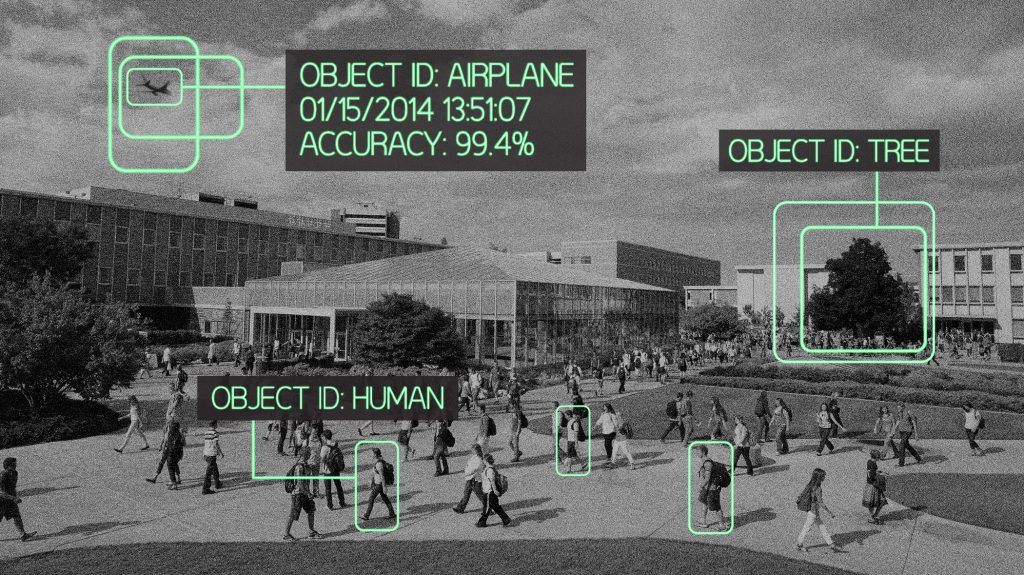
In everyday life we use our sense of sight, commonly without stopping to reason how it works and which are the components and processes into play between our brain and our eyes. It is an accepted and understood notion that sight is applied from a cognitive process that receives and interprets signs from the outside. Many centuries ago, Aristotle maintained in his Metaphysics that «the sight, better than other senses, makes us aware of the objects, and discovers among them a great number of differences». Thus, although as living beings we are characterize by the fact that we can distinguish the constitution of things that belong to a real and delimited space, we also obey a superior intuition that —along with memory— defines us as rational beings: in other words, humanize us. On the other hand, in recent years, in the scientific field we find multiple innovations that pretend to give a certain reasoned vision to the different technological prototypes that begin to emerge on the competitive system of today’s market. Some machines conceived from artificial intelligence offer, among its many other qualities, the capacity to have the sight set on the real and palpable world. This way, the device exercises a kind of freedom to act and decide conveniently, according to the utility and service that society has conferred on it. In summary, this is the purpose of computer vision. A first look to computer vision This discipline bursts in the sixties with a preconceived and somewhat misleading idea on the part of the firsts scientist specialized on artificial intelligence: that offering images to a computer to interpret them was relatively easy. Actually it turned out to be quite the opposite. At that time, there were plenty of issues to take account of in order to get significant advances on computer vision. In this sense, computer vision continues to be understood as a scientific discipline that studies and promotes the training of different devices and computers for the interpretation of images of the real world, in a way that both the processes as the results are as similar as possible to the human capacities. Vision and memory: to look from the mind For such case, it is necessary to understand the relation that the cognitive process keeps with the visual capacity in an informative context. There are interesting theoretical postulates that address the problem of computational memory (angular branch of artificial vision) from different edges. Some defend the necessity of an application external to the device that perform the primary memory processes for its operation. Other academics think it is valid to investigate from an intrinsic notion, that is, to try to define a cognitive structure in the construction of the electronic model itself. Also, another developers make a contribution from a more basic and rudimentary exploration, applying the simulation of specific tasks of the memory in some computers. Consequently, the conjunction between memory and vision is transcendental in the field of computer science, so as to be able to track in advance certain storage of information that is in constant revision with the images found in real life. In a nutshell, the machine must follow a series of steps to achieve its purpose: it needs to learn in order to see. Levels of computer vision The study of artificial vision divides its components in three essential horizons, from the most elemental one to the most complex: Level 2D. Distinction of the basic features in a superimposed image: lines, strokes, edges, arcs, zeroes. Level 21/2 Identification, in the image, of specific nuances belonging to stereoscopy (discipline that studies the three-dimensional illusion of the objects), like lighting, reflectance and shading, in conjunction with the elemental features mentioned before. Level 3D. Representation of the objects in real space. This allows the consequent classification and comparison of the images with information previously collected on the device. Therefore, different theoretical sections of computer science defend that this three levels must form in conjunction an adequate guideline on the experimentation and development of computer vision. Applications in sight Computer vision has presented an extraordinary boom in different fields of the industry and technology. To name a few cases, is transcendental its use in the optical metrology: from an artificial vision system, an object is designed with the proper physical measurements and magnitudes; it also has a significant application for data reading: here it is conceived from the recognition and verification of characters and codes that allow a correct compilation of information (files, documents, products) for its subsequent storage and categorization (a daily example of this application is the machines that detect the barcode of the products available at a supermarket); other cases are the control and surveillance systems, that allow to detect unconformities on a space previously outlined by the user; even, on the medical field, X rays and other complex systems for the detection of diseases from tomography, radiographs, magnetic resonances, among different utilities to consider. Among other favours that the computer vision have offered to the new tradition of innovation and competitiveness, we find its current focus on robotics. Thus, the research carried out for the development of domestic robots are notable: it is pretended to innovate from the creation of a human-prototype model that execute the cleaning chores and take care of children and elderly people. One of the enthusiast researches in this area is the Mexican scientist José Martínez Carranza, who holds a PhD in Computer Science from the University of Bristol, once said: «Not only in Mexico, but in the whole world, exists the necessity to have robots that can help us in our homes, robots that can clean. There are companies that are already selling robots that can clean floors, for example. Then, it is about having a robot that can take care of the kids, that can make them company, that can talk to you». Nonetheless, to materialize a product that clearly offers you a great variety of utilities essential to the human necessities may sound
Visión computacional: tecnología que observa hacia el futuro
En la vida cotidiana utilizamos nuestro sentido de la vista, comúnmente sin detenernos a razonar cómo funciona y cuáles son los componentes y procesos puestos en juego entre nuestro cerebro y los ojos. Es noción aceptada y entendida que la vista se aplica desde un proceso cognitivo que recibe e interpreta señales del exterior. Hace muchos siglos, Aristóteles sostenía en su Metafísica que «la vista, mejor que los otros sentidos, nos da a conocer los objetos, y nos descubre entre ellos un gran número de diferencias». Así pues, aunque distinguir la constitución de las cosas pertenecientes a un espacio real y delimitado nos caracteriza como seres vivos, también obedecemos a una intuición superior que —en comunión con la memoria— nos define como entes racionales: en pocas palabras, nos humaniza. Por otro lado, de unos años para acá, en el ámbito científico encontramos múltiples innovaciones que pretenden conferir cierta visión razonada a los distintos prototipos tecnológicos que comienzan a despuntar en el competitivo sistema de mercado actual. Algunas máquinas concebidas a partir de la inteligencia artificial ofrecen, entre sus otras muchas cualidades, la capacidad de estar a la mira del mundo real y palpable. De este modo, el aparato ejerce una especie de libertad para actuar y decidir convenientemente, conforme a la utilidad y el servicio que le ha conferido la sociedad. En síntesis, éste es el propósito de la visión computacional. Un primer vistazo a la visión computacional Esta disciplina prorrumpe en la década de 1960 con una idea preconcebida y un tanto equivocada por parte de los primeros científicos especializados en inteligencia artificial: ofrecer imágenes a una computadora para que las interpretara era relativamente fácil. En realidad resultó ser todo lo contrario. En ese tiempo, había multitud de asuntos por tomar en cuenta para conseguir avances significativos en la visión artificial. En este sentido, la visión computacional sigue entendiéndose como una disciplina científica que estudia y promueve la capacitación de distintos dispositivos y computadores para la interpretación de imágenes del mundo real, de tal forma que tanto los procesos como los resultados se asemejen lo más posible a las capacidades humanas. Visión y memoria: mirar desde la mente Para tal caso, es necesario entender la relación que el proceso cognoscitivo guarda con la capacidad visual en un contexto informático. Existen interesantes postulados teóricos que abordan el problema de la memoria computacional (rama angular de la visión artificial) desde distintas aristas. Algunos defienden la necesidad de una aplicación exterior al dispositivo que realice los procesos memorísticos primordiales para su funcionamiento. Otros académicos creen válido esforzar las investigaciones desde una noción intrínseca, es decir, buscar definir una estructura cognitiva en la construcción misma del modelo electrónico. Así también, otros desarrolladores realizan un aporte desde una exploración más básica y rudimentaria, aplicando la simulación de tareas específicas de la memoria en algunos computadores. Por consiguiente, es trascendental la conjunción entre memoria y visión en el ramo de la informática, para así poder permitirse rastrear a priori cierto almacenamiento de información que esté en constante revisión con las imágenes encontradas en la vida real. En pocas palabras, la máquina debe perseguir una serie de pasos para lograr su propósito: necesita aprender para ver. Niveles de la visión computacional El estudio de la visión artificial divide sus componentes en tres horizontes esenciales, desde el más elemental hasta el más complejo: Nivel 2D. Distinción de los rasgos básicos en una imagen superpuesta: líneas, trazos, bordes, arcos, ceros. Nivel 21/2D. Identificación en la imagen de matices propios de la estereoscopía (disciplina que estudia la ilusión tridimensional de los objetos), como la iluminación, la reflectancia y el sombreado, en conjunción con los rasgos elementales antes mencionados. Nivel 3D. Representación de los objetos en el espacio real. Esto permite las consiguientes clasificación y comparación de las imágenes con información previamente recopilada en el dispositivo. De tal modo, distintos apartados teóricos de la informática defienden que estos tres niveles deben formar en conjunto una directriz adecuada en la experimentación y el desarrollo de la visión computacional. Aplicaciones a la vista La visión computacional ha presentado un auge extraordinario en distintos campos de la industria y la tecnología. Por citar algunos casos, es trascendental su uso en la metrología óptica: a partir de un sistema de visión artificial, es diseñado un objeto con las medidas y magnitudes físicas adecuadas; también tiene una aplicación significativa en la lectura de datos: aquí se concibe desde el reconocimiento y la comprobación de caracteres y códigos que permiten una correcta recopilación de información (archivos, documentos, productos) para su posterior almacenamiento y categorización (un ejemplo cotidiano de esta aplicación son las máquinas que detectan el código de barras de los productos disponibles en un supermercado); otros casos son los sistemas de control y vigilancia, que permiten detectar inconformidades en un espacio previamente trazado por el usuario; incluso, en el campo de la medicina son utilizados los rayos X y otros complejos sistemas para la detección de enfermedades a partir de las tomografías, radiografías, resonancias magnéticas, entre distintas utilidades a considerar. Entre otras mercedes que ha ofrecido la visión computacional a la nueva tradición de la innovación y la competitividad, se encuentra su enfoque actual en la robótica. Así pues, son notables las investigaciones realizadas en el desarrollo de robots domésticos: se pretende innovar a partir de la creación de un modelo protohumano que realice labores de limpieza, cuidado de niños y adultos mayores. Uno de los investigadores entusiastas en este rubro es el científico mexicano José Martínez Carranza, doctor en Ciencias Computacionales por la Universidad de Bristol, quien ha dicho: «No sólo en México, en todo el mundo existe la necesidad de tener robots que nos puedan apoyar en la casa, robots que puedan limpiar. Hay empresas que ya venden robots que limpian el piso, por ejemplo. Entonces, es tener un robot que pueda cuidar a los niños, les pueda hacer compañía, pueda platicar contigo». En todo caso, materializar un producto que a todas luces ofrece una gran variedad de utilidades indispensables para las necesidades humanas, puede sonar fantasioso o lejano; las investigaciones, por el contrario, demuestran que este camino está
Ganadores del Reto 10 del TecnoCamp 2016 presentan su proyecto en las instalaciones del PIT-UAS
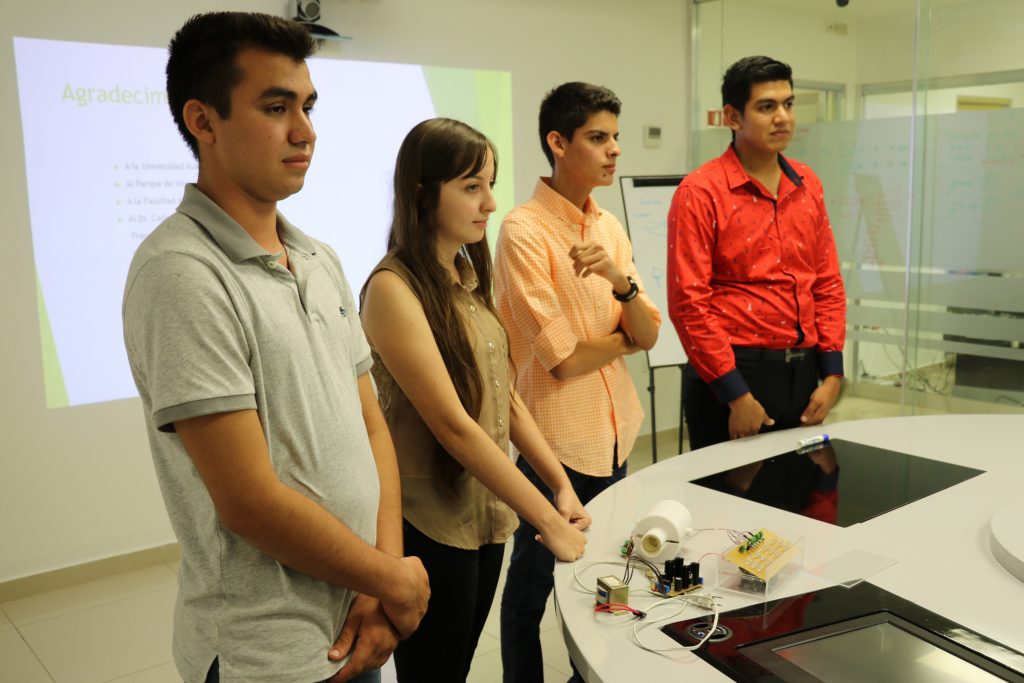
En una reunión concertada el día 11 de noviembre en el Parque de Innovación Tecnológica (PIT) de la Universidad Autónoma de Sinaloa (UAS), los estudiantes Darel Lugo, Guillermo Rojas, Norma Rodríguez y Omar Salazar, ganadores del Reto 10 del Campamento de Ciencia, Tecnología e Innovación (TecnoCamp 2016), presentaron las conclusiones de su proyecto Agrosen: Sensor de Flujo de Semillas para Sembradoras Tradicionales (elaborado en conjunto con Francisco Espinoza). Los jóvenes fueron elegidos para trabajar durante seis semanas en las instalaciones del PIT-UAS, donde se les facilitaron tanto los materiales como las asesorías necesarias para desarrollar su prototipo. El proyecto consiste en la creación de un dispositivo que facilite la utilización de las sembradoras operadas en el sector agrícola; el propósito de este sensor es contribuir a garantizar un uso responsable de los granos de siembra, así como también detectar anormalidades en ciertas extensiones del campo. El prototipo Agrosen, instalado correctamente en una sembradora tradicional, funciona como un sensor que controla el flujo de semillas a partir de la utilización de un emisor de luz infrarroja y dos receptores. «A pesar de que todos estamos interesados en áreas diferentes, de todas maneras compartimos el gusto por la ciencia y la investigación. Eso nos unió más», comentó Norma Rodríguez, una de los participantes en el diseño de Agrosen. De tal manera, el vínculo de los estudiantes para materializar este proyecto generó un cruce de disciplinas que permitió observar desde un enfoque más amplio las utilidades del mencionado dispositivo. Los jóvenes colaboradores, ayudados por su despunte y sus aptitudes demostradas en el marco del Tecno Camp 2016, presentaron un primer prototipo en la Sala de Videoconferencias del PIT-UAS. Asimismo, agradecieron el apoyo y la asesoría recibidos por los especialistas afiliados a las labores del Parque. «Esa fue una parte fundamental en nuestro proyecto, el poder sentirnos en un ambiente de trabajo agradable», puntualizó Omar Salazar. Así también, uno de los puntos angulares de los beneficios del Agrosen radica en los bajos costes que pretende generar mediante el máximo aprovechamiento de los recursos, pues busca evitar un consumo inapropiado de los granos utilizados en los campos agrícolas. «Lo que queremos hacer nosotros es solucionar esto para tener una mejor distribución de los insumos agrícolas», expresó Darel Lugo. Por otro lado, el joven Guillermo Rojas, ante la grata experiencia que vivió en el PIT-UAS, compartió su entusiasmo al materializar nuevas ideas en tecnología e innovación. «Sería muy bueno para mí seguirme desarrollando en el ambiente científico, con personas que ya tienen un trabajo establecido, sacar mi propio trabajo que me pueda permitir también actuar como un verdadero investigador», puntualizó. El equipo de estudiantes fue revisado por un jurado calificador durante la formal presentación del prototipo. «Supera las expectativas, desde mi punto de vista, porque es completamente funcional y, de hecho, algo sorprendente para mí fue que los miembros del equipo tienen muy claro cuáles son los siguientes pasos», argumentó el c. M. C. Rogelio Prieto Alvarado, coordinador operativo del PIT-UAS. A su vez, el doctor Inés Vega López, responsable del Laboratorio de Bioinformática del PIT-UAS, destacó el bajo coste económico que representa materializar la idea de los alumnos. «Parten de un problema que existe y presentan una solución. Además, lo importante de esto es que es una solución de bajo costo», aseguró. El doctor Carlos Duarte, de la Facultad de Ciencias Físico-Matemáticas, comentó sobre el prototipo: «Es algo con un grado de complejidad bueno y el desarrollo no necesita mucho trabajo más para terminar en un producto aplicable. Como ya tienes esa parte de hardware, puedes programar muchísimas cosas más». Por su parte, el maestro José Ramón López Arellano, director de dicho parque tecnológico universitario, felicitó personalmente a los jóvenes emprendedores por el empeño con el que desarrollaron su proyecto además del entusiasmo que los caracteriza. Reiteró que uno de los propósitos del Parque es el de generar desarrollos tecnológicos en colaboración con empresarios así como con emprendedores, dejando las puertas del PIT-UAS abiertas para estos cinco jóvenes talentos. Comunicación y Difusión PIT-UAS.
Winners of the Techno Camp 2016’s Challenge 10 present their project at PIT-UAS’ facilities
On a meeting held on November 11th at the Technological Innovation Park (PIT) of the Autonomous University of Sinaloa (UAS), the students Darel Lugo, Guillermo Rojas, Norma Rodríguez and Omar Salazar, winners of the Challenge 10 of the Science, Technology and Innovation Camp (TechnoCamp 2016), presented the conclusions of their project Agrosen: Seed Flow Sensor for Traditional Seeders (jointly prepared with Francisco Espinoza). The students were chosen to work for six weeks at the PIT-UAS’ facilities, where they were provided with both the material and the advice necessary for the development of their prototype. The project consists on the creation of a device that facilitates the use of seeders operated in the agricultural sector; the purpose of this sensor is to contribute to ensure a responsible use of the seeds, as well as to detect abnormalities in certain extensions of the field. The Agrosen prototype, installed correctly on a traditional seeder, works as a sensor that controls the flow of seeds from the use of an infrared light and two receptors. «Although we’re all interested in different areas, we all share the taste for science and research. That got us even closer», Norma Rodríguez said, one of the participants in Agrosen’s design. In such a way, the link between the students to materialize this project generated a cross of disciplines that allowed to observe from a broader perspective the utilities of the device. The young collaborators, helped by their wit and their skills demonstrated on the framework of the TechnoCamp 2016, presented a first prototype on the PIT-UAS’ Videoconferences Room. They also thanked the support and advice received by the specialists affiliated to the Park’s work. «That was a fundamental part of our project, to be able to feel in a nice work environment», Omar Salazar pointed out. Also, one of the angular points of Agrosen’s benefits lies on the low prices that it pretends to generate through the maximum use of the resources, as it looks to avoid an inappropriate consumption of the seeds used on the agricultural fields. «What we want to do is solve this to have a better distribution of the agricultural supplies», said Darel Lugo. On the other hand, Guillermo Rojas, before the pleasant experience he lived at the PIT-UAS, he shared his enthusiasm by materializing new ideas into technology and innovation. «It would be really good to me to continue developing on the scientific environment, with people that already have an established job, do my own work that can also allow me to act like a true researcher», he pointed out. The team of students was reviewed by a jury during the formal presentation of the prototype. «It exceeds the expectations, from my point of view, because it is completely functional and, in fact, something surprising to me was that the members of the team are really clear about what their next steps will be», argued MCS Rogelio Prieto Alvarado, operational coordinator of the PIT-UAS. At the same time, the PhD Inés Vega López, head of the PIT-UAS’ Bioinformatics Laboratory, highlighted the low cost that materializing the idea represents. «They start from a problem that exists and present a solution. Also, the importance of this is that it is a cheap solution», assured. The PhD Carlos Duarte, of the Faculty of the Physical-Mathematical Sciences, commented on the prototype: «It is something with a good degree of complexity and the development does not need much work to finish into an applicable product. Since you already have that piece of hardware, you can programme plenty more things». MBA José Ramón López Arellano, director of the facilities, personally congratulated the young entrepreneurs: «I would like to present this project in conferences and for some federal call, because it is something different and something that we wanted to experience this year, not with the businessmen but with you [the technocampers]», he said, leaving the PIT-UAS’ doors open for these five young talents. Written by Diffusion and Communication, PIT-UAS, translated by Belem Ruiz (Edition and Communication, PIT-UAS).
Big data: from the personal microworld to the massive study of users

Every day, whether continuously or sporadically, you connect to wireless networks through your smartphone, your tablet, your computer or other objects that may have access to the internet. Each time you are connected you generate a huge amount of data, whether you are posting a photo or a status on Facebook, searching something online, making a purchase with your credit card, watching a movie on a streaming page with your username… EVERYTHING is part of that constant generation of information. But, have you ever wondered what really happens to all that data? Do they have any use? The data in numbers As digitalisation and networking systems are becoming more sophisticated each year, database technologies that were being used a few years ago have become obsolete, being unable to efficiently analyse and structure the large volume of information that users generate through different platforms and devices connected to the internet. Only this year, it has been recorded that people around the world make four thousand Google searches per second and that they upload three hundred hours of content to YouTube on video format every hour; the world generates around ten thousand transactions of credit card payments and Twitter sends about three hundred and forty million tweets everyday (the equivalent to four thousand tweets per second). In short, in today’s world around 2.5 quintillions bytes of data are generated every day. It is important to highlight that, according to a study conducted by IBM, 90% of this information has been generated only as of 2011. This avalanche of data or tsunami data (as it is called sometimes) comes from different sources, such as: internet, latest generation cell phones, scientific studies, business and administration, among others. All this is known as big data and it consists of all the information, whether structured, unstructured or semi structured, that cannot be processed or analysed using traditional processes or tools (market studies, surveys, observation and analysis, all of this in charge of humans). Big data: an open window to the study of users Big data, then, consists on the set of processes, technologies and business models that are based on data and in capturing the value that these contain. The data is characterized by three v’s: volume (now we’re talking about generated petabytes instead of megabytes or gigabytes), variety (the information can be structured, unstructured or semi structured, audio, video, XML, etcetera) and velocity (the amount of time that it takes to analyse the collected data). Sometimes we also talk about a fourth v: veracity. Since the end of the first decade of the 21st century, technologies that were seeking to analyse and apply in real time all of this recollection about the user’s behaviour were applied, so that companies or different areas can carry out predictive analysis to help improve their processes. In case of companies, it is intended to apply big data in such way that they can predict, through their studies on consumer and market behaviour, how to retain their costumers and encourage them to buy their products with greater viability. According to a study conducted by the Aberdeen group, the companies that use big data for their market analysis reported an annual increase of 98% on the retention of their clients, contrasting with those reported by the companies that do not use this source of information, which increase is only of 20%. The weight of this huge amount of information has for the development of the companies and the conservation and increase of the life cycle and the satisfactions of the clients is such that the big data has been equated with a coin of the future or the next gold mine, even when there are sceptics about it. What we cannot deny is that the prediction through the analysis of the big data has come to revolutionize the customer’s experience with the company. Everyday life decoded Imagine that you like to read and buy books. Generally, people still tend to go to the bookstore, walk around the section of their interest and see what catches their eye. But now we have online shopping, you can use a virtual shopping platform like Amazon (which, in fact, uses big data) to look for your favourite books. Now, you start to look for a book you are interested in and at the same time the page starts to suggest some titles, based on the navigation you’re carrying out; it also shows the discounts applied to your preferences or offers you promotions related to your shopping habits. If you pay with your credit card, your bank records the information and can notify you when there is a promotion or a bonus available with that company. This is one of the ways big data can help to improve the costumer experience and learn from their habits, thanks to research that is not so expensive and does not compromise the effectiveness of their results. Big data also allow you to study the behaviour of the users by ethnographic and demographic areas, thus being a step beyond statistics and allowing not only to apply this technology on business, but in areas of prediction such as sports, medicine, crime prevention and trend of tourism in certain areas, even on political elections. In recent years the NFL applies prediction analysis through big data to programme their game scheduling for the season, so that the clashes will be categorized within the levels of each team and in a way that result more entertaining for the public. Before, the scheduling of the NFL took so long that it was only possible to make one schedule by hand each year; now, thanks to the application of a software and hardware created by IBM Analytics, they can create several calendars of seasons in a matter of hours. The application of big data and technologies capable of analyse their information on real time are another further evidence of the great advances that computer sciences have achieved on the last decades. As we keep moving
Macrodatos: del micromundo personal al estudio masivo de usuarios
Todos los días, ya sea de manera continua o esporádica, te conectas a redes inalámbricas a través de tu teléfono, tu tableta, tu computadora u otros objetos que puedan tener acceso a internet. Cada vez que te conectas, generas una cantidad de datos enorme, ya sea que estés publicando una foto o un estado en Facebook, realizando una búsqueda en línea, haciendo una compra con tu tarjeta de crédito, viendo una película en alguna página de renta con tu cuenta de usuario… TODO es parte de esa constante generación de información. Pero, ¿alguna vez te has preguntado qué sucede realmente con todos esos datos?, ¿tienen alguna utilidad? Los datos en números Gracias a que la digitalización y los sistemas de conexión a redes son cada vez más sofisticados, las tecnologías de bases de datos que se utilizaban hasta hace unos cuantos años han ido quedando obsoletas, al mostrarse incapaces de analizar y estructurar eficientemente el gran volumen de información que generan los usuarios a través de distintas plataformas y dispositivos conectados a internet. Sólo en este año, se ha registrado que las personas en el mundo realizan cuatrocientas mil búsquedas en Google por segundo y suben alrededor de trescientas horas de contenido a YouTube en formatos de video cada hora; el mundo genera unas diez mil transacciones de pagos por tarjetas de créditos y en Twitter se envían cerca de trescientos cuarenta millones de tuits al día (el equivalente a cuatro mil tuits por segundo). En pocas palabras, en el mundo actual se generan cerca de 2.5 quintillones de bytes de datos al día. Es importante destacar que, de acuerdo con un estudio realizado por IBM, 90% de esta información se ha generado tan sólo a partir de 2011. Esta avalancha de datos o datos tsunami (como se le llama en ocasiones) procede de distintas fuentes, como son: internet, teléfonos de última generación, estudios científicos, negocios, administración, entre otros. Todo esto es conocido como macrodatos (big data, en inglés) y está conformado por toda aquella información, ya sea estructurada, no estructurada o semiestructurada, que no puede ser procesada o analizada utilizando procesos o herramientas tradicionales (estudios de mercado, encuestas, observación y análisis, todo a cargo de humanos). Macrodatos: una ventana abierta al estudio de los usuarios Entonces, los macrodatos consisten en el conjunto de procesos, tecnologías y modelos de negocio que están basados en datos y en capturar el valor que estos encierran. Los datos están caracterizados por las denominadas tres V: volumen (ahora se habla de petabytes generados en lugar de megabytes o gigabytes), variedad (la información puede ser estructurada, no estructurada, semiestructurada, audio, video, XML, etcétera) y velocidad (la cantidad de tiempo que toma analizar los datos recolectados). En ocasiones también se habla de una cuarta V: la veracidad. Desde finales de la primera década del siglo XXI,comenzaron a aplicarse tecnologías que buscan analizar y aplicar en tiempo real toda esta recolección sobre el comportamiento de los usuarios, para que así las empresas o los distintos ámbitos puedan efectuar análisis predictivos que los ayuden a mejorar sus procesos. En el caso de las empresas, se pretende aplicar los macrodatos de tal manera que éstos puedan predecir, a través de estudios del comportamiento del consumidor y de mercado, cómo retener a sus clientes e incentivarlos a la compra de sus productos con mayor viabilidad. De acuerdo con un estudio realizado por el grupo Aberdeen, las empresas que utilizan macrodatos para sus análisis de mercado reportaron un incremento anual de 98% en la retención de sus clientes, contrastando con lo reportado por las empresas que no utilizan esta fuente de información, cuyo incremento es de apenas 20%. El peso que esta enorme cantidad de información tiene para el desarrollo de las empresas y la conservación e incremento del ciclo de vida y las satisfacciones del cliente es tal que se ha equiparado a los macrodatos con una moneda del futuro o la próxima mina de oro, aun cuando existan escépticos al respecto. Lo que no podemos negar es que la predicción mediante el análisis de los macrodatos ha llegado para revolucionar la experiencia del cliente con la empresa. La vida cotidiana decodificada Imaginemos que te gusta leer y comprar libros. Generalmente las personas aún tienden a ir a la librería, pasearse por las secciones de su interés y ver qué les llama la atención. Pero ahora contamos con la opción de compras en línea, puedes utilizar una plataforma de compra virtual como la de Amazon (que, de hecho, utiliza macrodatos) para buscar tus libros favoritos. Ahora bien, comienzas a buscar en internet un libro de tu interés y a la par la página comienza a sugerirte algunos títulos, con base en la navegación que llevaste a acabo; también te muestra los descuentos aplicados a tus preferencia o te ofrece promociones más relacionadas con tus hábitos de compra. Si pagas con una tarjeta de crédito, tu banco registra la información y puede notificarte cuándo ellos tengan alguna promoción o bonificación disponible con dicha empresa. Esta es una de las maneras en que los macrodatos pueden ayudar a mejorar la experiencia del cliente y aprender de sus hábitos, gracias a investigaciones que no son tan costosas y no comprometen la eficacia de sus resultados. Los macrodatos también permiten estudiar los comportamientos de los usuarios por zonas etnográficas y demográficas, situándose así un paso más allá de la estadística y permitiendo no sólo aplicar esta tecnología en el comercio, sino en áreas de predicción tales como los deportes, la medicina, la prevención de crímenes y la tendencia de turismo en ciertas zonas, e incluso para elecciones políticas. En los últimos años la NFL aplica los análisis de predicción por medio de macrodatos para programar su calendarización de juegos de la temporada, de manera que los enfrentamientos se categorizaran dentro de los niveles de cada equipo y de la forma que resulte más entretenida para el público. Antes la programación de la NFL llevaba tanto tiempo que sólo se lograba realizar una a mano cada año; hoy, gracias a la aplicación de software y hardware creado por IBM Analytics, se pueden crear varias agendas de temporadas en cuestión de
The PIT-UAS participates with presentation on the FCFM’s XXXIV Anniversary
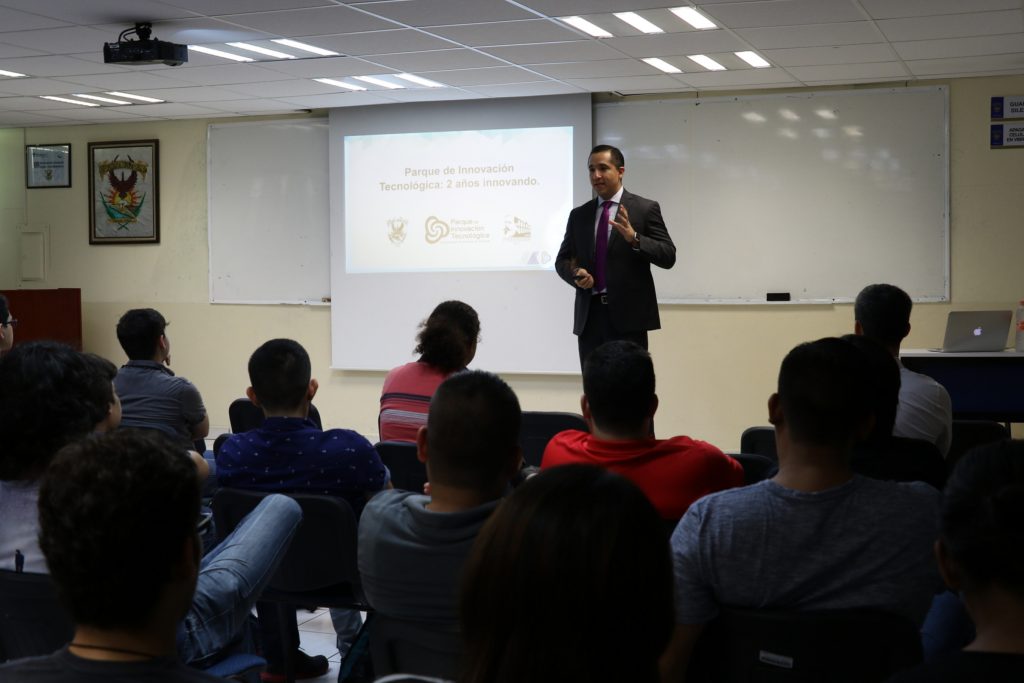
As part of the celebration of the XXXIV Anniversary of the Faculty of Physical-Mathematical Sciences (FCFM, Facultad de Ciencias Físico-Matemáticas) of the Autonomous University of Sinaloa (UAS, Universidad Autónoma de Sinaloa), PhD René Castro Montoya, the headmaster of the academic unit, commented on the important achievement that represents the organization of this event, in which both the student body and the academic staff of the faculty participate. He also explained the benefits that will be reflected in future projects and research routes that the student body aspires to, for which has been created colloquium cycles, talks and courses during the days of the celebrations. In this sense, the participation of MBA José Ramón López Arellano, general director of the Technological Innovation Park (PIT, Parque de Innovación Tecnológica) of the University, was included in the conferences programme for Tuesday, November 8th. López Arellano discussed with the university students about the methods and projects developed in the facilities of the Park, which are enrolled in precision agriculture, internet of things, data mining, among others. He extended an invitation to the students of the FCFM, he offered them assistance for the development of research projects related to their discipline of study. PIT-UAS’ general director talked about the current necessity to generate innovative planes that contribute to guarantee a better quality of life in social and economic terms. Also, in an interview with Castro Montoya, he talked about the intentions proposed on the anniversary celebrations. «What we are looking for is that our researchers interact and work in conjunction with researchers of others institutions of high academic renown on a national and international level», explained the doctor in Statistics by the College of Postgraduates of the Autonomous University of Chapingo. The headmaster of the FCFM celebrated the important role that the PIT-UAS represents in the business and academic development of the region: «We have students and teachers that are participating in projects inside the Park, together with the industry and the local companies». He also recognized the inclusion of university students and teachers in the making of the projects conducted inside the PIT-UAS: «The Park has been for us an opportunity for our students to develop and that our teachers —who are very well prepared— to contribute to the University. The celebrations for the XXXIV Anniversary of the FCFM are held from November 7th to 11th of the current year. Among the institutions participating are the Faculty of Sciences of the National Autonomous University of Mexico (UNAM, Universidad Nacional Autónoma de México), the University of Guanajuato, the Technological Institute of Eldorado, the Autonomous University of Querétaro, the UNAM’s Institute of Nuclear Sciences, the PIT-UAS, among others. The FCFM began activities on October 7th of 1982 in Culiacán Rosales (Sinaloa), at the time it was called School of Physical-Mathematical Sciences; on April 11th, of 2011, it received the title of faculty. Andrés Márquez (Communication and Diffusion, PIT-UAS), translated by Belem Ruiz (Edition and Communication, PIT-UAS).