The PIT-UAS participates in the National Week of the Entrepreneur 2015
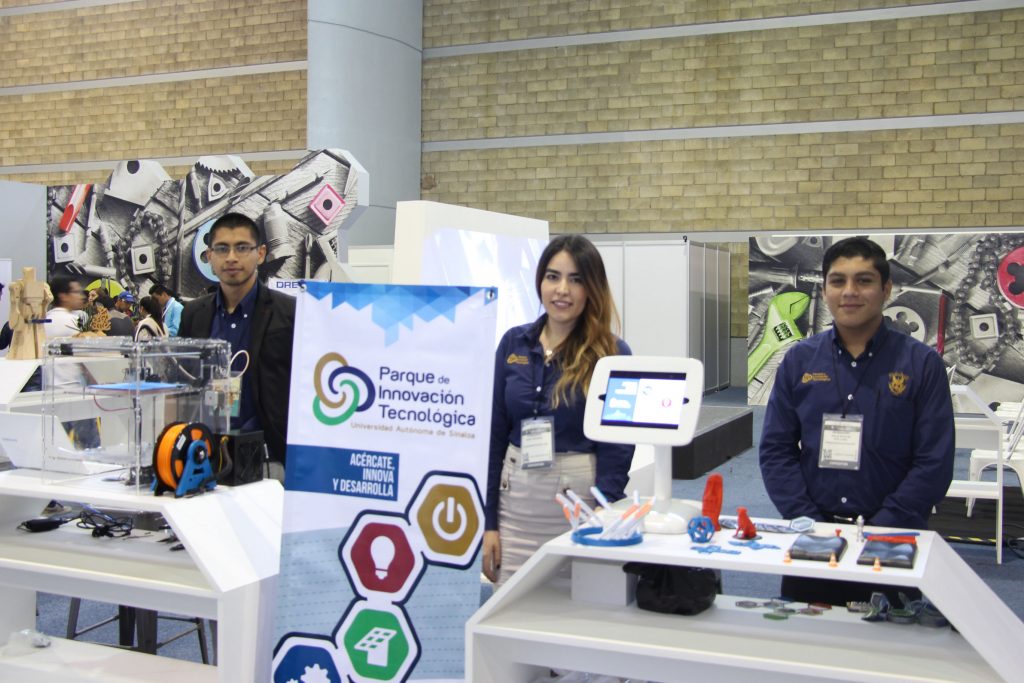
The Technological Innovation Park (PIT, Parque de Innovación Tecnológica) of the Autonomous University of Sinaloa (UAS, Universidad Autónoma de Sinaloa) participates in this year’s edition of the National Week of the Entrepreneur (SNE, Semana Nacional del Emprendedor), which is taking place at Expo Bancomer Santa Fe, in Mexico City, began on Monday 5th and will end on Saturday 10th of October. Known by being the business event more important of its category, the SNE is organized by the Government of the Republic through the National Institute of the Entrepreneur (INADEM, Instituto Nacional del Emprendedor) and the Secretariat of Economy, its objective is to grant backing and concrete solutions to begin business or help the growth of micro, small and medium enterprises. It is foreseen that the President of the Republic make a tour by the stands of the SNE on Friday and, according to the INADEM, the event will gather almost seventy thousand visitors and eight hundred thousand people will virtually access to workshops and conferences. As part of the third edition of the SNE, on its role as an INADEM’s makerspace, the PIT-UAS has an important intervention in the innovation ecosystem, through an exposition belonging to the 3D designing, modeling and printing field. In this way, the 3D printer developed by students in the facilities of the PIT-UAS is shown to the attendees; such printer is part of a project which purpose is to invent low-cost 3D printers, improving quality and rapidity so, in the future, these can be of common use, as if they were conventional paper printers. Moreover, it is scheduled a conference to be imparted on Thursday 8th of October at 13:00 hours, by the Director of this UAS’ innovation center, MBA José Ramón López Arellano, which is titled «The advantages of technological innovation parks by integrating as makerspaces and their contribution to national development». With his talk, López Arellano will make known the advantages institutions as the PIT-UAS provide by functioning as makerspaces, since contribute to achieve the success of the projects they host, thanks to the multidisciplinary scientific and technological development, besides applied innovation, contributions that also help to consolidate a sustainable socioeconomic development of national impact. Finally, it should be noted that the PIT-UAS was accredited with the makerspace title on February 6th of this year, date on which the Direction of Innovation and Promotion of the INADEM recognized the PIT of our University as part of the Innovation Network, under cover of the Support Network to the Entrepreneur (within the framework of the 2.9 Call, Encouragement for the Prototypes Development through Workshops of High Specialization). Consequently, Park’s personnel takes care of generating contacts with entrepreneurs and the enterprising community of the country, also students and other attendees to the event, within the Maker Area of the SNE; this, with the purpose of sharing resources, knowledge and tools, based on incentives to creation and creativity, in order to create new products, focused in the fabrication of elements that unite the physical with the technological. Written by Moroni Arellano (Communication and Diffusion, PIT-UAS), translated by Belem Ruiz (Edition and Communication, PIT-UAS).
University of Oxford’s PhD student begins at UAS impartation of interdisciplinary course about health
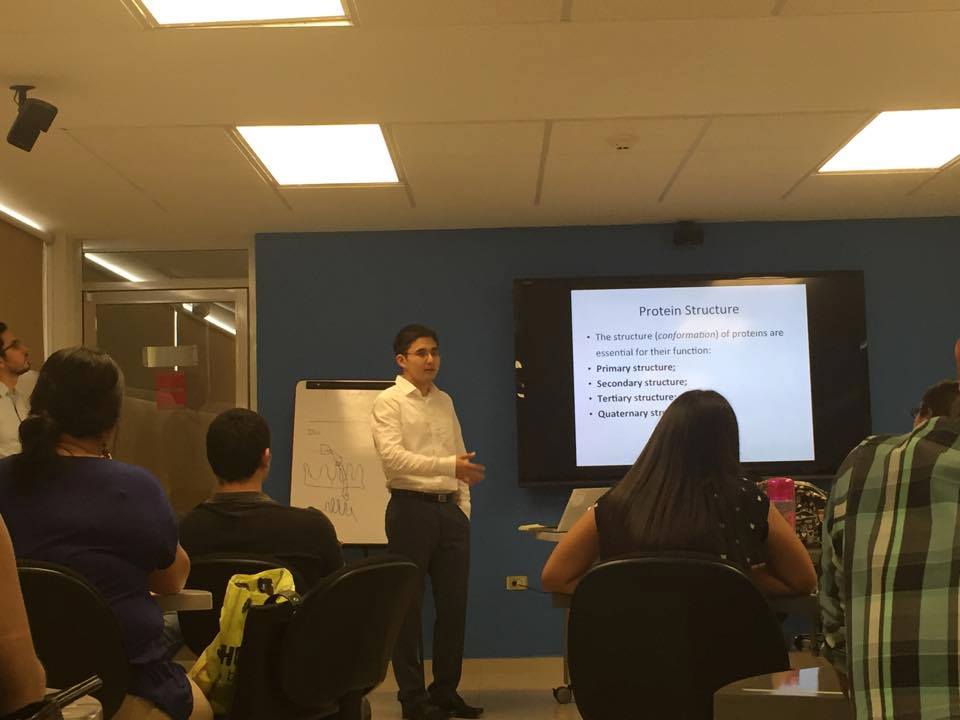
This Monday 5th October the course Mouth, Gut, Health: An Interdisciplinary Journey was started, it is taught by the Brazilian Juliano Morimoto Borges, a young PhD student at the University of Oxford. The course is taking place at the Training Room of the Technological Innovation Park (PIT, Parque de Innovación Tecnológica), belonging to the Autonomous University of Sinaloa (UAS, Universidad Autónoma de Sinaloa), from 15:00 to 18:00 hours, and will end on Friday 9th. The inauguration was attended by 42 university students, 34 undergraduates, 5 master’s and 3 PhD’s, coming from the UAS’ schools and faculties related to health: Dentistry, Psychology, Nutrition and Gastronomy, Bio-Chemicals Sciences and Medicine. As part of the reception and welcome to Morimoto Borges, on behalf of the UAS’ Rector, PhD Juan Eulogio Guerra Liera, PIT-UAS’ Director, MBA José Ramón López Arellano, stated: «Counting with the presence of the researcher Morimoto is an honor to us, since it implies creating with him a bond which will help us to interlace both Universities. At his disposal, there will be UAS’ professionals who are researchers of his field and whose knowledge he will be able to make the most of, so we can begin such bond which —at short and medium term— could lead both institutions to the development of joint investigations. In addition, to you, university students of this house of studies, it is the opportunity of making the most out of this type of researches». PIT-UAS’ Director emphasized that the organization he presides has the objective of making science, technology and innovation the key to reach the economic development, both regional and global. In this context, Morimoto’s course is an action that is part of the institutional strategy of linkage, which allows students to have access to specialized training and at the same time helps researchers to have a higher social impact. Previously to the first session, in interview, the Brazilian PhD student said that during the five days of the course’s duration the topics which compose it would be presented in theoretical and practical manners: “Theoretically, given that the students come from different disciplines, I’ll give them a brief background on bio-chemistry, carbohydrates, proteins’ structure and so on, until we get to microbiota in general. Then we’ll have the practices: students will develop interdisciplinary thinking —and this is actually the culminating part of the course—, task to which they’re not commonly trained to». In the course’s schedule also excel the subject «Microbiota, Cavity and Obesity», as well as the online interview with the Brazilian professor and PhD Elaine M. Benelli, head of the interdisciplinary project Promoting Oral Health (Curitiba, Brazil). During his first visit to our country, the PhD student at the University of Oxford specified that his course’s main objective consists in: «… showing to the students the importance of an interdisciplinary approach… and help them to develop this type of thinking. […] The idea of this course is to make students think outside of that comfort zone that they’re in, and to consider other inputs». By last, it is noteworthy that during his stay in Culiacán (Sinaloa, Mexico) Morimoto will have academic exchange sessions with a medical research team, UAS’ personnel from the Medicine Faculty, investigators who count on important progress in regard to the Brazilian’s investigation topic within the University of Oxford. As a tangible product of these investigations, belonging to the British and the Mexican institutions, its achieved knowledge could be jointly applied in the development of a prototypical nutritional supplement to help in obesity treatment. Written and translated by Belem Ruiz (Edition and Communication, PIT-UAS).
PhD student Morimoto from the University of Oxford will impart a course at PIT-UAS
With the objective of innovating on preventive and clinical care through the extension of student’s horizons to different disciplines in Sinaloa, from October 5th to 9th, the Technological Innovation Park (PIT) of the Autonomous University of Sinaloa (UAS) is going to offer the course Mouth, Gut, Health: An Interdisciplinary Journey, that will be imparted by the PhD student Juliano Morimoto, Brazilian scholar from the University of Oxford. To the event will attend UAS’ medicine, nutrition, dentistry, biology and psychology students, who will have the opportunity to get in contact with an international interdisciplinary researcher and, in this way, stimulating such sort of interaction. The program includes the explanation of the importance of developing a common language among the students from different health disciplines, in order to generate preventive and operative standpoints that may provide a complete and efficient treatment to patients from different specialties. Besides, issues of great interest to public health, such as digestion (with emphasis on the hormones that regulate food intake in the brain), depression and obesity, will be addressed from the point of view of nutrition, medicine, dentistry and psychology. Furthermore, in the practical part of the event, the students will work in teams to complete activities. In this sense, it is expected to have collaboration, via a videoconference, with PhD Elaine Benelli (who currently manages an interdisciplinary health project in Brazil), which will bring to the students the opportunity of making some questions about the practice of healthcare’s interdisciplinary perspective and how this changes the result of preventive and operative standpoints. The course is scheduled from Monday to Friday, from 15:00 to 18:00 hours, at the PIT-UAS’ Training Room. It will begin on October 5th and its ending is envisaged to be the 9th day of the same month. Written by Moroni Arellano (Communication and Diffusion, PIT-UAS), translated by Belem Ruiz (Edition and Communication, PIT-UAS).
The PIT-UAS becomes first Mexico’s public university organism joining to the IASP
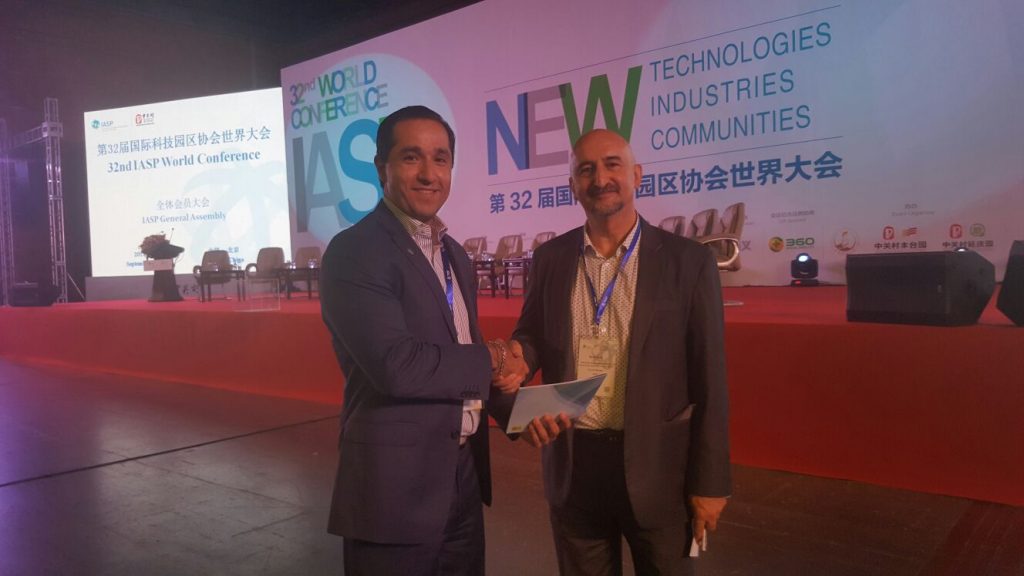
In July of this year, the Technological Innovation Park (PIT, Parque de Innovación Tecnológica) of the Autonomous University of Sinaloa (UAS, Universidad Autónoma de Sinaloa) became an affiliate member of the International Association of Science Parks and Areas of Innovation (IASP), which headquarters are in Málaga (Spain) and also counts on a regional office in Beijing (China). Thus, in the framework of the 32nd IASP World Conference, which this year took place in the ZPark (Zhongguancun Science Park), begun on Monday 21st of September and finished on Friday 25th, MBA José Ramón López Arellano, on behalf of UAS’ Rector, PhD Juan Eulogio Guerra Liera, received the formal letter of affiliate member that certifies PIT-UAS’ integration to the IASP. To this event attended dignitaries such as the Ambassador of Mexico in China, Julián Ventura Valero, and the Governor of the State of Hidalgo, José Olvera; the participation of parks coming from China, Turkey, Russia, Iran and Mexico was prominent. The diverse editions of these conferences are realized with the purpose of gathering experts in Science and Technology Parks (STP) and other Areas of Innovation (AI), technology-based incubators, academy, public and business sectors, so as «to discuss and to debate in depth the trends in all these increasingly complex and efficient structures, tailor-made for professional innovation support to entrepreneurs«. It should be specified that the IASP, as a founding member of the World Alliance for Innovation, is a global network of innovation which purpose consists on enhancing the growth, the internationalization and effectiveness of its members. Among the affiliates stand out organisms like: Kyoto Research Park (Japan), Heidelberg Technology Park (Germany) and Technopark-Alliance (Switzerland). Given the important role assumed by each one of IASP’s members on their respective regions in the matter of business and enterprising competitiveness, as well as for the economic development trough innovation, entrepreneurship and knowledge transfer, this non-governmental organization functions as a Special Consultative Status with the Economic and Social Council of the United Nations. Nowadays, the PIT-UAS, the first institution belonging to a Mexican public university joining to the IASP, participates on the proposals of 10 projects with high levels of innovation, among which impact areas are included spheres such as social, ecologic and business. In this way, the Park continues working on its consolidation as an axis of academic, scientific and technological development that promotes regional productive vocations and makes easier their incorporation to new and wider markets, with the aim of helping for State and country’s economic progress. Written by Moroni Arellano (Communication and Diffusion, PIT-UAS), translated by Belem Ruiz (Edition and Communication, PIT-UAS).
PIT-UAS is going to be certified by the International Association of Science Parks and Areas of Innovation
Thanks to its important technological developments and contributions to science, the Technological Innovation Park (PIT, Parque de Innovación Tecnológica) of the Autonomous University of Sinaloa (UAS, Universidad Autónoma de Sinaloa) is going to receive, this September 24th, the certification as a member of the International Association of Science Parks and Areas of Innovation (IASP). In releasing this information, PIT-UAS’ director, MBA José Ramón López Arellano, expressed that, thanks to this distinction by such organism, the Park might link with other institutions of its own kind, which would mark the beginning of a more specialized promotion of its activities related to science, technology and research, as well as other areas of innovation, tasks which purpose is to provide services for the effective growth of its members. «Belong to the IASP gives us a national and international recognition, considering that we’d be the fifth Mexican member, the third from the northwest of the country; and, the most important, we are the only public university within it. This would help to improve the competitiveness of future projects developed at PIT-UAS», declared. In the next days, informed López Arellano, he’s going to attend to Beijing (China), in order to be part of the IASP’s annual reunion. It will be on the context of such event to be carried out at the Chinese capital that the PIT-UAS will receive the certificate to guarantee its belonging to the IASP as an affiliated member. The manager of this technological complex of the UAS detailed that this specialized international association counts with approximately 402 members, located in 72 countries, to which belong 128 thousand innovative companies, as well as the total of 42 universities registered in the IASP. An important factor of the IASP, said, is that it has the status of Special Consultative with the Economic and Social Council of the United Nations, besides is a founding member of the World Alliance for Innovation. Thus, «The members of the IASP are distinguished by the quality and the boost for technological development they socially have, as well as for the economic growth of their countries», added. López Arellano emphasized that, thanks to this attainment, this university organism on his charge contributes to attend the core idea about internationalization contained in the Plan of Institutional Development Consolidation 2017, which regulates the administration of the rector of our University, PhD Juan Eulogio Guerra Liera. The Director of the PIT-UAS specified that, this way, to the solid academic exchange program of the UAS would be added the linkage in the matter of technological and scientific developments, better known as multidisciplinary networks of applied research. «By having the IASP certification, this implies to us that we have the quality and the added value which define a true park of science and technology, in which business incubators can be created and managed, technological transfer can be made, as well as projects of innovation, entrepreneurship and economic development», opined. He also said that other benefits that this distinction, being member of the IASP, brings consist on: having the right to attend to the General Assembly of the IASP and have the right to make use of the voice in it; discounts in conferences, workshops, as well as in the buying of books and communication material, among many others. In Mexico, besides PIT-UAS, also have this certification: the Technological Innovation Park of the Northwestern Center of Biological Research (Parque de Innovación Tecnológica, Centro de Investigaciones Biológicas del Noroeste), the Research and Technology Innovation Park (Parque de Investigación e Innovación Tecnológica de Monterrey), the Technological Park of Guanajuato (Parque Tecnológico de Guanajuato) and the Chihuahua based Orión Tech Park of the Monterrey Institute of Technology and Higher Education (Parque Tecnológico Orión, Instituto Tecnológico y de Estudios Superiores de Monterrey). To get more information about the IASP, you may consult its official web site. Source: Autonomous University of Sinaloa. Translated by Belem Ruiz (Edition and Communication, PIT-UAS).
Conceptual demonstration of Smart EcoPark PIT-UAS is presented
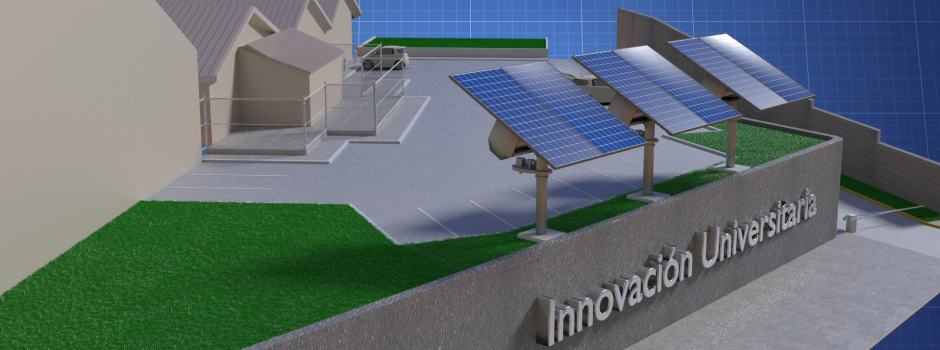
Once the starting signal for the beginning of this project was given on February of this year in front of researchers and university authorities, during the last week of August it was made known in the official channel of the Technological Innovation Park (PIT, Parque de Innovación Tecnológica) of the Autonomous University of Sinaloa (UAS, Universidad Autónoma de Sinaloa) the conceptual video of this built-in ecologic model for implementing sustainability and the Internet of Things (IoT) in urban complexes, project realized as part of the participation agreement between PIT-UAS and the regional enterprise HunabSys. The Smart EcoPark PIT-UAS will be constituted by the design and the implementation of a building prototype that integrates diverse models designed to incorporate sustainability as much as IoT on urban complexes. This project is composed by: an eco-parking with automatized access control via a mobile app; an internal combustion car turned into one of electric functioning, for which there will be two charging stations; a vertical garden which purpose will be to embellish spaces and to make the most of this type of urban agriculture’s ecologic benefits; and, as core element, a solar plant equipped with a system of solar trackers to optimize electric energy generation. On February, within the framework of the beginning labors for the execution of this project, regional entrepreneur José Carlos Castro Padilla, whose company, HunabSys, is dedicated to develop new technologies researching and innovative computer solutions of high quality, expressed: «The idea, at the beginning, was to have solar panels that were more efficient than normal… And the only way to do that was building a solar tracking system, which means the panels will orient themselves depending on the Sun’s trajectory in order to obtain about 30% more solar energy production». For his part, MBA José Ramón López Arellano, PIT-UAS’ Director, specified that the rotatory photovoltaic system of approximately 12 Kw/h will feed the eco-parking, which will function as charging station for electric cars. Likewise, he claimed that, as part of the second phase of this built-in model, it is planned to make an own design of an electric car that includes IoT elements. This initiative, the IoT, was defined by the MBA as a «… big global project in which all devices are interconnected and generate relevant information in real time in order to improve the quality of life». In addition to the above, it is proposed that the sustainable energy model to be implemented in the facilities of the PIT-UAS be extended to other university buildings. Finally, according to the University’s Rector, PhD Juan Eulogio Guerra Liera, this project’s implementation puts the UAS «… on a work route of world class». Besides, he added, «… the fact that this initiative is being possible thanks to the sum of efforts between the University, through the PIT, the Federal Government, through the CONACyT [National Council of Science and Technology, Consejo Nacional de Ciencia y Tecnología], and private initiative, by means of the enterprise HunabSys, positions it [this project] in a guideline of work linked to the servicing and the knowledge transfer». In this way, the PIT-UAS complies with two of its tasks: objectifying the triple helix model (University-Government-Enterprise) as well as the technological transfer. It is noteworthy that this project represents the opportunity for enriching the technical and scientific training of UAS’ and HunabSys’ human resources, on the base of an environmental culture, thought according to current tendencies directed to the adoption of technology as a tool to reach a rational usage of energy and the gradual inclusion of clean energy sources that contribute to mitigate climate change and global warming. Thus, in alignment with the Plan of Institutional Development Consolidation 2017, the PIT-UAS contributes to strengthen the University as a green higher education institution, committed with taking care and preserving the environment through research and education, as well as by designing and developing technologies that allow to promote the establishment of a more respectful and conscious relation with the environment in the region. Written by Moroni Arellano (Communication and Diffusion, PIT-UAS), translated by Belem Ruiz (Edition and Communication, PIT-UAS).
Director of the PIT-UAS initiates relations with French universities

During his participation in the Second French-Mexican Forum carried out in France, the Director of the Technological Innovation Park (PIT, Parque de Innovación Tecnológica) of the Autonomous University of Sinaloa (UAS, Universidad Autónoma de Sinaloa), MBA José Ramón López Arellano, started the establishment of relations with French universities, with the purpose of strengthen this research center’s activities. He specified that the Technological University of Compiègne has a research center similar to the PIT-UAS, therefore, while chatting about linkage with the Director of that university, the increase of the academic value of both institutions, French and Mexican, was considered: «On these dates we are settling up the general legal terms of the convention, besides, we already have a first proposal of student exchange, this would be a master student at Compiègne and the intention is that his thesis can be directed by a UAS’ researcher, who can offer him counseling and implementation to his research». López Arellano said that another linkage was given with the University of Strasbourg, of which he said is run and ruled by sustainability issues, and that’s why one of the projects with this French institution would be the exchange of students and professors focused on energy studies: «We are considering the creation of an international laboratory, the proposal is to build it at UAS and have their support in order to achieve a globally advanced laboratory, so that our University can set itself at the forefront on energy matters». He explained that the legal status of the agreement, as in the case of Compiègne, still in process. The MBA assured that this visit contributes to both the internationalization and the linkage considered in the Plan of Institutional Development Consolidation 2017 of our University. Precedents UAS’ participation on this forum was possible thanks to the approach between PhD Enrique Cabrero Mendoza, General Director of the National Council of Science and Technology (Consejo Nacional de Ciencia y Tecnología), and PhD Juan Eulogio Guerra Liera, Rector of the UAS; the above, during the last General Assembly of the National Association of Universities and Higher Education Institutions (Asociación Nacional de Universidades e Instituciones de Educación Superior), in Guadalajara City (Jalisco, Mexico). Source: Direction of Communications UAS. http://dcs.uas.edu.mx/index.php?sec=3&op=2&tipo=i&id_noticia=6033. Translated by Belem Ruiz (Edition and Communication, PIT-UAS).
Testing vertical garden is designed and installed at the PIT-UAS

Also known as green wall or living wall, vertical garden is an architectonical-ecological technique applicable both indoor and outdoor, which consists on making the most of space, one of the most lacking benefits in large cities, for gardens’ sowing: limited areas or the façade of public and private buildings are grown green with beautifying plants. The benefits that the innovative urban gardening provides to people’s quality of life are enrolled in diverse areas: health, ecology, sustainability, among others. Thus, green walls contribute with colors and shapes to the urban surroundings, provide protection from solar radiation, constitute leisure and meeting places which visual enriching positively affects people’s mood. In addition, living walls bring along environmental advantages: contribute increasing the oxygen levels of recirculation air, meanwhile the vegetation layer’s refrigeration and evaporation processes improve thermic efficiency, which means significant energy savings. Having said that, in accordance with the core idea relating to environmental education and sustainable development included in the Plan of Institutional Development Consolidation 2017, during July of 2015 personnel from the Technological Innovation Park (PIT, Parque de Innovación Tecnológica) of the Autonomous University of Sinaloa (UAS, Universidad Autónoma de Sinaloa) took charge of designing and installing a pilot vertical garden on the PIT-UAS’ headquarters building. This testing version was made to study plants’ behavior in vertical state, its requirements and durability, so subsequently the acquired knowledge can be applied in the construction of the green wall which is part of the ecosystem where the solar plant that’s currently being designed at the PIT-UAS will be installed. It should be pointed out that it is planned that such model of living wall be applicable to university buildings in the whole state. In this way, the PIT-UAS helps to improve, adapt and modernize university spaces with the purpose of promoting a culture of environmental care, at the same time this institution generates and applies knowledge on relevant themes linked with sustainable development, according to what is stipulated in the sixth institutional strategic core idea. By making this contribution to UAS’ consolidation as a green university, the PIT-UAS also accomplishes its task of helping to generate scientific and technological knowledge through basic and applied research on the knowledge application general guidelines. Written by Moroni Arellano (Communication and Diffusion, PIT-UAS), translated by Belem Ruiz (Edition and Communication, PIT-UAS).
Is presented in Pachuca the GeT-In 2014 book, one of which co-authors is the PIT-UAS’ Director
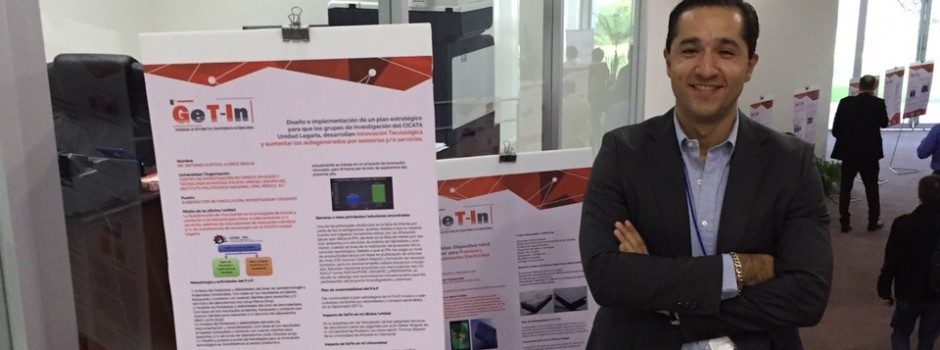
MBA José Ramón López Arellano, Director of the Technological Innovation Park (PIT, Parque de Innovación Tecnológica) of the Autonomous University of Sinaloa (UAS, Universidad Autónoma de Sinaloa), was part of the first GeT-In group (2014), which stayed in Germany last year’s autumn. After such stay, joint with other participants of the same group, the Director of the PIT-UAS wrote a chapter of the book GeT-In 2014: Experiences of an Intensive program of Professionalization for Linkage Managers from Higher Education Institutions (GeT-In 2014: experiencias de un programa intensivo de profesionalización de gestores de vinculación de instituciones de educación superior), to which presentation attended on Monday 6th of July, within the framework of the GeT-In 2015, carried out in Pachuca (Hidalgo, Mexico). GeT-In, Intensive Program of Professionalization for Linkage Managers from Higher Education Institutions in Mexico, is organized by the Autonomous University of Hidalgo State (UAEH, Universidad Autónoma del Estado de Hidalgo) in coordination with the Kassel University and the Brandenburg University of Applied Sciences; it is financed by the National Council of Science and Technology (Consejo Nacional de Ciencia y Tecnología) through the Associate Directorate of Technological Development and Innovation (Dirección Adjunta de Desarrollo Tecnológico e Innovación), and it is supported by the National Association of Universities and Higher Education Institutions (Asociación Nacional de Universidades e Instituciones de Educación Superior), the Consortium of Mexican Universities (Consorcio de Universidades Mexicanas) and the German Academic Exchange Service (Deutscher Akademischer Austauschdienst). With an intensive course of professionalization, GeT-In aims to reduce the existent technological gap among higher education institutions (IES, instituciones de educación superior) and their economic and social environments, through the exchange with other countries’ experts and the knowledge of best practices in Germany; likewise, the exchange aroused among the participants and presenter’s inputs contribute to delimitate adequate strategies and necessary operative changes so that IES’s internationalization processes be promoted and the university-enterprise linkage be strengthen. During the first of the two days of activities of GeT-In’s 2015 edition, were dealt with subjects as Germany’s innovation system and its knowledge networks, besides knowledge and technology transfer in the UAEH, which Knowledge City was visited by the course’s attendees. This second program aims to lay the groundwork for the creation of a specific thematic network about Mexico. GeT-In 2015 had the participation of national and foreign speakers, experts on entrepreneurship, linkage, technology transfer, patents and intellectual property. Participants included decision-makers and public servants on innovation, entrepreneurship, technology and linkage areas from Mexican IES, such as The College of the Southern Border, Technological University of Tulancingo and the Monterrey Institute of Technology and Higher Education. Thus, the PIT-UAS complies with its institutional role, which consists on helping to overcome the lack of economic and social development, both in Sinaloa and the country, since experiences like GeT-In will allow the Park to strength its labor of integrating multidisciplinary projects on key fields of knowledge that, implementing the triple helix model and for the sake for the prosperity of State’s technological capabilities, make the most of regional researchers and professionals’ diverse capabilities and that combine information technologies. Written by Moroni Arellano (Communication and Diffusion, PIT-UAS), translated by Belem Ruiz (Edition and Communication, PIT-UAS).
The Director of the PIT-UAS will attend to an international forum about research
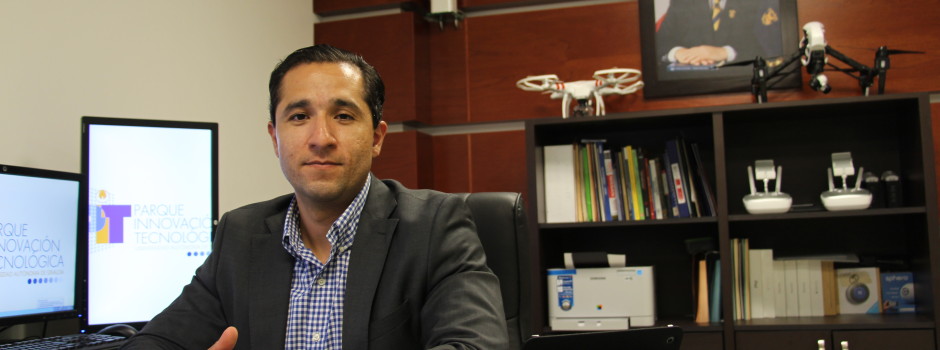
From July 7th to 11th, the Director of the Technological Innovation Park (PIT, Parque de Innovación Tecnológica) of the Autonomous University of Sinaloa (UAS, Universidad Autónoma de Sinaloa), MBA José Ramón López Arellano, will attend to the Second French-Mexican Forum for Research and Innovation (Seconde Forum Franco-Mexicain pour la Recherche et l’Innovation), with the purpose of knowing the ways of linkage between French and Mexican universities. The university researcher explained that the main reason for this visit is to linkage UAS with the most important research centers from France. He recalled that the invitation to attend to this forum was possible thanks to the approach between PhD Enrique Cabrero Mendoza, General Director of the National Council of Science and Technology (CONACyT, Consejo Nacional de Ciencia y Tecnología), and PhD Juan Eulogio Guerra Liera, Rector of the UAS; the above, during the last General Assembly of the National Association of Universities and Higher Education Institutions (Asociación Nacional de Universidades e Instituciones de Educación Superior), in Guadalajara City (Jalisco, Mexico). López Arellano made known that his stay in France will be in the behalf of the UAS’ Rector and his intention is to promote the PIT-UAS. He also announced his coming visit to Pachuca (Hidalgo, Mexico), with the objective of verifying the monitoring, by CONACyT, to those educational institutions which made a stay in Germany last year during November. At the event will be shown the results of the projects thanks to which these educational organisms were supported to realize such stay in the European country; besides, there will be presented a book containing the related experiences and promotion of technology transfer belonging to the institutions that were benefited through this stay. «This book has international guarantees, such as ISBN. And we are promoting that public and private universities of the country opt for an optimal technological transfer model, one approved by German universities and centers of innovation like, for example, the German Academic Exchange Service (Deutscher Akademischer Austauschdienst)», indicated. Source: Direction of Communications UAS. http://dcs.uas.edu.mx/index.php?sec=3&op=2&tipo=i&id_noticia=5937. Translated by Belem Ruiz (Edition and Communication, PIT-UAS).