Course-workshop on bioinformatics is imparted at the PIT-UAS
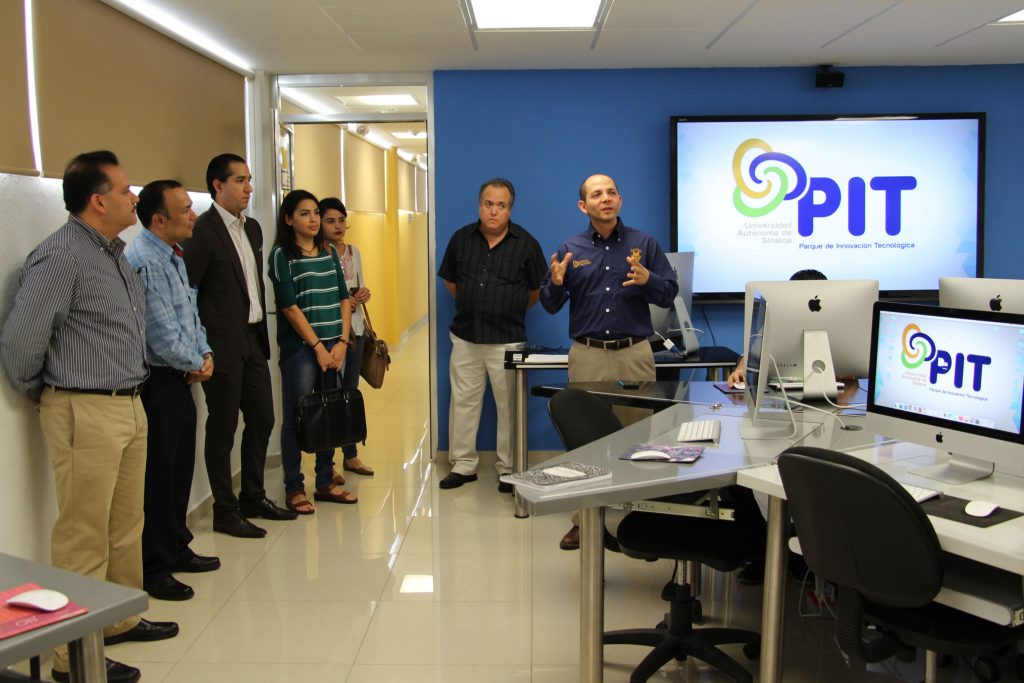
This Friday 27th of November began the Course-workshop of Bioinformatical Tools for the Analysis of Bacterial Genomes in Ecology and Epidemiology, imparted at the Training Room of the Technological Innovation Park (PIT, Parque de Innovación Tecnológica) of the Autonomous University of Sinaloa (UAS, Universidad Autónoma de Sinaloa); on Friday 4th of December will be carried out the closing event and the delivery of participation certificates. Organized by the PIT-UAS and the National Laboratory for Food Safety Research (Laboratorio Nacional para la Investigación en Inocuidad Alimentaria) of the Research Center for Food and Development (CIAD, Centro de Investigación en Alimentación y Desarrollo), such course-workshop has the objective of transmitting to the participants the necessary knowledge to use, handle and analyze data from technologies of DNA’s massive sequencing, by means of specialized software that generates genomes assemblies and examines them for their application to specific purposes. The directors of this seminar are PhD Jaime Martínez Urtaza from the University of Bath’s Milner Centre for Evolution, PhD Cristóbal Quiroz from the CIAD and PhD Inés Fernando Vega López from the UAS. The impartation is in charge of professors and researchers from different organisms, such as PhD Luis Lozano from the National Autonomous University of Mexico’s Center for Genomic Sciences, PhD Mario dos Reis from the Queen Mary University of London and MS Gerardo Beltrán Gutiérrez from the UAS. During the seven sessions of this seminar, the next modules will be imparted: «Unix and Linux», «Bioinformatical analysis of genomes», «Phylogenetics and estimation of populations’ divergence time», «Genomics in ecology and epidemiology», «Introduction to R programming language» and «Installation of specialized software for genomic analysis». «This course’s organization emerges from the necessity of counting on an interdisciplinary expert group with interest on collaborating for the bioinformatics’ development and application, stimulating linkage with the academic and industrial sectors and generating internationally relevant products», commented PhD Vega López during the beginning of the event; besides being one of the course-workshop’s directors, he currently is a researcher at the PIT-UAS. Written by Moroni Arellano (Communication and Diffusion, PIT-UAS), translated by Belem Ruiz (Edition and Communication, PIT-UAS).
In press conference, Guerra Liera makes known PIT-UAS’ integration to the IASP
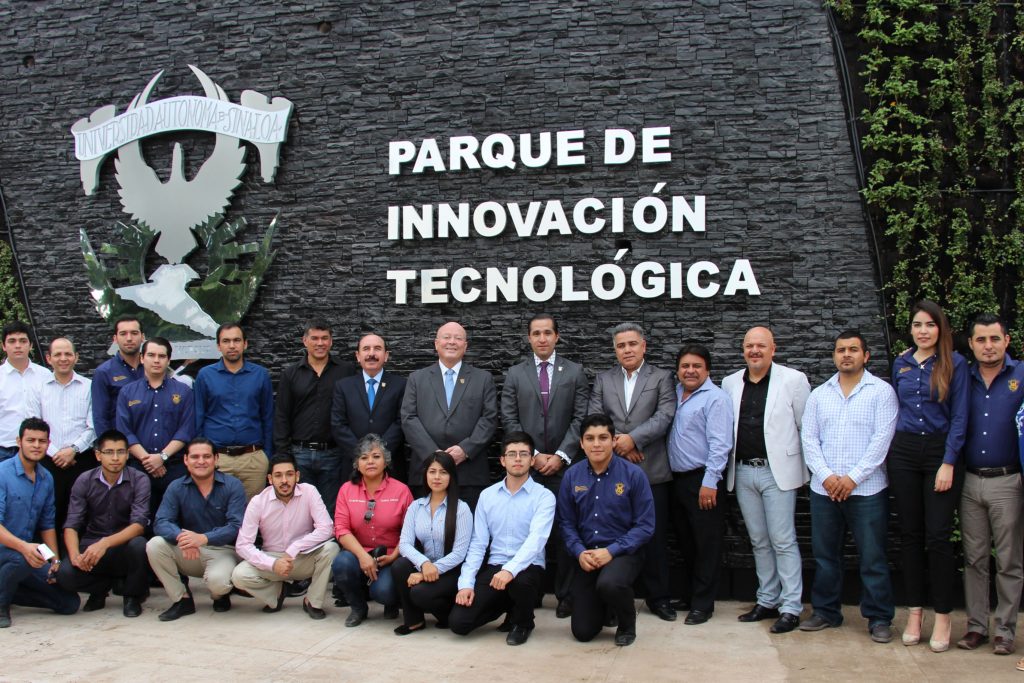
The Rector of the Autonomous University of Sinaloa (UAS, Universidad Autónoma de Sinaloa), PhD Juan Eulogio Guerra Liera, visited today the facilities of the Technological Innovation Park (PIT, Parque de Innovación Tecnológica) in order to announce to professionals of the media the PIT-UAS’ recent incorporation to the International Association of Science Parks and Areas of Innovation (IASP), formalized on September 24th this year in Beijing (China) during the 32nd IASP World Conference. Guerra Liera specified that the UAS is «… the fifth Mexican member joining [to the IASP], the third of the republic’s northwest and the first public university that is included in this network of technological parks; the four others are private institutions, so the UAS becomes the first state public university». This will allow, assured, developing future projects, contributing to the country’s economic development, fomenting technological advances, innovation, innovative spirit, as well as knowledge transfer. In the same context, he claimed that the University, through its Innovation Park, is going to have «… an international visibility, with which will count on the possibility of working with international agents, either in these projects or also getting funding so we can materialize the proposals we have here». Additionally, during his intervention, MBA José Ramón López Arellano, PIT-UAS’ Director, when asked about the University’s objectives after its incorporation to the IASP, expressed that the most important is strengthening two of the objectives the Rector includes in the Plan of Institutional Development Consolidation 2017: internationalization and scientific research. PIT-UAS’ Director also said that, at federal level, it has been given «… the importance to universities so that they act as agents of change in economic development matters». And asseverated that there are countries that have been working in this for years, as China, the United States and Germany, nations which show a greater interest on the development of technological parks, through which they seek that their universities cause an economic impact in their societies. López Arellano concluded by saying that in a national context and in alignment with the institutional project managed by the UAS’ Rector and with the goals devised to be achieved in 5 or 10 years by this Park, it is very important the UAS’ integration to the IASP and, even more, «… in the representation we have as university». In this event, carried out in the Park’s Hall of Videoconferences, the UAS’ Rector was accompanied by MBA José Ramón López Arellano, PIT-UAS’ Director, MS Manuel de Jesús Lara Salazar, UAS’ Secretary of Finances and Administration, and BL Ramón López Hernández, UAS’ Director of Human Resources. After the press conference offered by the maximum authority of this University, the Director of the PIT-UAS gave a tour to the visitors, during which were explained the current activities realized within the Park, in areas as Projects Development, Laboratory of Educative Technologies, Prototypes Workshop, Smart Eco-Park, among others. Written by Moroni Arellano (Communication and Diffusion, PIT-UAS), translated by Belem Ruiz (Edition and Communication, PIT-UAS).
PhD in Physics, UAS’ researcher Ildefonso León Monzón, in search of the next God particle
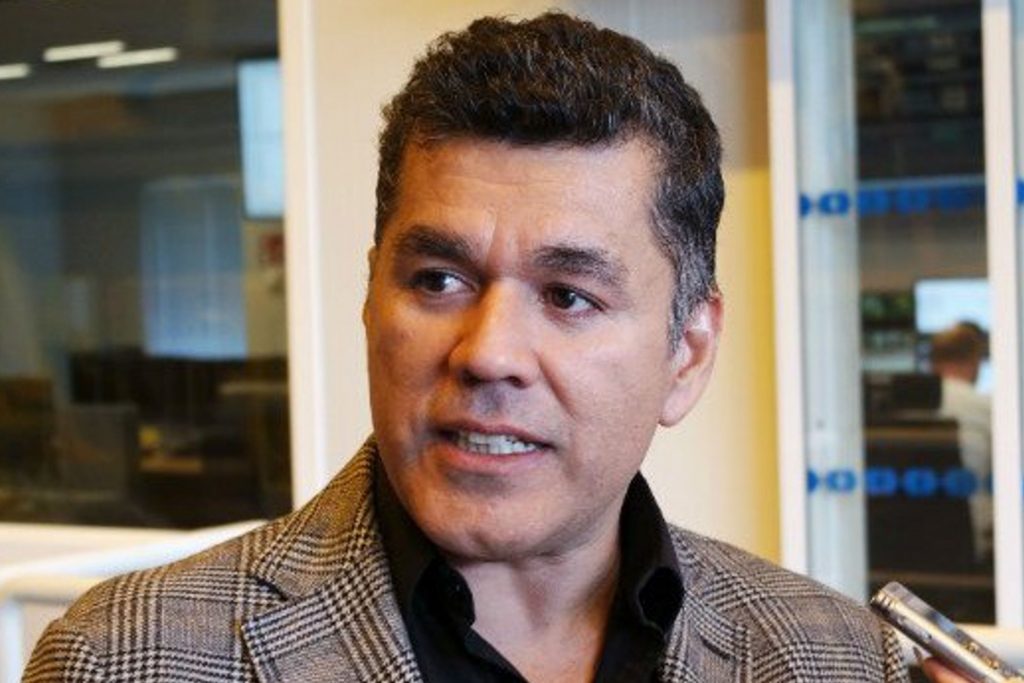
The Mexicans in the European Organization for Nuclear Research (CERN, Centre Européen pour la Recherche Nucléaire) There are 66 Mexicans registered in the CERN, coming from the Center for Research and Advanced Studies of the National Polytechnic Institute, the National Autonomous University of Mexico, the Autonomous University of Puebla, the Autonomous University of Sinaloa (UAS), the Ibero-American University and the Autonomous University of San Luis Potosí. Also, 33 Mexican researchers employed by foreign institutions. Most of the compatriots work on the experiments of ALICE (A Large Ion Collider Experiment) and the CMS (Compact Muon Solenoid), which analyze the activity and the results thrown by the hadrons collider. The façade of ALICE’s facilities resembles a great hangar. Inside, we are received by the PhD in Physics Ildefonso León Monzón, researcher both in the UAS’ Faculty of Physics-Mathematical Sciences and the CERN. Ildefonso León: “The Universe: a perfect liquid” The UAS’ researcher explains the labor in this experiment: «The intention is to recreate the first Bing Bang instants, is part of ALICE’s main motive». León Monzón clarifies that ALICE was not involved in the discovering of the Higgs boson, but this area is crucial to know what the Universe is made of. «Since 2008 we began registering data, and we reached to the conclusion that the system (Universe) does not behave as a gas, but as a liquid, a perfect liquid», complements León, who also emphasizes the hadrons therapy as an important contribution of the CERN, as instead of throwing X rays to a cancerous cell, «we send hadrons (protons or neutrons); then, with this technique it is guaranteed that when a particle is sent to hit in a determinate position, precision is much more higher». The researcher adds that the discovery of the Higgs boson was useful to verify something already known. But the teams also work in order to discover new particles. «Science is unexpected. When something we expected happens, it may be boring and senseless. We hope a revolution in science and physics». Source: Francisco Muciño, «The Mexicans who search the next God particle», in Forbes Mexico. Translated by Belem ruiz (Edition and Communication, PIT-UAS).
Are concluded courses about drills developing at the PIT-UAS
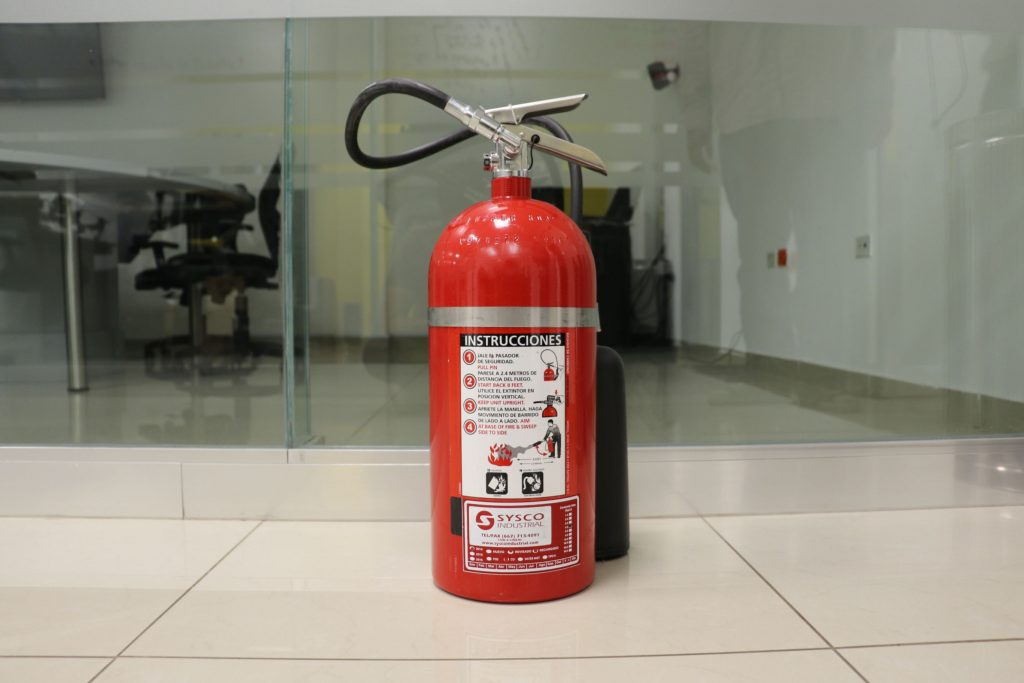
On Thursday 5th and Friday 6th of November, were imparted the courses First Aids and Correct Usage of Firefighting Equipment, which were on charge of personnel from the municipal unit of Civil Protection, Mexican Red Cross and the H. Squad of Volunteer Firefighters from Culiacán; collaborators from distinct areas of the Technological Innovation Park (PIT) of the Autonomous University of Sinaloa (UAS) attended to the workshops, which were carried out in the PIT-UAS’ Training Room. Through theoretical and practical sessions the attendees were trained so they could later share with their colleagues the learned techniques and knowledge, besides applying them if necessary in case of disasters or eventualities related to the themes considered in the framework of the seminars. Some of the topics were: «Accurate Usage of Extinguishers», «Wounds and Hemorrhages», among other themes of vital importance for the personnel training. These two courses about first aids and fires were imparted because of the petition made by the PIT-UAS’ General Direction, with the objective of complying with a fundamental goal of the Annual Operative Plan, denominated «Drills Development», for the benefit of the workers of this university innovation and research center. Both trainings make patent the Park’s commitment of operating in strict adherence to existent regulations in the matter of protection and assistance facing certain eventualities, as well as ensuring the safeguarding of human and material resources belonging to this university complex . Written by Moroni Arellano (Communication and Diffusion, PIT-UAS), translated by Belem Ruiz (Edition and Communication, PIT-UAS).
The Director of the PIT-UAS participates in the Symposium on Intellectual Property and Innovation of the UASLP
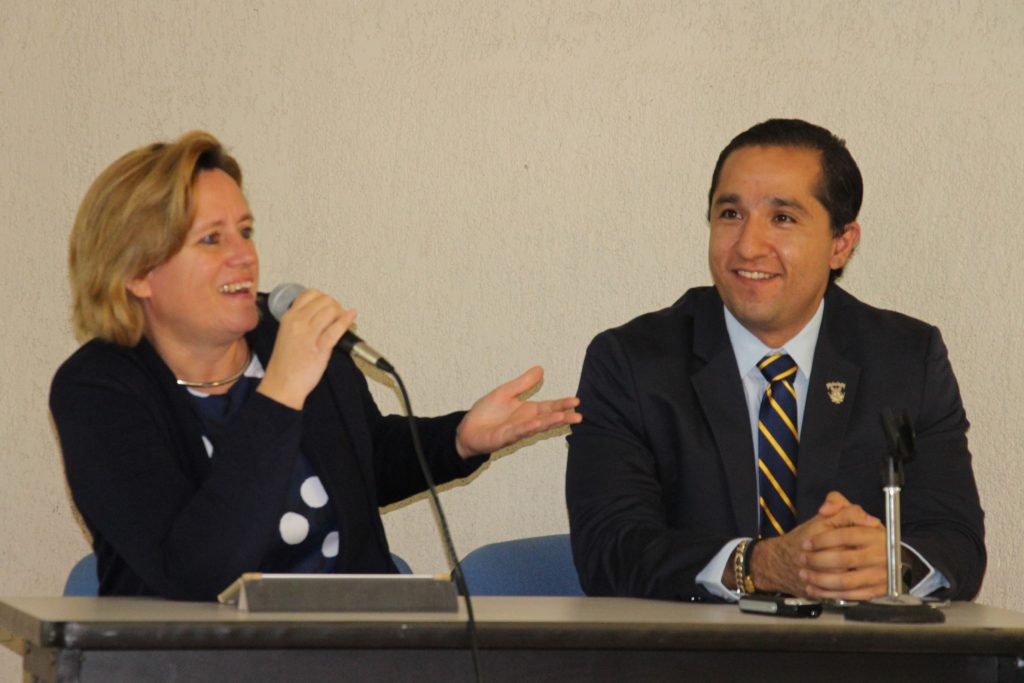
Within the framework of the 30th Week of Engineering organized by the Faculty of Engineering of the Autonomous University of San Luis Potosí (UASLP, Universidad Autónoma de San Luis Potosí), the Director of the Technological Innovation Park (PIT, Parque de Innovación Tecnológica) of the Autonomous University of Sinaloa (UAS, Universidad Autónoma de Sinaloa), MBA José Ramón López Arellano, participated this Friday 30th of October in the Symposium on Intellectual Property and Innovation of the UASLP, with the presentation «Development and functioning of innovation parks». It is worth mentioning that the Week of Engineering of the UASLP is product of students and school authorities’ effort, consists on the organization of a series of academic, sports and cultural events that involve the 14 careers imparted at the UASLP’s Faculty of Engineering, counts on over sixty activities: conferences, talks, competitions, expositions, panels, seminars and courses. Architect Manuel Fermín Villar Rubio, UASLP’s Rector, emphasized the level reached by the Faculty of Engineering since its founding to date and assured that the celebration of the 30th Week of Engineering was a motive of great enthusiasm for the UASLP. In this vein, also underscored the contribution made by the generations of graduated engineers, how they have contributed to improve life, social welfare and progress. Besides his intervention with the aforementioned conference, López Arellano had part in a discussion panel on themes referent to technological innovation parks, joint with PhD Lydia Raesfield, who serves as Director of the Scientific and Technological Park of the Autonomous University of Hidalgo State. In this event also were exposed the problems Mexican scientific parks have had to deal with as part of their development; likewise, the Directors detailed the actions they are making in their areas in order to solve such barriers; by last, they shared their institutions’ plans on short and long terms. López Arellano claimed that it is foreseen to create an alliance between universities that permits to make the most of specialization areas of each one of them, so that the impact can be both regional and national. Through its participation in such national thematic network in the applied research area and its contributions for the development of other scientific parks, the UAS will be in conditions of assuming a leadership position, thanks to the accomplishment of the axis 1 (Teaching, Educative Quality and Innovation) and 3 (Linkage and Extension) of the Plan of Institutional Development Consolidation 2017, relative to the promotion of this type of scientific and linkage activities, which purpose is to increase the quality of training and the university community performance, so that the socioeconomic development of Sinaloa and Mexico can be fostered. You can also listen to the interview with the PIT-UAS’ Director after his visit to the UASLP, by clicking here (spanish). Written by Moroni Arellano (Communication and Diffusion, PIT-UAS), translated by Belem Ruiz (Edition and Communication, PIT-UAS).
Students from the Faculty of Informatics visit PIT-UAS’ facilities
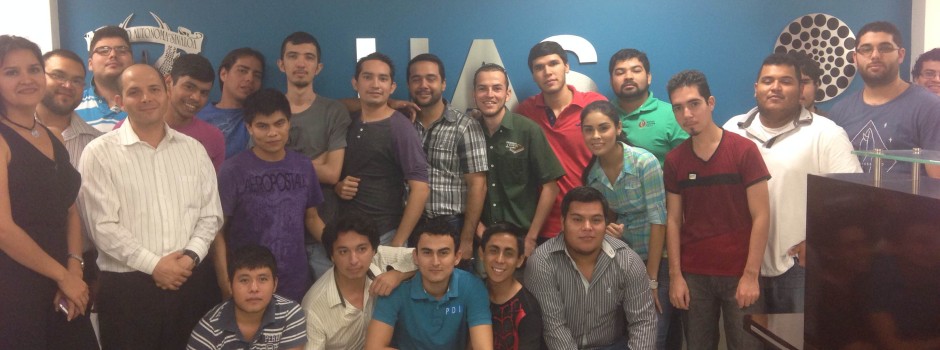
A group formed by around thirty informatics students of the fourth grade visited the facilities of the Technological Innovation Park (PIT) of this University, they are current students at the Faculty of Informatics, Campus Culiacán, belonging to the Autonomous University of Sinaloa (UAS). The visitors were received by PIT-UAS’ collaborators, who showed to the students each one of the areas within the Park, besides explaining them the objective and the functioning of such university organism of technological innovation and development. Thus, before beginning with the guided tour, there was an exposition in the Videoconferences Hall, which purpose was making known to the young visitors the Park’s projects proposals (nowadays are 14), in addition to the innovative projects currently in development at the PIT-UAS. As part of the tour, were shown the areas: Projects Development, where they had the opportunity of knowing about the research by Rubén Quintero (Engineering in Telecommunications, Systems and Electronics student at the aforementioned Faculty of Informatics), which purpose is the generation of pulses for the transmission of ultra-wide-band signals on optical fiber; Robotics Laboratory, where they met the amusing humanoid robot Nao and were shown hardware and software used in haptic and teleoperation researches directed by the doctor in Robotics Ulises Zaldívar; 3D Printing, where they could see the PIT-UAS’ equipment for 3D modeling and printing, as well as some pieces printed at the Park; among other departments. MSc IT Rogelio Prieto, one of the Park’s Operative Coordinators, pointed out that this university unit is focused on the strengthening of Sinaloa’s technological capabilities in essential fields of knowledge, thanks to the strategic transversal platform that represent the information and communication technologies. In addition to the above, complying some of the Park’s functions, the student were invited to participate in the development of projects, as well as to subscribe them through the PIT-UAS. This, with the objective of acting as an agent for linkage, training and specialization of university human resources. Written by Moroni Arellano (Communication and Diffusion, PIT-UAS), translated by Belem Ruiz (Edition and Communication, PIT-UAS).
Guided visit to students from the UAS’ PhD Salvador Allende High School
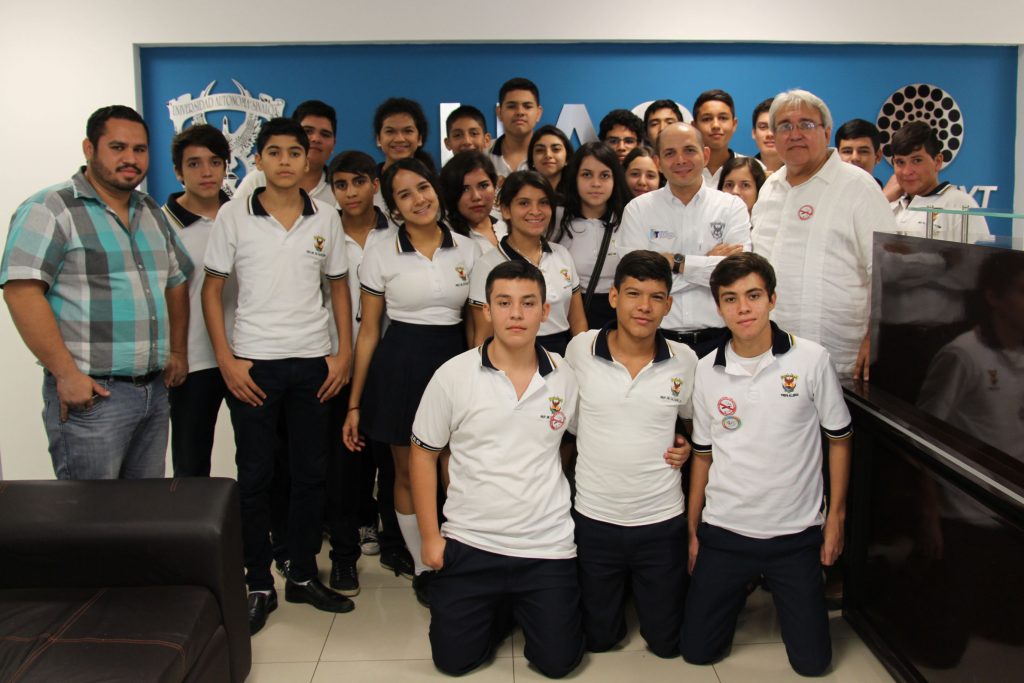
Within the framework of the 22nd National Week of Science and Technology of the National Council of Science and Technology (CONACyT, Consejo Nacional de Ciencia y Tecnología), students from the academic unit PhD Salvador Allende High School of the Autonomous University of Sinaloa (UAS, Universidad Autónoma de Sinaloa) visited the facilities of the Technological Innovation Park (PIT, Parque de Innovación Tecnológica) with the purpose of knowing the different Park’s areas where a wide variety of multidisciplinary projects can be developed. The group was integrated by around forty students, who were divided in two different groups, on charge of the professor Emigdio Urrea. The young visitors were received by one of the PIT-UAS’ operative coordinators, MSc IT Rogelio Prieto Alvarado, who at the beginning talked to them about the objective and the functions of this university organism, in order to later begin a guided tour by the facilities. First were shown the areas of Projects Development, Robotics Laboratory, 3D Printing, among others. In such points, was explained to the students, are facilitated both spaces and expert attention by researchers, for the training that may be necessary during the current researches taking place at the PIT-UAS. In the course of the students’ visit, which was used to invite them to participate in the development of projects and its subscription through the Park, Prieto Alvarado outlined that the PIT-UAS is focused on the strengthening of Sinaloa’s technological capabilities in essential fields of knowledge, from the strategic transversal platform represented by the information and communication technologies. Thus, this university research center makes its contribution to 2015 edition of the National Week of Science and Technology, one of which objectives is precisely awaking the interest by scientific and technological disciplines among children and youth, through the approach of this particular public to the different actors of science and technology in our country (scientists, popularizers, researchers, entrepreneurs, technologists and authorities). Written by Moroni Arellano (Communication and Diffusion, PIT-UAS), translated by Belem Ruiz (Edition and Communication, PIT-UAS).
Is concluded the course Mouth, Gut and Health: An Interdisciplinary Journey, imparted by Juliano Morimoto Borges
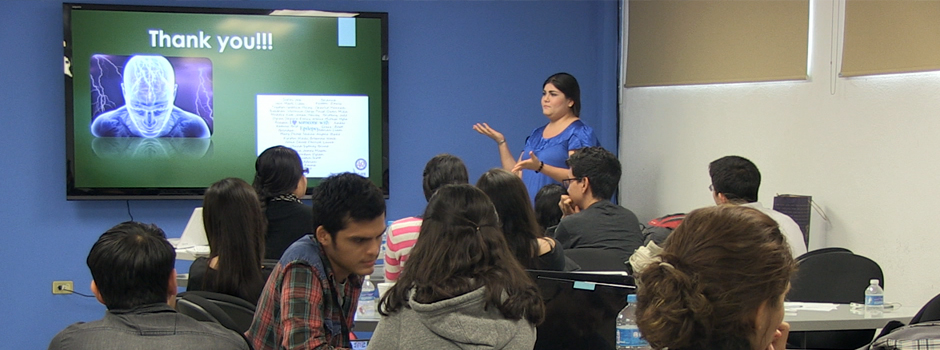
The workshop had the participation of over forty university students from schools and faculties of the Autonomous University of Sinaloa (UAS, Universidad Autónoma de Sinaloa), belonging to health areas. The course imparted by the PhD student at the University of Oxford Juliano Morimoto culminated this Friday, it was carried out in the facilities of the Technological Innovation Park (PIT, Parque de Innovación Tecnológica) of the UAS, from October 5th to 9th this year. The seminar Mouth, Gut and Health: An Interdisciplinary Journey was well received by the attendees, who with great interest received the knowledge transmitted by Morimoto about interdisciplinary thinking. For his part, the speaker from the British university considers that, at the end, thanks to the feedback, he and the students acquired new knowledge. In addition to the impartation of this course, the Brazilian PhD student also had sessions of academic exchange with a University’s medical research body, due to which Morimoto Borges supposes feasible the development of a joint project: «I hope so. I really enjoyed the faculties, the University, and I long to develop interdisciplinary projects in collaboration with the UAS». Likewise, he used his stay in Culiacán to know different faculties of the University. About this experience, he commented: «It was profitable. I tried to connect with diverse faculties of the University and to get collaborations with them, it was really good to see what each faculty is doing, the researches that are being developed at the UAS». Once finished his academic stay in our University during his first visit to the country, Morimoto Borges got a good impression of the State’s capital city and hopes this to be barely the first of many others visits: «I loved Culiacán. I wish to come back, I hope to come back next year, give a course again or interact another time with the University. And I hope this to be the beginning of a perdurable relation of collaboration with the UAS». Written by Alfredo Careaga (Communication and Diffusion, PIT-UAS), translated by Belem Ruiz (Edition and Communication, PIT-UAS).
The importance of an interdisciplinary perspective in public health. An interview to Juliano Morimoto Borges

How did the idea of giving this course at the Autonomous University of Sinaloa (UAS) come up? At the beginning, when I was studying as an undergraduate at Brazil, we had a project, which was an interdisciplinary project to improve public health. And, well, I decided to increase the scale of this project to include Latin America, not only Brazil, but also other countries; because I think sometimes Latin America is a forgotten continent, we sometimes don’t care about our own continent. And why these topics: mouth, gut, health? Because I think the mouth and the gut are very related, and studies have being showing this more and more, that they’re more related to our health. So, if you spot imbalance in either mouth or gut microbiota, you can actually treat the disease better or you can identify the disease better, and find ways to treat that thing. So the subject of the course is that it aims to give the students this idea that you have to treat not only the disease, so if you have one bacteria it means you have a disease: that’s not true. So the idea of the course is to broaden the view of the students in this sense. Could you tell us about what the UAS’ students will learn in your course during this week? The course is structured in theoretical and practical parts. In theoretical parts, I’m gonna give the students a brief background —because they come from different disciplines, psychology, dentistry and so on— on basic things like bio-chemistry, carbohydrates, the structure of proteins… until we get to microbiota in general. And then we’ll have the practical parts of the course, in which the students will develop the interdisciplinary thinking —and that’s the part of the course where it will blow up, in a sense—, the students will develop things they’re not usually trained to develop. So, your idea is to teach the students how to make a correct analysis? No, not necessarily a correct analysis, but to look at the problem in a different way. So, if you have a bacteria, for example, it doesn’t mean that you have a disease: that’s the holistic view. The holistic view tells you: “Okay, you have a bacteria, but what are the other factors that contribute?”. You have beneficial bacteria, they can balance the presence of detrimental ones; sometimes actually the beneficial bacteria is the same that causes the disease. You give a lot of importance to this interdisciplinary perspective, why? Yes, I do. So, the idea of the course is to make the students think in an interdisciplinary way. And I think that’s what makes a difference when you, for example, if you are a doctor, when you go and treat a patient, because you see the patient in a holistic way, not necessarily as: “Oh, I’m gonna prescribe a pill or something that will treat the problem and that’s it”; so, if that pill that you prescribed had other effects —and not necessarily symptom effects, you can have psychological effects— that you might not be aware of, and if you had an interdisciplinary holistic view, then you could start considering these things, and how can they affect and how can you improve these things. What’s the main result you’re aiming through this course at UAS? Is to show the students the importance of interdisciplinary thinking. We’re gonna have students from psychology, dentistry… they don’t usually interact in a normal way, which they’re gonna be forced to in this course. The aim is to develop this interdisciplinary thinking in the students and that kind of researching. But that kind of thinking is not how the normal academy functions… Yes, so, when you study only, for example, chemistry, you know how to solve problems in chemistry and you look all the problems in a mindset of a chemist. The idea of the course is to make students think outside of that comfort zone they’re in and to consider other inputs. So, I am a chemist, I have this problem which affects public health: “How can I tackle that problem with the knowledge that I have? But how can I consider looking at this problem with a different tool that comes from psychology?”, for example. Do you provide the correct tools to change that? Well, the tools are developed by yourself: that’s the beauty of interdisciplinary research. We never know when we’re gonna have to adopt or bring a tool from a different discipline for the problem we have. So, is not like the recipe of a cake that you have: add flour and butter, and so on. Is when you have a problem and you start talking to people from different fields that you actually come up with the idea: “That looks similar to my problem, can I apply those methods that they use in economics to the problem that I have in biology?”. And that actually has led to a lot of developing within biology. Written and translated by Belem Ruiz (Edition and Communication, PIT-UAS).
PIT-UAS’ Director imparts conference in the National Week of the Entrepreneur
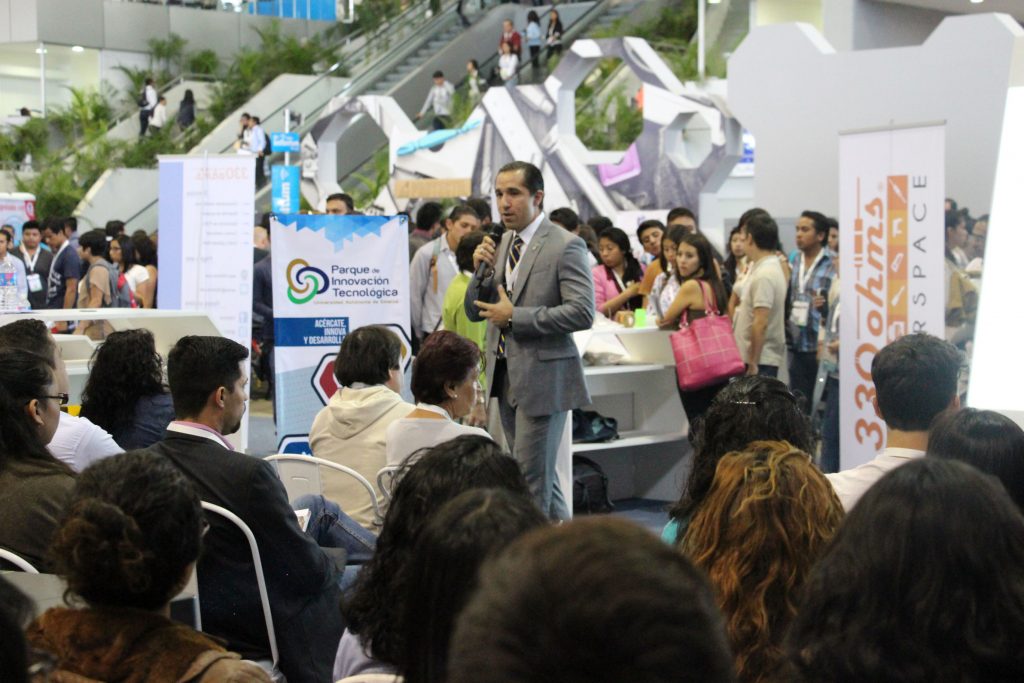
Mexico City. Within the framework of the third National Week of the Entrepreneur (SNE, Semana Nacional del Emprendedor), which is organized by the Government of the Republic through the National Institute of the Entrepreneur (INADEM, Instituto Nacional del Emprendedor) and the Secretariat of Economy, was imparted the presentation titled «The advantages of technological innovation parks by integrating as makerspaces and their contribution to national development», by the Director of the Technological Innovation Park (PIT, Parque de Innovación Tecnológica) of the Autonomous University of Sinaloa (UAS, Universidad Autónoma de Sinaloa), MBA José Ramón López Arellano. Such participation took place in the expositions forum of the Innovation Area’s Maker Section in the SNE, was attended by business owners and entrepreneurs of all ages and from different parts of the country. López Arellano talked about PIT-UAS’ objectives, which consist in promoting Sinaloa’s development via the strengthening of its technological capabilities, by providing knowledge essentials from the strategic transversal platform that are the information and communication technologies. He pointed out that this helps to promote regional economy’s productivity and competitiveness, given that contributes to knowledge generation, as well as to produce, apply and integrate technologies’ knowledge oriented to the solution of problems in our surroundings. As main theme, he mentioned that the PIT-UAS is aligned to the Plan of National Development, the State Plan of Development and the Plan of Institutional Development Consolidation 2017, which emphasize the importance of generating scientific, technological and innovational development, pillars for the socioeconomic progress. Besides, photographs of the PIT-UAS’ facilities were shown to the attendees, settlements where business owners and entrepreneurs can develop their projects under the tutelage of diverse renowned researchers and through the faculties of higher level. In this way, by making business owners and entrepreneurs of the whole nation know that thanks to the services it offers the PIT-UAS progresses in the innovation and the technological developments that favor a higher development level for the country and society in general, there is a contribution so this unit of our University can be nationally identified as an ideal space for hosting and developing enterprising projects of high impact. The foregoing, for benefit of the national progress and as a contribution to the institutional prestige, impact and growth of the UAS. Written by Moroni Arellano (Communication and Diffusion, PIT-UAS), translated by Belem Ruiz (Edition and Communication, PIT-UAS).