PIT-UAS, present at the inauguration of the GeT-In linkage program
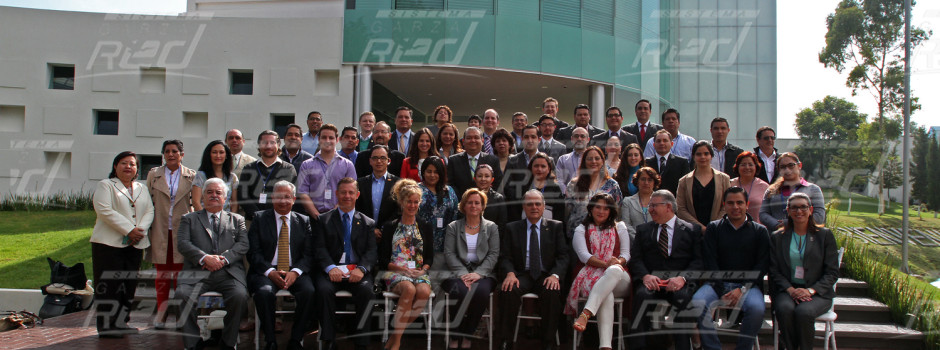
Pachuca de Soto, Hidalgo (Mexico). With the presence of over forty public and private universities, national and foreign, Humberto Veras Godoy, Rector of the Autonomous University of Hidalgo State (UAEH, Universidad Autónoma del Estado de Hidalgo) and President of the Consortium of Mexican Universities (CUMex, Consorcio de Universidades Mexicanas), inaugurated the GeT-In, Intensive Program of Professionalization for Linkage Managers from Higher Education Institutions in Mexico. This program has the objective of reducing the existent technological gap between the institutions and their economic and social environments, through exchange with experts from other countries and the knowledge of best practices in Germany; and, this way, benefits the units of linkage, knowledge and technology transfer, as well as research, internationalization areas from Mexican higher education institutions. In his message, Veras Godoy thanked by their presence to the representatives of different national universities, as well as to those from Germany, Spain, Costa Rica and Venezuela: «… it is an honor that all of you are here participating in an effort that provides a sample of what the linkage and the sum of wills mean». He recognized the work that Lydia Raesfeld, Director of the Scientific and Technological Park of the maximum house of studies, has made for this project, which at the beginning started with the University of Münster, in Germany, the starting point for this series of projects. The Rector of the UAEH thanked the support of different organizations, such as the National Council of Science and Technology (Consejo Nacional de Ciencia y Tecnología), the National Association of Universities and Higher Education Institutions (Asociación Nacional de Universidades e Instituciones de Educación Superior), the CUMex and the German Academic Exchange Service (Deutscher Akademischer Austauschdienst), which fund this project: «GeT-In has benefited many public and private institutions from the country and abroad, and today we have the evaluation of the first group of projects, which were presented last year, as well as those I have just known, and in everyone I can perceive the emotion, passion with which they have been constructed». He alluded the program’s success and also his wish that in this second phase excellent results may be obtained: «During two days will be shared a series of experiences and agreements that will benefit its institutions and students». He exhorted those present so they give their best effort as a part of the GeT-In, and to work with their characteristic quality, respect and vision. At her intervention, the Director of the Scientific and Technological Park of the UAEH, Lydia Raesfeld, expressed her pleasure by observing the first group of 25 specialists that participated in GeT-In, who will present the book edited by the UAEH GeT-In 2014: Experiences of an Intensive Program of Professionalization for Linkage Managers from Higher Education Institutions (GeT-In 2014: experiencias de un programa intensivo de profesionalización de gestores de vinculación de instituciones de educación superior). She appreciated the joint effort of the UAEH, the Kassel University and the Brandenburg University of Applied Sciences to carry the activities out: «Many tasks wait for us today, creating bonds and sharing experience, setting the basis for a technology transfer network». In her turn, the researcher from Kassel University Rosalba Badillo Vega pointed out that GeT-In is a professionalization program so the experts on linkage within the universities may specialize in a better way through phases like: Evaluation Meeting of GeT-In 1 and GeT-In 2’s Kick-off; Coaching Online, a general introduction to participants and the first round of individual training online; Attendance Course, which is realized during ten days in Germany; Coaching Online, a second round of training online and the general evaluation of the attendance phase; by last, the Evaluation Meeting of GeT-In 2 and Thematic Network. She emphasized that the labor of each one of those present is the leading thread of GeT-In and their projects will be the means to impulse thematic networks among participants, experts and involved institutions, so within the international frame can be strengthened discussion groups interested in developing more effective linkage mechanisms between higher education institutions and productive sectors. «Thanks for trusting that we can make something so technological transfer can improve in your universities». During today and tomorrow, at the Business Center, located in the University Extension Center, will be held presentations, workshops and working groups with topics as: The German Innovation System and its Knowledge Networks, imparted by Bettina Burger-Menzel from Brandenburg University; workshop University-Enterprise Relations: Challenges and Opportunities, in charge of the researcher from the University of Münster Victoria Galán; workshop Intellectual Property, by Angélica Silis from the Mexican Institute of Intellectual Property; workshop Thinking-Out and Innovation, given by the researcher Luis Jiménez from the University of Costa Rica; among other activities. Source: Department of Communications UAEH. http://www.uaeh.edu.mx/comunicacionsocial/noti.php?noboletin=1880. Translated by Belem ruiz (Edition and Communication, PIT-UAS).
Vertical gardens, beyond the landscape

In addition to its esthetic value, a vertical garden (or green wall) has the ability to improve the environment within buildings by reducing the noise and temperature changes; besides, the plants it holds absorb atmospheric pollutants and may turn into bird’s perching and feeding places. These gardens and green rooftops are called urban naturation systems and its installation objective is to improve the appearance of the constructions and bring to them the «green» idea, related with environmental sustainability. Due to the importance these green areas have for the environmental balance, the World Health Organization recommends from 9 m2 to 16 m2 of them per resident in metropolis; despite this, Mexico City has an average of 5.3 m2. «This deficiency has implications for the welfare of individuals, since the interaction with those spaces reduces anxiety and depression», affirmed Saraí Montes, researcher at the Institute of Ecology (IE, Instituto de Ecología) of the National Autonomous University of Mexico (UNAM, Universidad Nacional Autónoma de México). Before this situation and the lack of spaces, vertical gardens would be a suitable element to improve residents’ welfare, because they function as an acoustic barrier by simulating a mattress which isolates the noise, mainly due to substratum’s porosity (layer of soil) and plant’s foliage. With an appropriate combination, 100% of isolation may be reached; this could be an option for the residents of municipalities near the International Airport of Mexico City, added. Another of its advantages is the absorption of contaminants through leaves’ stomata: «These small pores allow the exchanging of carbon dioxide (CO2), oxygen (O2), water steam and the entrance of contaminants as nitrogen dioxides, derived from combustion». If these spaces are arranged facing each other, they generate a tunnel where the air recirculates by the leaves of the plants; so, the absorption of contaminants is potentiated. In addition, green walls favor the presence of birds, sparrows and starlings, which use these systems for their nests and to feed from the insects. Jorge Escutia, also a biologist at the IE, considered relevant to incentivize in naturation systems the usage of native flora, as well as to sensitize owners and observers about phenological changes of the plants, that is, they won’t always have the same green appearance or foliage, «which is why we should appreciate the seasonal aspects and also those of growth». Since 1988, vertical gardens have covered European areas, thanks to the patented technique of Patrick Blanc, French biologist who applied his knowledge in botany for the creation of monumental spaces. On that basis, Ulises Martínez, graduate from the Faculty of Engineering, undertook the commercialization of green walls through the enterprise Integral Naturation (Naturación Intergal), incubated at InnovaUNAM and partially funded by the National Council of Science and Technology. It is linked to the Chapingo College of Postgraduates and the IE, where Saraí and Jorge collaborate. As a result of this association, two gardens have been installed in the university entity, one with native plants from the Mexico Valley and another, experimental, which supports the development of a master thesis. With the first one, improvements are expected by making the system less expensive, selecting appropriated species for outdoor and indoor gardens, and also by designing and testing substrata and nutritional formulas, detailed Martínez. That vertical garden’s installation consisted on an iron frame on which was fixed a waterproof plate made of plastic and recycled aluminum, which isolates and protects the wall from moisture. Two layers of geotextile, a plastic fabric which allows the growth of roots and water filtering; finally, there was placed a mixture of substrata which provides humidity retention, as well as good drainage and support to the root. By last, he commented that this is an example of how university people may generate business and work in collaboration with other professionals in order to resolve technical aspects of naturation systems. Source: El Occidental journal. http://www.oem.com.mx/eloccidental/notas/n3641124.htm. Translated by Belem Ruiz (Edition and Communication, PIT-UAS).
Children learn and have fun during the talk-workshop and demonstration about haptic and teleoperation
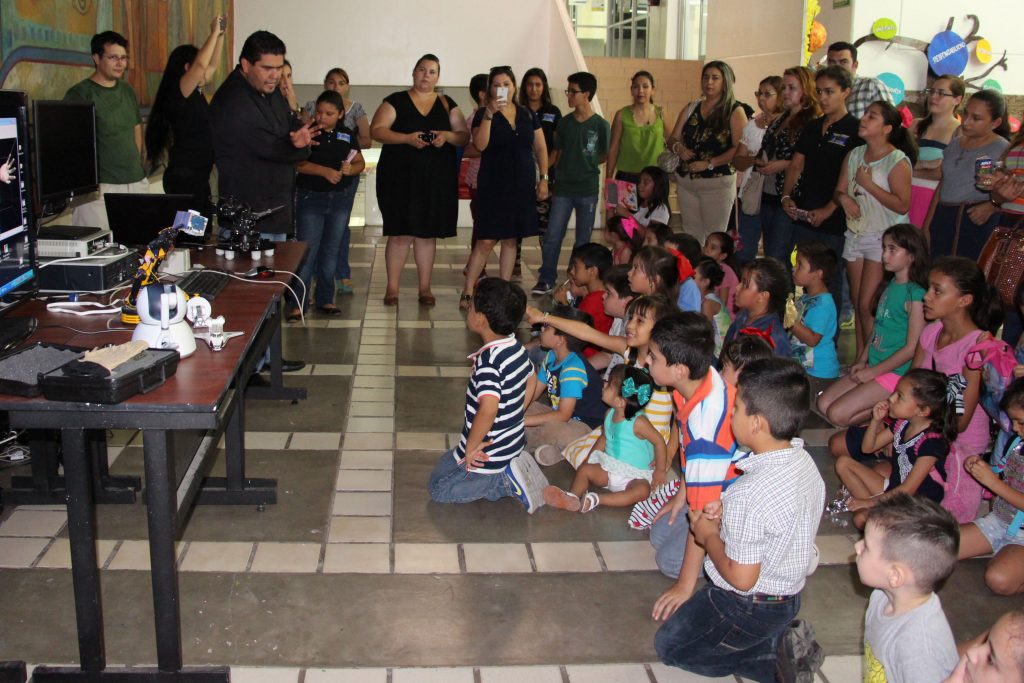
On Thursday 2nd of July, tens of kindergarten and elementary school children, accompanied by their parents, attended to a talk-workshop about some of the robotic and virtual reality tools astronauts use in the outer space, which was on charge of Ulises Zaldívar, PhD in Robotics by the University of Versailles and full-time researcher at the Technological Innovation Park (PIT, Parque de Innovación Tecnológica) of the Autonomous University of Sinaloa (UAS, Universidad Autónoma de Sinaloa). This demonstration, Robotics as an Indispensable Tool in the Space Age, was part of the programed activities of the tenth edition of the summer courses My Vacations at the Library, which main subject this year was «Values in action: an adventure in the outer space» and are carried out by the UAS’ General Direction of Libraries and the University Welfare Unit. Gathered outside the facilities of the UAS’ Central Library, the attendees learned about haptic and teleoperation. PhD Zaldívar specified that teleoperation is a technique that, through the usage of robots, allows to realize everything from microscopic operations to remote operation, either in the same work area or kilometers away from the human operator; whereas haptic is a technology that, through force feedback, makes possible perceiving and interacting by the sense of touch with the elements that constitute a given virtual reality. MS Pául Tamayo and MS Silvestre Tamayo were attendants during the demonstration, both are current students of the Mastery of Sciences in Information at UAS’ Informatics Faculty and are elaborating their thesis directed by PhD Zaldívar; they also attend him within the PIT-UAS’ Robotics and Virtual Reality area, where they support Zaldívar in the development and application of his researches. The Tamayo brothers are respectively dedicated to the development of augmented reality techniques for the virtual assembly and to the research about a new strategy of teleoperation for robots that allow to integrate people’s natural movements, with the purpose of handle automatons. Supervised by Silvestre and Paúl, the children had the opportunity of employing the haptic interface Phantom, thanks to which the attendees confirmed that means for remote operation like this make easier the realization of specific actions because they make the interaction with virtual environments seem more natural or real through force feedback. On this subject, it is worth remarking the ability showed by the most little, in comparison to adults, to interact with the interface. The attendees also met Nao, a small interactive robot which, previous programming, introduced himself: «My name is Legabot, but everybody calls me Nao». Then, garnishing its interventions with gestures and movements that reinforced its words, the automaton had conversations with some children and adults from the audience. This way, amazed and very amused, when asked about its nationality, the infants heard Nao respond: «I am from France, but I feel a whole Mexican»; another question made to the robot was about its sentimental status: «No, I don’t have a girlfriend yet», replied Nao to one of the children’s inquiries. Thereby, in complement to the observation of the Universe through telescopes and a guided visit to the Sinaloa Science Center, among other activities of My Vacations at the Library, personnel of the PIT-UAS helped in the important task of making children know about science and technology applications in elementary spheres of human activities, with the objective of generating a first approach of Sinaloa’s children to these transcendent fields of knowledge, and thus awake in them an interest by such matters. Written by Moroni Arellano (Communication and Diffusion, PIT-UAS), translated by Belem Ruiz (Edition and Communication, PIT-UAS).
Students from FCFM and FCQB develop a 3D printer which will work with PET material
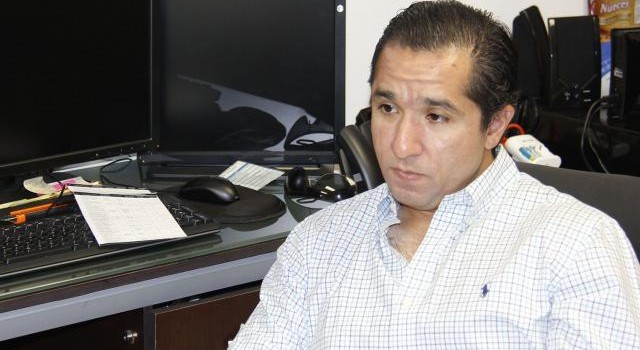
Students from the Autonomous University of Sinaloa (UAS) converge at the Technological Innovation Park with the purpose of developing the Automation System for the Process of Recycling Plastic Material for 3D Modeling and Printing, this was made known by José Ramón López Arellano, who explained that such system consists on a printer that functions with recycled polyethylene terephthalate (PET), which is a strong material, of light weight and clear polyester. The Director of the PIT-UAS indicated that these youths, whose idea is to generate this print, are current students of the degree in Electronics, from the Faculty of Physical-Mathematical Sciences (FCFM, Facultad de Ciencias Físico-Matemáticas), and from the Faculty of Chemical-Biological Sciences (FCQB, Facultad de Ciencias Químico-Biológicas). The university researcher detailed that this project also includes the raw material generation: «We’d be talking about the generation of two machines, one to produce the raw material and the other, the printed final prototype». By the end of the year, he said, it is planned to have the prototypes of these two machines, which would be in the conditions of waiting for some organism’s call, like the National Council of Science and Technology (CONACyT), to get the resources and to perfect such models. In this sense, López Arellano commented that the students are working during their free time on expressing the idea on paper, in order to have an updated sketch by the time calls from CONACyT or other organisms begin; nevertheless, he explained, there’s also work being done in the PIT-UAS’ laboratories for the modeling of such prototypes. The development of 3D techniques of print is an incipient area of the market, as well as the technological development of different methods, ways and complements in the matter, concluded José Ramón López Arellano. Source: Direction of Communications UAS. http://dcs.uas.edu.mx/index.php?sec=3&op=2&tipo=i&id_noticia=5797. Translated by Belem Ruiz (Edition and Communication, PIT-UAS).
With UAS presence, installation of the Connected Mexico Project’s Coordination Committee is performed
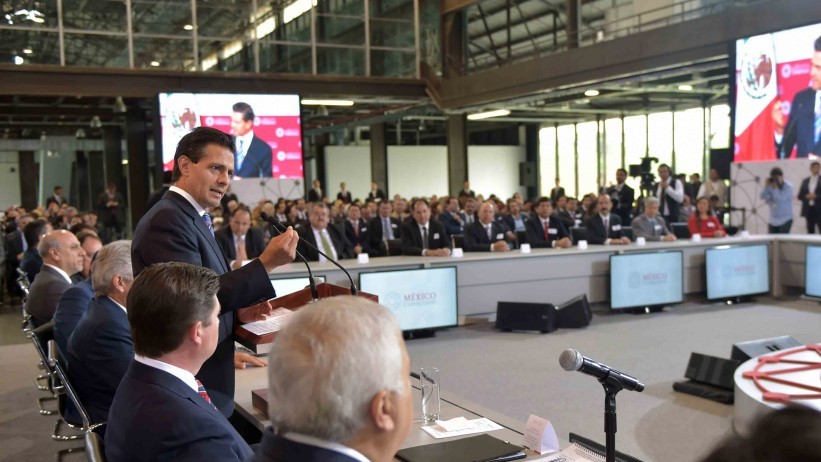
On April 6th, with the presence of the MBA José Ramón López Arellano, Director of the Technological Innovation Park of the Autonomous University of Sinaloa (UAS), on behalf of the Rector, PhD Juan Eulogio Guerra Liera, the installation of the Coordination Committee of the Connected Mexico Project (PMC, Proyecto México Conectado) was carried out in Nuevo León State. Thereby, Nuevo León becomes the 15th state joining to this federal program, which objective is to reduce the existent digital gap in the country, by promoting the free access to broadband internet service in schools, hospitals, clinics, libraries, community centers, governmental offices, parks, squares, among other public spaces. Coordination Committee’s installation, performed in the Exhibition Center Lewis Industrial Unit of the Fundidora Park —first public space benefited with free internet by the PMC—, was leaded by Enrique Peña Nieto, President of the Republic, and Rodrigo Medina de la Cruz, Governor of the Nuevo León State. Peña Nieto pointed out that up to today there are already 65 thousand public spaces connected to internet, of the 250 thousand the Constitution commands; it is intended to reach the objective of 100 thousand public spaces connected this year. He added that Mexico has reached a greater mobile internet connection, going from 21% to 40% regarding to population with access to this service. Besides, he claimed that his government works so the Mexicans can have the required solid tools to have access to information technologies, proof of this is that currently 47.4 millions of people can access to internet for free. At the event also were present the MPS Mónica Aspe Bernal, principal of the Coordination of the Information and Knowledge Society, instance responsible of operating the Project, from the Secretariat of Communications and Transportation (SCT, Secretaría de Comunicaciones y Transportes); Gerardo Ruiz Esparza, SCT’s Secretary; Emilio Chuayffet, Public Education Secretary; Alfonso Navarrete Prida, Work Secretary; university rectors, among others. This act is part of the efforts that contribute to guarantee the constitutional right to have access to broadband internet service, described in the sixth article of the Political Constitution of the Mexican United States. This way, the Federal Government’s interest on decreasing the existent digital gap in the country is demonstrated. Written by PIT-UAS’ Communication Team, translated by Belem Ruiz (Edition and Communication, PIT-UAS).
The PIT-UAS is part of the INADEM’s Innovation Network
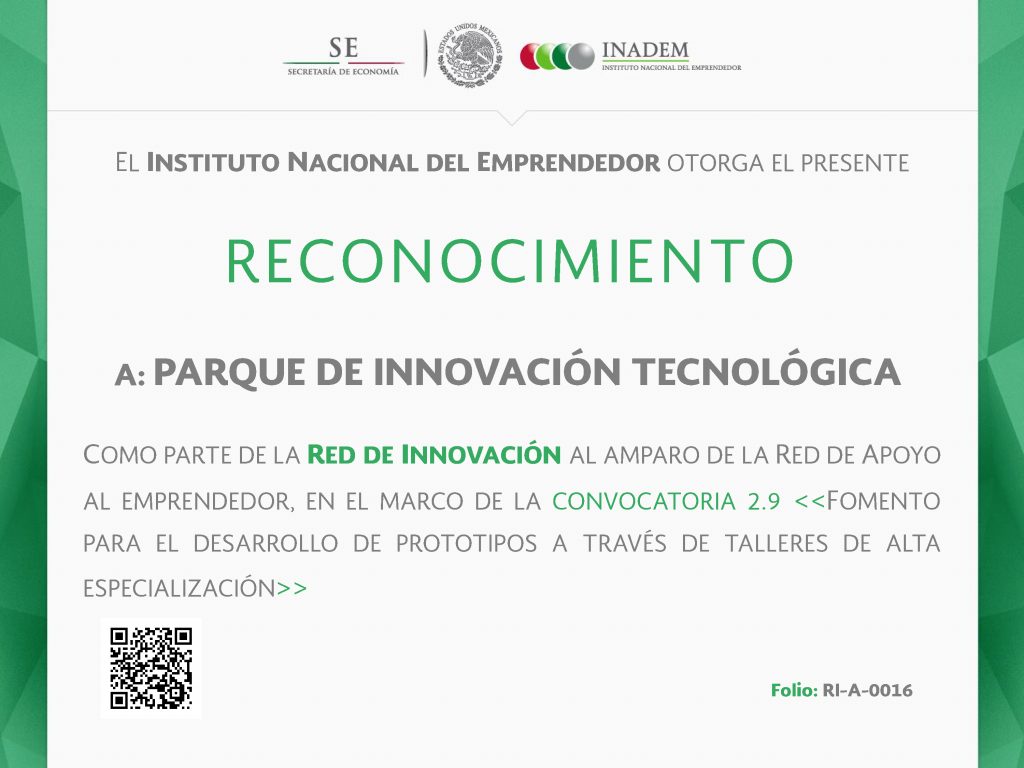
The Technological Innovation Park (PIT, Parque de Innovación Tecnológica) of the Autonomous University of Sinaloa (UAS, Universidad Autónoma de Sinaloa) is now part of the Innovation Network of the National Institute of the Entrepreneur (INADEM, Instituto Nacional del Emprendedor), which belongs to the federal Secretariat of Economy. This achievement of the Park provides to entrepreneurs the certainty and safety to request specialized resources with the guarantee of an educative institution. The Director of the PIT-UAS, MBA José Ramón López Arellano, assured that the laboratories on which the institution he presides counts are certified. Besides, he commented that the specialized calls and the linkage between enterprise and educative institution promote the work model known as triple helix, with what is given the possibility of developing projects that may be commercialized. López Arellano recalled that, in order to be part of this Innovation Network, the Park applied for the call launched by the INADEM named Promotion for the Development of Prototypes via High Specialization Workshops: «Thanks to our belonging to this innovation network, three enterprises from Jalisco, Chihuahua and Sinaloa have already approached to us, which projects proposals are focused on sustainable energy generation». He explained that the PIT-UAS does not only focus on software development, and that the University, as such, has different opportunity areas of knowledge: «All year long we are working in forming multidisciplinary teams, involving different faculties, and it is thanks to this that we have been able to form such teams». José Ramón López Arellano affirmed that PIT-UAS’ position in the State, the region and the country is due to the unconditional support given by the University’s Rector, PhD Juan Eulogio Guerra, with which it has been possible the adequate planning in almost a year of operations. Finally, he claimed that ranks are being closed in this path of innovation, with coordination and planning, in order to visit the faculties in the whole state, identify the opportunity areas and its strengths, so multidisciplinary teams of basic science can be joint with applied research. Source: http://dcs.uas.edu.mx/index.php?sec=1&op=2&id_nota=5617&tipo=i. Translated by Belem Ruiz (Edition and Communication, PIT-UAS).
PIT-UAS, present during the report about the advances on the reform of telecommunications and broadcasting, at Mexico City
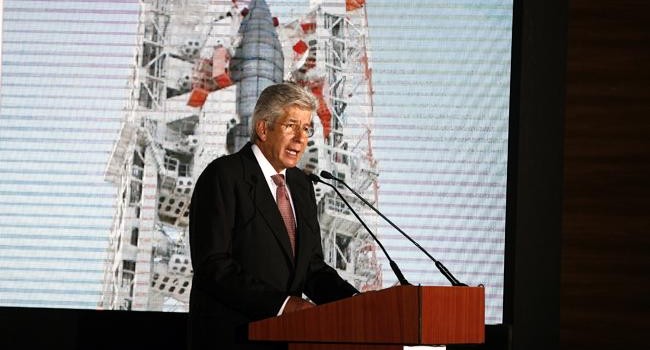
On behalf of the Rector of the Autonomous University of Sinaloa (UAS, Universidad Autónoma de Sinaloa), MBA José Ramón López Arellano, Director of the Technological Innovation Park (PIT, Parque de Innovación Tecnológica) of the University, went to Mexico City in order to witness the meeting which objective was to make known the advances on the reform of telecommunications and broadcasting. The reform, at almost two years of its promulgation: «… has managed to make world investors put their eyes on Mexico», according to Gerardo Ruiz Esparza, principal of the Secretariat of Communications and Transportation (SCT, Secretaría de Comunicaciones y Transportes). During the presentation of the advances on the reform of telecommunications and broadcasting, Ruiz Esparza expressed to sector’s entrepreneurs, academics and legislators that Mexico sets «as one of the countries with more opportunities for economic activities and development». With the reform «important new investments have been formalized for over six billions of dollars, from global quality firms, such as AT&T, Eutelsat and Virgin Mobile», detailed. He gave as a reference that recently the Organisation for Economic Co-operation and Development upheld that the regulation of telecommunications in Mexico is now significantly less restrictive, even placing itself below the average of member countries. In a video transmitted during the presentation, Thaddeus Arroyo, Director of AT&T Mexico, claimed that «good policies promote good investment decisions». Thus, AT&T’s acquisitions of Iusacell and soon Nextel are results of these reforms. In other topics, the SCT announced that on its website will be published the application for expressions of interest for the development of the shared network, wherewith its bidding will begin. The shared network of mobile services at wholesale implies an approximate inversion of ten billions of dollars for the next ten years, and it is the biggest infrastructure project on telecommunications. The government unit expects that, once liberated the 700 MHz band, more private investments will be attracted and internet coverage, mobile telephony and the quality of the services will be improved. Ruiz Esparza emphasized that «TV’s digital transition will be possible to realize thanks to the reform», and that by such constitutional mandate this must be achieved by December 31st of 2015. In favor Elimination of national long-distance. Portability of numbers within 24 hours. Eutelsat Communications acquired Satmex by 831 millions of dollars. Virgin Mobile began operations in Mexico, with an investment of 45 millions of dollars. AT&T invested 2.5 billions of dollars on the purchase of Iusacell and is planning to invest 1875 additional millions of dollars. On hold Scant advance on TV’s digital transition process, which must end by December 31st of this year, although there has been just one analog blackout. Shared network’s deployment should have started last year, but it was until November of 2014 that the SCT began with the field testing of the technology to be used on the 700 MHz band. Raise connectivity levels: there is chance of connecting 60 millions of currently unconnected users by 2018. Market, the most important factor for progress of the reform At almost two years from the promulgation of the reform on telecommunications, and one year of the new legislation, investments on the sector strongly obey the dynamic of international market, although new rules have facilitated the operations. There still a lack of crucial subjects for the sector, therefore, true effects could begin to be noticeable in a year, in accordance to specialists. Jorge Fernando Negrete, director of Mediatelecom Policy & Law, expressed that in the case of AT&T’s 2.5 billions of dollars to be invested, those are for purchasing business assets, even though they do not necessarily generate a bigger competition nor coverage. «AT&T entered in Mexico because it came from a procurement package on Brazil, Argentina and Colombia, and inside of that package came our country», detailed. For the Law Institute of Telecommunications (Instituto de Derecho de las Telecomunicaciones), the measures of higher impact on the gestation of an effective competence environment on markets have not reached its materialization yet. As, for example, infrastructure sharing and unbundling of the local network of the predominant: notwithstanding that in the case of public offer it has already been published, it is not been carried out yet any agreement on usage and sharing of América Móvil’s infrastructure. «The spotlight of the regulatory authority and the agents involved should focus on compliance and effective implementation of the measures which materialization still unreached», stated. Additionally, still to be done the shared network’s deployment and its start of operations, with planned investments of ten billions of dollars. On digital television, the SCT informed that to the date a little bit over two millions of televisions have been delivered, but this agency and the Federal Institute of Telecommunications (Instituto Federal de Telecomunicaciones) go against the clock. In accordance with the constitutional mandate, the digital transition in the whole country must be done at the latest on December 31st of this year, and barely one analog blackout has been done. Negrete considered that «we have to wait at least another year to see real and objective effects of the reform, enterprises need fiscal exercise to see if investments are being done in the country or not». Source: El Economista journal. http://eleconomista.com.mx/industrias/2015/03/11/reforma-telecom-genero-ya-inversion-us6000-millones. Translated by Belem Ruiz (Edition and Communication, PIT-UAS).
With 39 projects to 2019, the Innovation Agenda of Sinaloa is presented
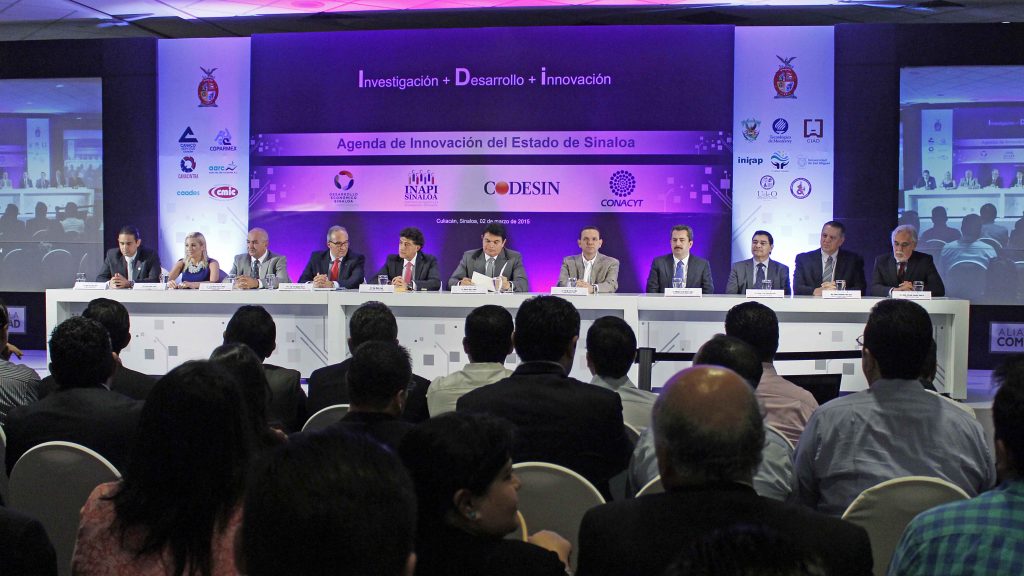
The Assistant Director of Regional Development from the National Council of Science and Technology (CONACyT, Consejo Nacional de Ciencia y Tecnología) notes that the 39 projects are product of every productive sectors’ consensus, which guarantees its concordance with the State’s vocation, considering weaknesses and strengths of each sector. The Innovation Agenda of Sinaloa is part of a federal Government’s strategy to strengthen the capacities of the Republic’s 32 States and to eliminate disparities among the federal entities. Micha Zaga exhorts private sector to recognize the importance science, technology, research and innovation have in their productive processes, being that the most successful countries invest private resources decidedly: «The outlay of [successful] countries in science and technology has two components: public and private; that is something we must implement in Mexico, we cannot reach what other countries make, where private outlay is far greater. […] At the most, most successful is almost 80-20, something reasonable would be 70-30; here we are totally the other way around. Traditionally, the public sector invests much more, 70-30, where the Government invests much more». Once delivered the Agenda to the productive sectors and the State and its municipalities, Micha Zaga emphasizes that science and technology must be seen as indispensable motors for development, so that the State can get ahead: «The recommendation for the involved is that —there’s no doubt— science, technology and innovation are indispensable to the material improvement of people, of the citizens, of the families, it is a necessary condition to development; let’s all collaborate in the matter, let’s make our greatest effort to direct resources to this… [The exhortation is made to] federal, state and local Government, and above all to private initiative». The federal public servant recognizes that, concerning to public investment, the State continues being low, although he says there has been a raise with Enrique Peña Nieto which hadn’t occurred in the past 20 years: «There’s the commitment of reaching 1% on public and private outlay in the years of this administration. The last hasn’t been calculated, we were in 0.45% when Enrique Cabrero assumed his position [in CONACyT]; we believe that [now] we are above 0.6%». Food sector The portfolio of Sinaloa is based on the State’s vocation for food production, as well as on the fact of being the main vegetable producer, producing 33% of the Mexican shrimp, having an important cattle breeding and aquaculture structure; all which makes of Sinaloa the producer of 30% of Mexico’s food. Thus, the agenda designed by CONACyT and entrepreneurs has projects for 10 sectors, 7 of which are associated to food production or the exploitation of productive process’ waste (such as mango peel or shrimp’s). «The projects are focused on increasing competitiveness, so they can become products of major added value, which is the global trend nowadays, is innovation’s topic; that the ideas be what the path marks for these projects in food sector, chiefly», expounds. Weaknesses are also considered, as the lack of human resources with higher academic and specialization levels, the poorly adequate offer to the demand, the each day more influential climatological factor, the absence of linkage between the academy and the research centers, a sector dependent of high inputs and technology, and a market of products in the hands of intermediaries. «Here the business sector has intervened, productive sectors, federal and state Governments took part, many opinion leaders, well versed on the subject citizens, it has been worked from the basis, with the producers. It appeared as a natural exercise, it is not a theoretical exercise, it is practical one, the methodology is bottom-up, and that’s how it was made», defends. Luis Torreblanca, Director of Technological Development and Innovation, considers that fortunately Mexico still count with the demographical bonus, therefore many people is preparing in a high level for the sector: «All the competencies required to take benefit of this cheap energy and growth which in consequence are going to have all the sectors, fortunately is in the generational boom, there is a fair amount of young people who is studying, a million which is studying engineering, there is good raw material of talent that can be used in such sectors». The cheap energy Sinaloa will have based on natural gas will be a strategical part for competitiveness repairing; which, joint to State’s natural resources, place Sinaloa in a good position. He admits that is in specialization where Sinaloa has weakness: «There is in Mexico… we see a concentration, 35%, 40% of researchers is in the metropolitan area of D. F. [Mexico City]; we must revert this trend. In this aspect, it might be said that we have some sort of disadvantage: there are some States where research and development, laboratories and big universities are concentrated. There, Sinaloa has its deficiencies. Definitely, with this effort to change the priorities per State, what CONACyT aims is to support so there will be a better regional distribution of the activities». Sectors with potential State’s potential does not focus just in food, the Innovation Agenda of Sinaloa stablishes projects in technologies of information, which main strength is the high volume of graduates from careers of informatics and engineering: each year, formulates the document, 2800 youths graduate from universities, 50% of them in technological platforms, which is why there is a surplus regarding the offer and the demand of human talent. Other advantages are attractive governmental supports, a technological park and competitive costs. The found weaknesses for technologies of information are enterprises poorly linked with the academy, the international reach of commercial activities the enterprises from Sinaloa have is minimum and the market is very varied, whereas the field of Sinaloa’s enterprises is lower than the actual necessities. And the reason is that the principal clients of the sector are Government units, the pharmaceutical industry, and sectors such as commercial, touristic, agricultural and educational. In tourism, the Agenda considers Sinaloa has strengths, as sun destinies, nautical tourism, besides natural, historical and cultural attractions. As for weaknesses, it is required
Guided visit to students from La Cruz High School, Jacola Extension
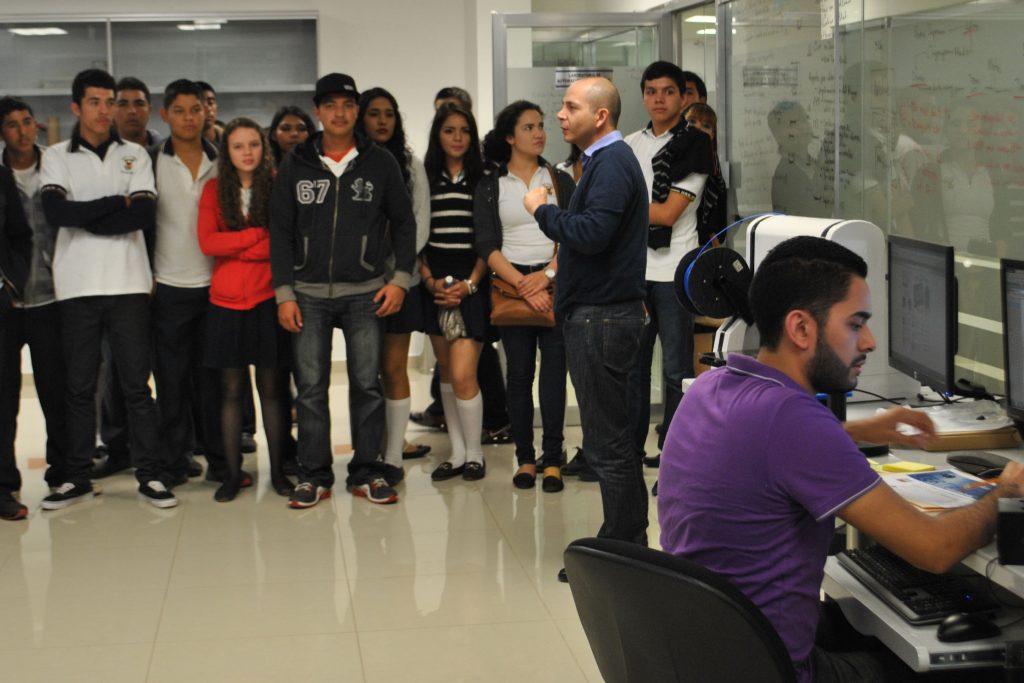
Coming from La Cruz High School, Jacola Extension, 23 students visited the Technological Innovation Park (PIT, Parque de Innovación Tecnológica) of the Autonomous University of Sinaloa (UAS, Universidad Autónoma de Sinaloa), with the purpose of knowing the facilities and the duties realized by the University in matter of technological projects. MSc IT Rogelio Prieto Alvarado, belonging to the PIT-UAS’ Operative Coordination, was the responsible of guiding this group of students in their tour. Besides receiving the youths with an introductory talk about the beginnings of the Park and its functions, Prieto Alvarado attended the students’ curiosity as they were visiting the different areas that constitute the PIT-UAS. At the end of the tour, they were invited to continue with their studies, they were talked about the importance and the great socioeconomic impact careers in engineering areas are going to have in the next years in Sinaloa, also the necessity of innovation in the matter was mentioned. In this vein, the Operative Coordinator contemplated the possibility of these youths integrating some project through the PIT-UAS. Department of Communications PIT-UAS. Translated by Belem Ruiz (Edition and Communication, PIT-UAS).
Starting signal is given to Smart EcoPark PIT-UAS project’s work
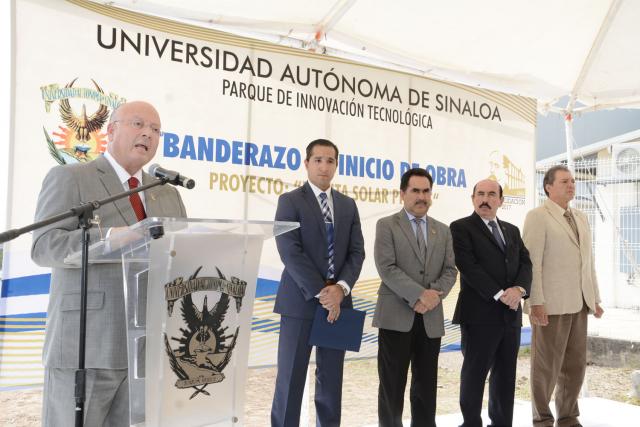
The Rector of the Autonomous University of Sinaloa (UAS, Universidad Autónoma de Sinaloa), PhD Juan Eulogio Guerra Liera, set in motion the project of the solar plant for electrical energy generation in the facilities of the Technological Innovation Park (PIT, Parque de Innovación Tecnológica), in the context of the institutional objective of achieving a green university. In the presence of university authorities and researchers, the rector pointed out that a conclusive reality in the current context of Knowledge Society is the importance of innovation and technology in human activities. He claimed that the University has full conscience of this reality, thus, is focusing on generating ideas and concrete actions which point to new excellence levels. «The organizations which do not dare to innovate, which do not invest efforts and resources on the improvement of processes, materials and products, are condemned to isolation or backwardness, in a world marked by its dynamism and the making of associations between diverse natures», assumed. He referred that in the World Economic Forum’s report, one of the most emphasized areas has to do precisely with clean energy and technologies. Guerra Liera recalled that this report highlights the existence or emergence of organizations dedicated to generation, storage and distribution of energy, as well as the technology oriented to increase its efficiency and decrease its impact on the environment. In this context, he considered that, thanks to this project, UAS is taking a work route of world class. Juan Eulogio Guerra Liera claimed that, with the summation of efforts from PIT-UAS and regional developing enterprise HunabSys, the University is complying with the Plan of Institutional Development Consolidation 2017, which considers the strategies of environmental sustainability and linkage. During his intervention, the Director of PIT-UAS, MBA José Ramón López Arellano, emphasized that this center of research functions as a driving force of the triple helix model, in which sustainable developments are generated in multidisciplinary projects. He made known this project’s first phase is the construction of a rotatory photovoltaic system of approximately 6 kW/h, which is going to feed a parking lot that will function, at the same time, as a charge center for electric cars. «Concurrently, the conversion of an internal combustion car into an electric car will be done; likewise, during the second phase, the own design of an electric automobile is planned, besides the implementation on other university facilities of this prototype-building model of sustainable energies», revealed. By last, the director thanked the Rector by the support offered to this space; to José Carlos Castro Padilla (Director of HunabSys), López Arellano thanked by his trust on the University to collaborate in activities of research and technological research. Source: Direction of Communications UAS. http://dcs.uas.edu.mx/index.php?sec=1&op=2&id_nota=5522&tipo=i. Translated by Belem Ruiz (Edition and Communication, PIT-UAS).