A specialization course about the FANUC controller for computer numerical control lathes is imparted at PIT-UAS
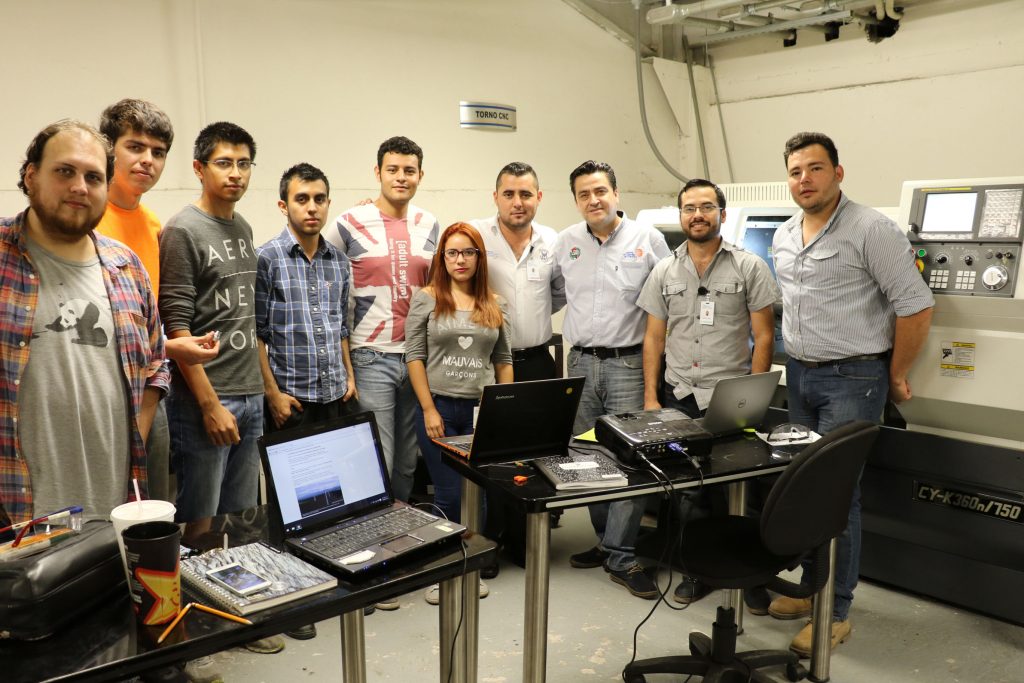
From July 9th to 14th of 2016, with the propose of professionalize and specialize even more the staff belonging to the Technological Innovation Park (Parque de Innovación Tecnológica, PIT), took place the course named Usage and Programming of Computer Numerical Control Lathe with FANUC Controller, imparted to PIT-UAS employees and collaborators, by engineer Jesús Armando Gámez Wilson, from the Sinaloa Science Centre (Centro de Ciencias de Sinaloa, CCS). The 8 collaborators who attended to the seminar sessions learned about theoretical (CNC machine and G Code) and practical lessons (FANUC controller usage, CAD/CAM simulator and automatic code G creation). In the course given by Gámez Wilson, students from different disciplines participated, these students currently develop their initiatives at the Park’s Projects Development area, and possess knowledge on industrial processes, electronics and sustainable energies; additionally, the Design and Modelling Lab’s manager, the Robotics and Virtual Reality Lab’s responsible, as well as mechatronics engineers from the PIT-UAS’ Prototypes Workshop, also attended to the seminar. Finally, it is important to mention that all the knowledge acquired by the PIT-UAS’s staff through this course will be applied for the creation of prototypes for the interdisciplinary applied research projects that take part at the university’s innovation centre. Written and translated by Belem Ruiz (Edition and Communication, PIT-UAS).
PIT-UAS’ staff participates with talk about 3D printing material recycling and environmental care, as part of the summer course My Vacations at the Library
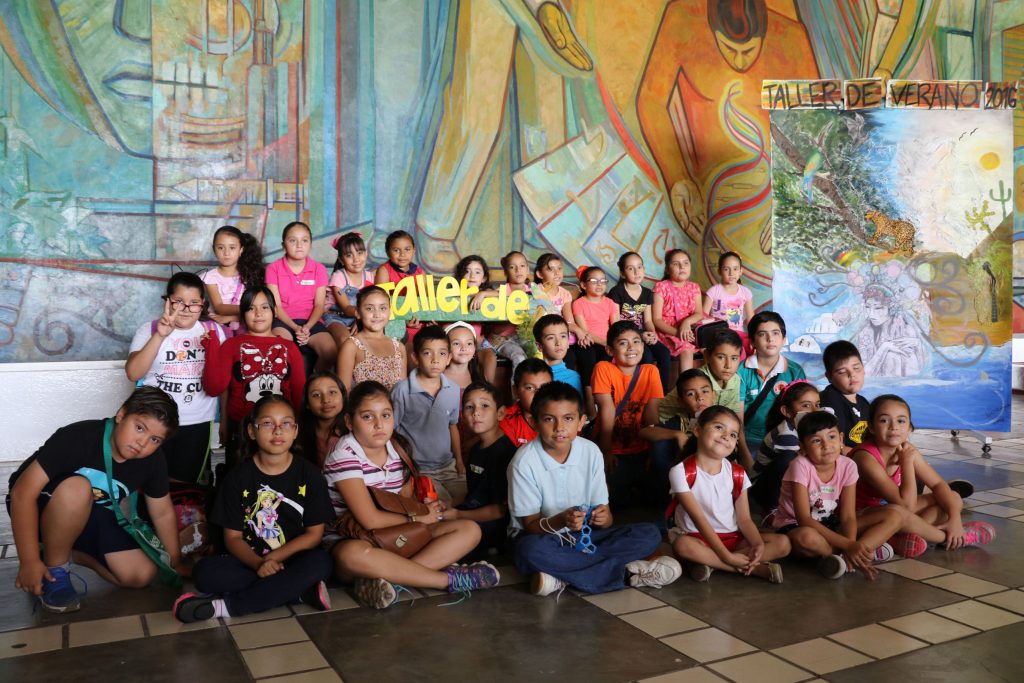
Last June 11th, among laughs, questions and the characteristic curiosity that only children possess, staff belonging to the Technological Innovation Park (Parque de Innovación Tecnológica, PIT) of the Autonomous University of Sinaloa (Universidad Autónoma de Sinaloa, UAS) participated in My Vacations at the Library (Mis Vacaciones en la Biblioteca), the traditional courses for children that every summer take place at the Licenciado Eustaquio Buelna Pérez Central Library and are organized by the University’s General Direction of Libraries and University Welfare Unit. The talk was imparted by young students belonging to UAS’ engineering careers, youths who currently collaborate at PIT-UAS in the Projects Development area, where for over a year has been taking place the design of a 3D printing system that includes a machine that will allow to recycle waste of material used for the printing process. During the youngsters’ relevant intervention, not only the topics of 3D printing and its applications were addressed, but there was also emphasis placed on the ecological side of this technology, from the point of view of the recycling of materials used for 3D printing. This, due to the fact that in the 2016 edition of the courses the main topic was «Biodiversity: shared values for a better future, learning, teaching, and conserving». The person in charge of the Central Library children’s area, Sandra Salazar Villa, mentioned that the goal of the courses were that «…the children can learn values about taking care of the environment and to know how to defend themselves for future times». Lastly, is important to emphasize that the work carried out by the university innovation centre goes beyond the development of collaborative interdisciplinary projects, since it also consists in helping so society in general appropriate the notions of sustainability and biodiversity protection, which also are the main topics of several projects developed at PIT-UAS. Written by Moroni Arellano (Communication and Diffusion, PIT-UAS), translated by Belem Ruiz (Edition and Communication, PIT-UAS).
Colombian international exchange student collaborates for the documentation of PIT-UAS’ occupational safety and health normativity
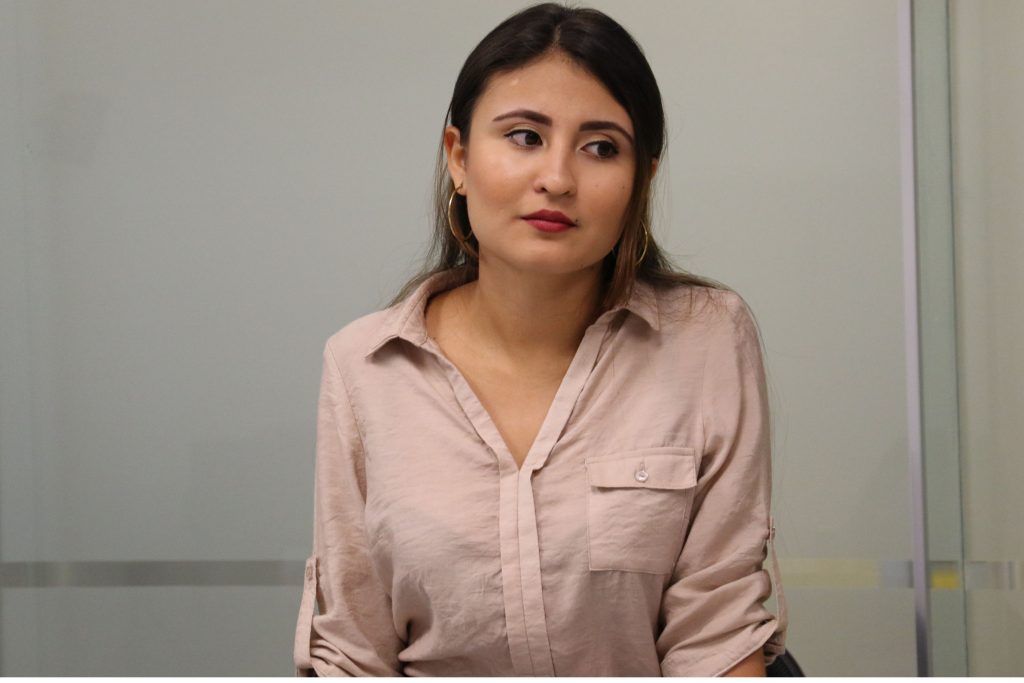
Last June 30th, Yésica Paola Baquero Benítez presented the results obtained from the work completed during her internship at the Technological Innovation Park (Parque de Innovación Tecnológica, PIT) from the Autonomous University of Sinaloa (Universidad Autónoma de Sinaloa, UAS), in front of PIT-UAS members and Colombian university authorities (through video call). Her exposition was about documents such as Identification and Evaluation of Legal Requirements Procedure, Identification of Endangerment and Risks Assessment Procedure, the Functions and Responsibilities’ Manual, among other subjects. The Colombian student is currently enrolled on the 9th semester of Occupational Health Management degree at the University Corporation Minuto de Dios (regional seat of Llanos, Villavicencio city, Meta department, Colombia). Later, during an interview with PIT-UAS’ Communication and Diffusion personnel, Yésica Paola explained the main goals of her career: «… under a management focus, is about security and health inside an organization; taking care of workers and a safe and healthy work environment». It is important to emphasize that, in Mexico, this degree with a management approach is a university programme that has been recently incorporated and has low presence still. After applying for a student’s international exchange programme, Baquero Benítez chose our university because our academic programmes fulfil the requirements for validating her subjects. She describes her stay at the Faculty of Accountability and Management as «… an enriching experience that increased knowledge and strengthened the management aspect of the career». As a matter of fact, during her administrative Audit courses she met MBA José Ramón López Arellano, general director of PIT-UAS, with whom she shared her desire of doing her internship in Culiacán: «I discussed it with professor José Ramón, and he gave me the chance for doing it [the internship] at PIT-UAS. That’s how it all started». Paola Baquero emphasizes that, looking for a national reference, «… PIT was an option for carrying out my work, due to their fulfilments under international regulations about security and health at the work environment, a management system». Through this collaboration, the PIT-UAS not only endorses its support to the international exchange programme for students, but also keeps strengthening its structure and internal management, in order to increase the processes’ quality and the results of the park itself. These activities belong in the work for national and international certifications carried out during the last year, among those that stand out are the environmental certification ISO 14001, the process quality certification ISO 9001, and the General Law of Civil Protection. Written by Moroni Arellano (Communication and Diffusion, PIT-UAS), translated by Belem Ruiz (Edition and Communication, PIT-UAS).
Smart Eco-Park: ecological innovation
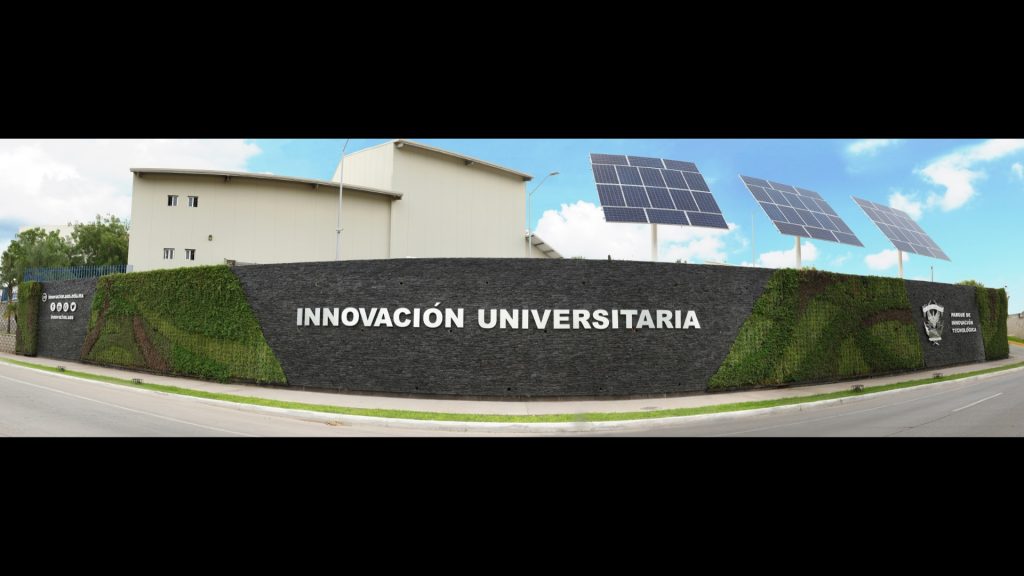
Culiacán, Sinaloa. June 27th, 2016 (Conacyt Information Agency). Every year, three states of the country register an increase in their temperature that overpasses the 50 Celsius degrees mark. According to the National Meteorology Service (Servicio Meteorológico Nacional, SMN) and the National Water Commission (Comisión Nacional del Agua, Conagua), states such as Chihuahua and Sonora had reached 50 degrees Celsius, followed by Sinaloa, which during the first days of this month reached 48 degrees. The previous data force Sinaloa’s scientists to experiment with the creation of sustainability projects that allow to diminish the heat in homes and businesses, reducing the high costs of electrical consumption. For this purpose, the Technological Innovation Park (Parque de Innovación Tecnológica, PIT) from the Autonomous University of Sinaloa (Universidad Autónoma de Sinaloa, UAS) has created a vertical garden, which is capable of reducing up to 10 Celsius degrees the temperature of either open or closed spaces. New projects originated from this idea: solar trackers, a weather station, a smart parking lot and an electrical car. The combination of these projects was named Smart Eco-Park. The general director of PIT-UAS, José Ramón López Arellano, made public that the so called Smart Eco-Park is unique of its kind and was developed as part of a shared project with the sinaloense enterprise HunabSys, and has the goal of experimenting with renewable energies and the absorption of solar energy through photovoltaic cells. «During a talk, while doing a brainstorm, a project with the intention of doing a prototype of a solar tracker was conceived, the design of the hydraulic mechanism that this must have in order to start to run tests for solar gathering with it», he commented. This, he added, because of studies made that confirm solar trackers are a more efficient method for energy gathering, achieving a 30 percent of energy gain when they start rotating, over the energy achieved by solar panels. The project recently received the 2015-2016 Award to the Most Successful Linkage Experience of the Northwest Region Linkage Network of ANUIES’s HEI, TI and RC. It was given by the Regional Council and the Northwest Region Linkage Network of the National Association of Universities and Higher Education Institutions (Asociación Nacional de Universidades e Instituciones de Educación Superior, ANUIES), during this association’s session held at Mazatlán, Sinaloa. UAS’ rector, Juan Eulogio Guerra Liera, pointed out that the institution looks forward to drive this type of projects in order to obtain innovative significance at an international level. «This kind of projects give us the possibility of working with international agents, either with these projects (in linkage with institutions or enterprises), or also getting funds that will allow us to settle on the proposals that we have here», he said. The vertical garden The initial idea of building a vertical garden, said PIT’s director, consisted in a wall that would help us to reduce a building or a housing complex temperature, and was also decided that this wall would go in harmony with the Riberas Park, which is located in front of the PIT, next to the Tamazula river, in Culiacán. «The project was about sustainability and the usage of ecological resources in urban complexes. We do this as a University, in terms of innovation, and as professional developers of the city and the state, trying to line up with a development plan for the country », commented López Arellano. The developers found that besides of being a showy and different covering, this kind of gardens generates several benefits, one of them is the notable reduction of carbon footprint and the temperature reduction at insides and outsides. «If we apply this kind of covering on buildings, you can reduce between 20 to 40 percent the temperature generated by the sun inside the facilities. If this room has a temperature of 40 degrees Celsius, you can lessen it to 35 or even 30 degrees», he shared. The benefits can be measured with the necessity cut down in the usage of cooler systems and the electrical energy saving. This vertical garden main characteristic is its irrigation system, he added. It controls the irrigations schedules according to the seasons, preventing a lack or an overwatering. The parking lot The project consists in the use of a cellphone app that notifies the user if there are parking spots available within the parking lot and, if there is at least one, access to the parking lot will be granted through the mobile device. «In the parking lot, there’s a barrier gate that controls the access and, before letting you in, checks if there are empty spots, if that’s the case, then it grants you access. The app is available for iOS and Android», pointed out López Arellano. The smart parking lot has 17 available spots, one of them for individuals with disabilities, and also has an area exclusively for the parking of bikes, the reason being that many of the PIT workers use this as their main transportation method. Electric car Developers came up with the project of an electric car. With their business model, HunabSys is seeking venture in this kind of vehicles. «Due to the experience they have and the university’s experience, we were able to settle on a project to transform the car’s internal combustion engine to an electric one, for this experiment the business donated a truck and the first step was converting it to an electric vehicle», he said. In the long-term, the institution is planning to create an electric car adding big data and internet of things concepts. «To settle this project, the learning curve consist in knowing the basis, and one of these basis was the car’s internal transformation from a combustion engine to an electric engine. We put this basis as a second stage so we could be able to see what would the car need to function, and once we got this know how, be able to design it and work on the car’s modelling», he announced. Solar trackers Currently PIT-UAS has 80
PIT-UAS general director introduces TecnoCamp 2016 project within the framework of the V National Encounter of Programmes for the Encouragement of Mexican Talent
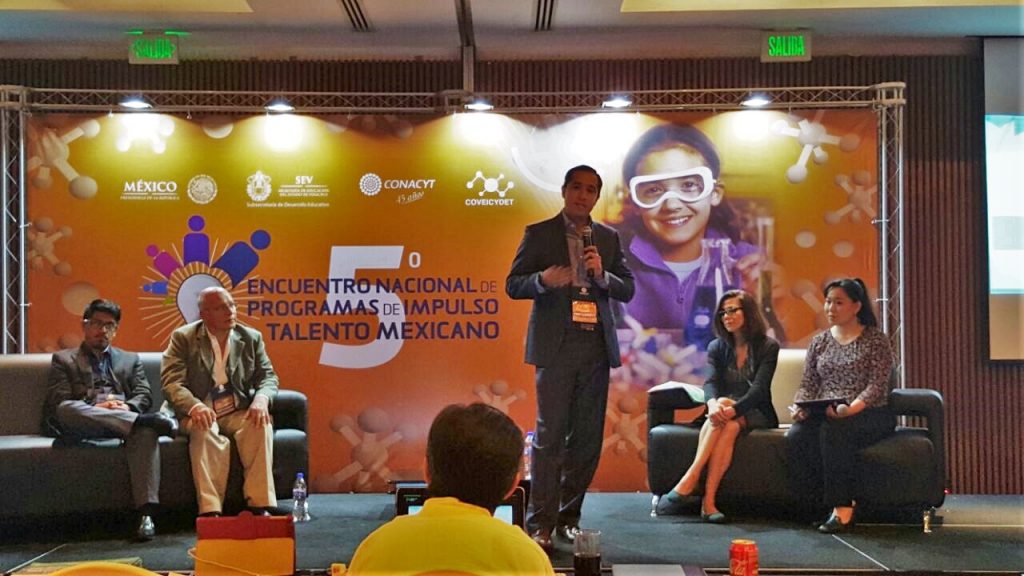
Within the framework of the V National Encounter of Programmes for the Encouragement of Mexican Talent, organized by the Veracruzano Council of Scientific Research and Technological Development and the National Council of Science and Technology (CONACyT), the general director of Technological Innovation Park (PIT, Parque de Innovación Tecnológica) of the Autonomous University of Sinaloa (UAS, Universidad Autónoma de Sinaloa), MBA José Ramón López Arellano, unveiled the proposal elaborated for the Encouragement to Scientific and Technological Vocations in Mexican Children and Youths Programme call. The event took place at Veracruz port, the 8th, 9th, and 10th of June this year. Over 93 executers of programmes for the encouragement to scientific vocation attended, each one of them is member of one of the 65 institutions belonging to 27 entities of the country. The PIT-UAS general director introduced the proposal to carry out the Science, Technology and Innovation Camp: TechnoCamp 2016, which will take place at UAS in September. The project is an initiative created by PIT-UAS and takes part of the UAS’ Encouragement to University Innovation Programme, that in 2015 gathered over 350 students, professionals and private sector members, in order to provide them specialized training. So as to provide a direct interaction to a diversity of scientific-technological areas to a larger number of students from high school, university and postgraduate levels, TechnoCamp establishes a strategy that looks forward to enhance the scientific vocation by offering a practical formation and a straight relation with applied research within the exact science fields. According to MSc Martín Wincour, Linkage Director at CONACyT, during the V Encounter: «The programmes that take part in this event are able to awake and develop abilities that will allow the youths to become analytical observers, critical and efficient entrepreneurs, and also possess a better and greater understanding of natural phenomena, which will grant them the key to explain the what and the why from their everyday environment… In short, we want to teach them how to analyse on the basis of the scientific method», he highlighted. Written by Moroni Arellano (Communication and Diffusion, PIT-UAS), translated by Belem Ruiz (Edition and Communicatios, PIT-UAS).
Smart Eco-Park PIT- UAS linkage plan is awarded by ANUIES

The Regional Council and the Northeast Linkage Network of the National Association of Universities and Higher Education Institutions (Asociación Nacional de Universidades e Instituciones de Educación Superior, ANUIES) recognized the Autonomous University of Sinaloa (Universidad Autónoma de Sinaloa, UAS) for achieving first place at the Most Successful Linkage Experience of an HEI, TI and IC Award, granted by the 2015-2016 ANUIES’ Regional Council and the Northeast Linkage Network. The decoration was received by José Ramón López Arellano, as a representative of the institution. The general director of UAS’ Technological Innovation Park (Parque de Innovación Tecnológica, PIT) informed that, through the university centre of innovation he heads, the leading academic institution of Sinaloa was awarded thanks to the Smart Eco-Park PIT-UAS project, an integral ecological model that aims for the introduction of sustainability and the internet of things in urban areas, such as the systems implemented inside of the Park’s facilities. The recognition was granted during the ANUIES session recently celebrated at Mazatlán city. According to Lopez Arellano, the project was evaluated by external advisors, independent of the universities, and it raised a great interest among the institutions, given the complexity involved and the factors that take part on this development. «The elements taken into consideration for this evaluation are the impact in society and who are the people integrated for the development of this work, performed by an interdisciplinary team of university academics. The project is linked to a local enterprise… in general, we talk about improvement of an urban area endorsed by a vertical garden, the implementation of three solar trackers, an intelligent parking system and also a combustion car’s changeover to an electric one», the general director of PIT-UAS announced. Additionally, he explained that there were two main aspects taken under consideration by the evaluators that allowed them to grant UAS with the award: the unity between the local enterprise HunabSys and the consensus inside the university for the establishment of interdisciplinary groups that keep directly in touch with the enterprises, accomplishing thus impact inside and outside the institution. López Arellano highlighted the importance of the linkage that UAS keeps whit local and regional enterprises, because this concedes a main focus in academic research and the prompt solving of social environment needs. The linkage plan strengthens thanks to the government’s support to count on resources that lead to ease this collaborative work. Source: http://dcs.uas.edu.mx/index.php?sec=3&op=2&tipo=i&id_noticia=6761 translated by Belem Ruiz (Edition and Communication, PIT-UAS).
Sinaloa’s Technological Innovation Park: academy-industry-government synergy
Culiacán, Sinaloa. May 24th, 2016 (Conacyt Information Agency).- Specialized human resources formation to offer technological services to the state, the country and the world, these are some objectives pursued by the Technological Innovation Park (Parque de Innovación Tecnológica, PIT) of the Autonomous University of Sinaloa (Universidad Autónoma de Sinaloa, UAS), a research centre that has two years in operation. The park’s director, José Ramón López Arellano, pointed out that the idea for PIT creation started four years ago, upon the initiative of state government and UAS. It was until 2014 when the project was consolidated, with extraordinary resources from the National Council of Science and Technology (Consejo Nacional de Ciencia y Tecnología, Conacyt), an amount of 22 million pesos, allocated to UAS. «We work on different axis, at world level. First task was searching regional opportunity areas and how to foster university’s strengths so these could have an impact in the region», he commented. During its first month, he added, UAS’ and PIT’s authorities held talks with business area. At that point, was managed a project with the National Electoral Institute (Instituto Nacional Electoral, INE), related to the monitoring system for local elections. However, due to structural reforms and INE’s operative changes, the project was stopped; it is contemplated to pick up the idea this year. During its first three months, PIT-UAS achieved to define its position in the state, thanks to its multidisciplinary work with teachers and students from different UAS’ faculties. «Some enterprises contacted us, some were trying to solve problems of projects for Innovation Incentives Programme (Programa de Estímulos a la Innovación, PEI), and in practically three months we managed to have the work done by a university workers group. That gave us very good fame in Sinaloa, given that us, as an option, turned out to be effective and efficient for the necessities of the business sector», commented López Arellano. The triple helix PIT-UAS fuses economic development’s three axis: industry, government and academic abilities. For its first operation year, the park had four institutional projects, subsidized by Conacyt, due to UAS management. And this is why, said the rector of the institution, Juan Eulogio Guerra Liera, the park aims contributing to specialised human resources formation. «It’s about integrating multidisciplinary teams, offering services, growing ideas and commercializing technological products, that’s why we’re looking for the approach of the public and private sectors.» «Within this institution appropriate researches take place inside its Educative Technologies, Motion Capture, Automation and Control, and Mobile Computing and Tracking laboratories», he said. Connected Mexico Project The Technological Innovation Park was selected as State Operative Instance for the Connected Mexico Project in Sinaloa. State authorities announced that the programme seeks to provide free wireless network access to all the public centres of the country, reason why, through PIT, UAS work was requested in order to elaborate a market and feasibility assessment. In 2018 the goal is to connect 250 thousand places all over the country and at least 8 thousand public areas in Sinaloa, according to the programme characteristics. PIT-UAS general director, José Ramón López Arellano, emphasised that the Project was jointly worked with the Technological Institute of Sinaloa. «Connected Mexico Project needed a market and feasibility assessment, so we reached to the faculties of Accountability and Administration, Economy and Earth Sciences for help». «We created another multidisciplinary group that helped us with the research and feasibility studies for the project. This is where the university participated and basically opened a new offer in the market for telecommunication and internet technologies within the state, to give the necessary means so the places where is plausible or not the connection can be visited», he explained. 16 people participated at PIT-UAS’ facilities, 6 more were involved in the market study, and for the field survey 8 teams were assigned, each with 4 to 6 members (working temporarily). All was made with students support. International projects The level II researcher from the National System of Researchers (Sistema Nacional de Investigadores, SNI), Ildefonso León Monzón, at present time works in the Technological Innovation Park. He announced that on next July an agreement will be sign with German research centres. «It will be an agreement with the Research German Centre in Berlin. We’re looking to establish a collaboration link with the Oldenburg University, in Germany, which stands out in the computational audition research subject», said. Nowadays, PIT collaborates in the creation of a national network named Innovation and Knowledge Transfer Network (Red de Innovación y Transferencia del Conocimiento), in which participates universities such as the Autonomous University of Hidalgo, Quintana Roo, Tabasco, San Luis Potosí and Coahuila states. Written by Janneth Aldecoa (CONACYT Informative Agency), translated by Belem Ruiz (Edition and Communication, PIT-UAS).
Educative Innovation academic body participates in the III International Congress on Sustainability, Competitiveness and Administration in Organizations
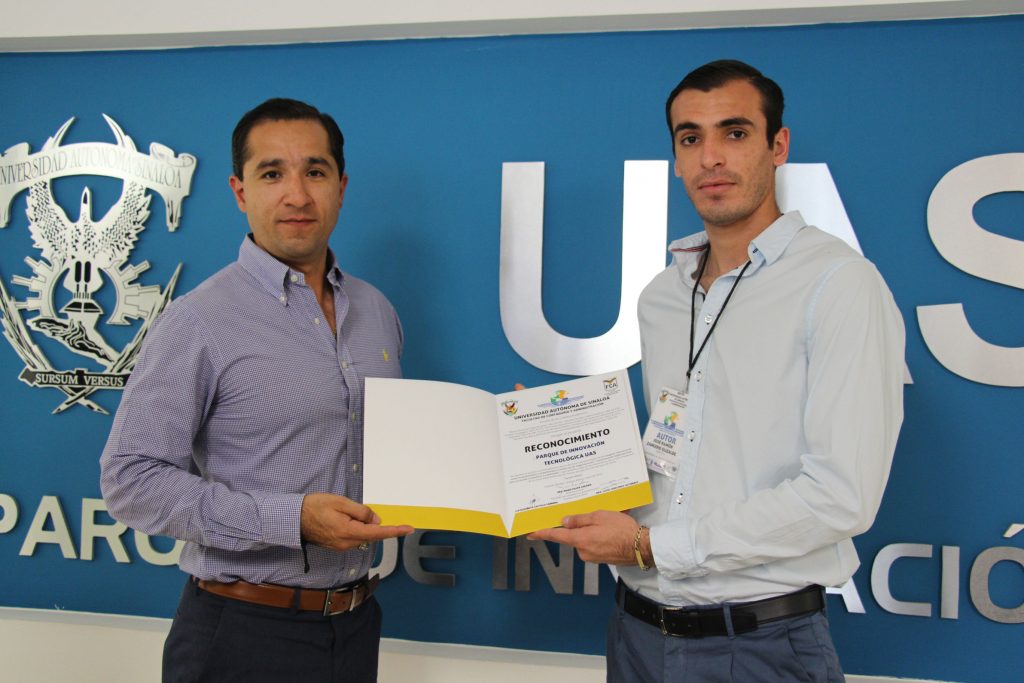
Within the Enterprises Administrative Development Framework (UAS-CA-288), the Educative Innovation academic body participated as organizer in the III International Congress on Sustainability, Competitiveness and Administration in Organizations, titled «Transforming organizations for a competitive and sustainable world». This university academic body is integrated by full-time professors and researches belonging to the Autonomous University of Sinaloa (UAS, Universidad Autónoma de Sinaloa); among its objectives stand out formation in economic development and financial competitiveness of small and medium-sized enterprises, besides strategic education and innovation in professional teaching, within administration field. It should be mentioned that such entity, recognized by UAS’ Accounting and Administration Faculty (FCA, Facultad de Contaduría y Administración), resides, operatively, within the university facilities of the Technological Innovation Park (PIT, Parque de Innovación Tecnológica), and among its members are PhD Marifeli Avendaño (Audit director), MBA José Ramón López Arellano (PIT-UAS’ general director), as well as other university teachers. PIT-UAS’ participation consisted in offering a guided visit to this institutional centre of scientific-technological research and innovation. Thus, students and academics knew about how knowledge on sustainability, competitiveness and organizational management are applied in the Park at present. Through UAS-CA-288’s collaboration, this university space dedicated to science, technology, innovation and entrepreneurship opens its doors to FCA’s students in Culiacán campus, so they can link their projects through PIT-UAS, an opportunity that could also be leveraged by the attendees to these guided visits of May 3rd and 4th. Written by Moroni Arellano (Communication and Diffusion, PIT-UAS), translated by Belem Ruiz (Edition and Communication, PIT-UAS).
UAS consolidates research on high energy physics
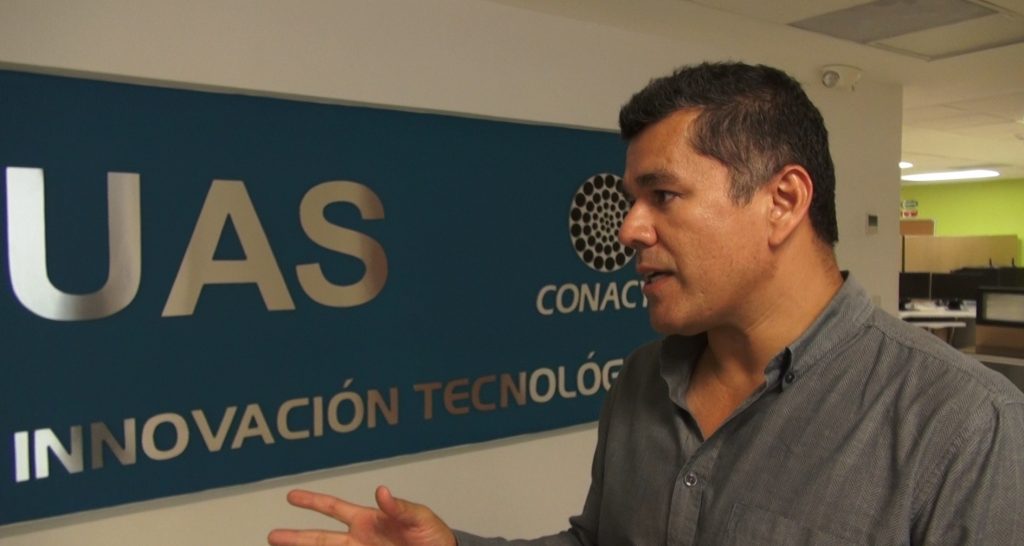
Culiacán, Sinaloa. April 29th, 2016 (Conacyt Information Agency).- Twelve years ago, Sinaloa started its incursion into the most ambitious international project of particle physics, the Large Hadron Collider (LHC) of the European Organization for Nuclear Research (CERN, Centre Européen pour la Recherche Nucléaire), based on Geneva, Switzerland. Ildefonso León Monzón, PhD and researcher from the Physics-Mathematics Science Faculty of the Autonomous University of Sinaloa (UAS, Universidad Autónoma de Sinaloa), is responsible of the detector ALICE (A Large Ion Collider Experiment), specially designed for the collision of heavy ions. The discoveries of such project have achieved the prolongation of this research up to 2022, as well as the opportunity for more postgraduate students to join this project. León Monzón works along with almost a thousand of scientists from 29 countries, among them is the Mexican Gerardo Herrera Corral. The work team aims to recreate the explosion that gave life to the Universe. In the interview for Conacyt Information Agency, the PhD level II of the National System of Researchers recalled that in 2004 UAS, as a recognised institution, joined the project. «The objective is to make a recreation of the Big Bang’s first moments, that is, how was formed the matter in the first instants, since its first millionth of second», commented. Conacyt subvention In 2013, the National Council of Science and Technology (Conacyt, Consejo Nacional de Ciencia y Tecnología) approved the project for creating the Instrumentation Laboratory on High Energies Physics, through which scientists and postgraduate students remotely work with the LHC, from Culiacán. «The investment for the installation of the laboratory in the Physics-Mathematics Science Faculty was of 3.5 million of pesos. This is what allowed UAS to increase its permanence in the project up to 2022», emphasised. Undergraduate students of electronics also joined, through the Electronics Laboratory of Printed Circuit. Nowadays, said, three researchers work on ALICE project, together with two students from Informatics Faculty, one from Electronics and two postgraduate Physics students. There are at least 10 UAS students. In the framework of recreating the first moments of the Big Bang and the quest of answering the mystery matter formation time (mainly its characteristics), the team gathered by León Monzón surprised with the discovery of the liquid Universe. «Until a few years ago, it was thought that the early Universe had a property of gaseous state, and the ALICE experiment showed it ain’t gas, is liquid. Is a liquid universe, but, besides, strange, is perfect, flows without barriers.» «That is to say, a very special matter state, you cannot restrain it: overflows boundaries. It is not a new state for physics, but such state hadn’t been characterised in those instants. It was a surprise that it was liquid», said regarding to the great achievement made by the sinaloense team. Another contribution, he explained, is the responsibility of designing, constructing and operating a new instrument for physics studies. «This is not something that exists as a programme within the experiment; nevertheless, it is part of UAS’ responsibilities, in coordination with the Centre for Research and Advanced Studies of the National Polytechnic Institute and CERN». The team designed and constructed a detector entitled AD (Alice Diffractive), which broadens ALICE detector’s efficiency for a physics type named diffractive. It was validated in 2012 as a diagnosis system and in 2015 functioned as detector of reading to improve the experiment’s capacity for diffractive physics. This consists on the research on protons collision against protons. «»Diffractive» processes occur almost 30% of times a proton crosses with another, after which interaction protons still protons.» The AD detector is placed in two distant points, explained Léon Monzón. Is where particles collision happens. «It is in those points where the diffractive physics phenomenon happens.» From UAS, most of human resources Currently, UAS is the institution that provides most of human resources and designs for the detectors, emphasised León Monzón. The responsibilities of the students are very specific. The research team’s headquarters is the Physics-Mathematics Science Faculty, located in University City. The group is called High Energies. «I represent the Mexican group, on behalf of the University. And there is another colleague from electronics who is also linked. Then, UAS is placing scientists from physics and electronics areas fro the development of devices and technologies to be used in the new instruments that will be installed in CERN, in ALICE», noted. Source: CONACYT Informative Agency, translated by Belem Ruiz (Edition and Communication, PIT-UAS).
The Smart Eco-Park PIT-UAS in pictures
The Smart Eco-Park PIT-UAS is going to be constituted by the design and the implementation of a building prototype that integrates diverse models oriented to the incorporation of both sustainability and the internet of things in urban complexes. This project is composed of: an eco-parking lot with automatized control access through a mobile app; an internal combustions car converted into an electric one, for which the parking lot will have two charging stations; a vertical garden, seeking to embellish the spaces and to leverage the benefits of this type of urban agriculture; and, as main axis, a solar plant that optimizes electric energy production, thanks to its solar tracking system. Below, some images that register the advances of this collaborative project developed in our university centre of innovation, the Technological Innovation Park of the Autonomous University of Sinaloa. Written by Moroni Arellano (Communication and Diffusion, PIT-UAS), translated by Belem Ruiz (Edition and Communication, PIT-UAS).