Prototype elaborated by PIT-UAS collaborators wins first place in Mechatronics, within IV EJIS framework
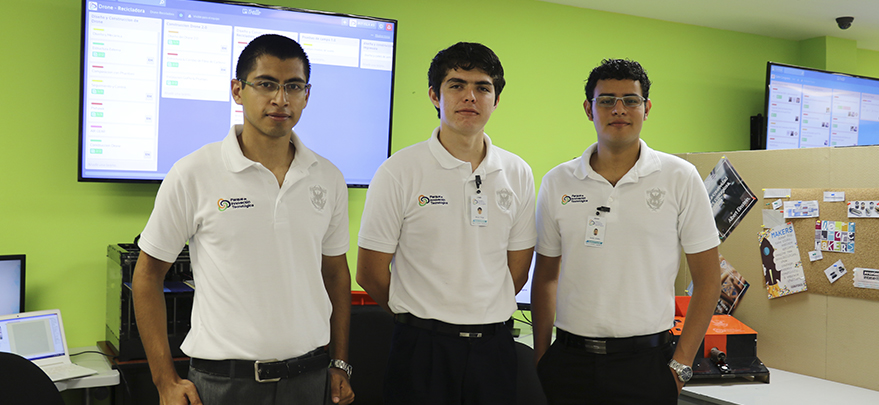
In representation of the Autonomous University of Sinaloa (UAS, Universidad Autónoma de Sinaloa), through its Technological Innovation Park (PIT, Parque de Innovación Tecnológica), Eduardo Abitia participated, the 21st and 22nd September, in the prototypes fair of the IV Sinaloa Estate Young Researchers Encounter (EJIS, Encuentro de Jóvenes Investigadores del Estado de Sinaloa), where his Recycler of Plastic Material for 3D Print received the first place within its category. This year EJIS, which is support by the National Council of Science and Technology, the Institute for the Support of Research and Innovation of Sinaloa and the Sinaloa State Government, was carried out in the Conventions Centre’s facilities at Mazatlán city and was organized by the Polytechnic University of Sinaloa, in association with other higher education institutions and public research centres of Sinaloa. The participation of PIT-UAS young collaborator consisted of explaining recycler’s functioning and making some demonstrations of the prototype. The youth emphasized that the problematic attended by the device is an ecological issue: 3D print is one of the industries of the future, is starting to experience a boom and it is expected to grow even more during the next decade, unfortunately this technology’s waste (resin, polyamides, acrylonitrile butadiene styrene) is too much and highly contaminant. Eduardo spoke about the advantages of reusing plastic materials, economic and material resources maximization, recycling process and environmental impact generated by implementing this system (grinder and extruder). He also shared with the attendees how the interest in taking to practice what is learnt in the classroom, took him and his two schoolmates to the development of these two machines, which were preceded by a low cost and high performance 3D printer. This group of entrepreneurs students that made the three prototypes is conformed by two students of Industrial Processes Engineering belonging to the UAS’s Engineering Faculty, Javier Eduardo Abitia Camacho (9th semester) and Jesús Alberto Vega López (7th semester), as well as Juan Francisco Verdugo Arredondo (7th semester), student of Electronics at UAS’s Physics-Mathematics Sciences Faculty. Since April 2015, these three youths have developed their prototypes within PIT-UAS facilities, where they have fund tools, spaces and specialised counselling required in order to perfect their machines. Nowadays, they work in the design of a computer numeric control machine that allows to user assemble and disassemble different tools carriages, so the same structure can work the same for a laser cutting-machine, a 3D printer or a milling machine. Written and translated by Belem Ruiz (Edition and Communication, PIT-UAS).
Precision agriculture, technological innovation for crops
Precision agriculture consists of increasing resources exploitation and diminishing pollution effects through the employment of current technological tools, especially those related to geographical referencing of sites by satellites, which allows to take as management unit smaller areas than those used by traditional methods; such sites are liked to information databases, as support for decision making. In few words, consists in intervening accurately in the accurate place and moment, making the most out of the precision given nowadays by information technologies. Precision agriculture constitutes an instrument to diagnose with accuracy agricultural production problems, to make decisions and to obtain satisfactory answers in the indexes of agricultural performance, mainly though technologies as global positioning systems (GPS), sensors, satellites and aerial images, along with geographic information systems (GIS); as a whole, they allow for estimating, evaluating and understanding such variations. Recollected information is used for the highly accurate evaluation of the crop’s optimal density, estimating fertiliser and other required inputs usage, as well as higher-precision predicting of crops production. There is an application of this technology that is highly spread all over the fields: site-specific, methodology that has been used since this primary sector activity’s beginning, but it had a huge economic boost during agriculture mechanization in the 20th century, in order to work large cropland extensions with uniform agricultural practices. Site-specific technology makes possible to match seeds, fertilisers, pesticides and other agrochemical doses with soil type and other conditions. GPS is an instrument that allows to elaborate geographical maps much more detailed, this digital technology enables farmers to capture data about their croplands, in a way that their particular spatial characteristics can be examined, contrary to what happens within traditional paradigm, that used to analyse them as if they were homogeneous areas. At present, thanks to GPS, the days of square kilometre-based labour in fields has been left behind, now the labour is square metre-based. There are different methods to incorporate this technology in agricultural crops, an example is the one presented in the image, which shows a diagram of the site-specific technology cycle, divided in two phases: field evaluation and data application. First phase begins with the harvest guided by a performance monitor and a GPS (showing variability of each sector), then data is analysed with GIS and statistical software, which allows to give specific recommendations for each site; second phase begins with recommendations application, then comes customized sowing and fertilisation for each site, followed by plagues and diseases control (that also varies according to each site characteristics), finally is realised variable fertilisation; and the cycle restarts. Having said that, the implementation of a new technology always has social repercussions, and precision agriculture case is not the exception, initial resistance to change can be found in all sectors, no matter the benefits brought by technological innovation to that sector where it is established. Within this context, the precision agriculture disadvantage is that it did not rise up as a necessity of small producers, but rather it were transnational producers which imposed such technological innovation in the market. Although the rejection expressed by smallholdings to the implementation of scientific advances is matter that has been transcended by a great number of cases where technology has brought greater efficiency and productivity to agricultural fields. Lastly, it is worth noting that, in Latin-American countries like Cuba, adopting these new technologies has caused the following changes: performance is risen, costs are diminished, workforce is diminished, a quantitative leap in agriculture is caused up to levels of any highly developed industrial process, it is guaranteed a better environmental care, the quality of countryside life is increased. Agriculture is one of the most important productive sectors in our country and Sinaloa state is called Mexico’s Breadbasket, given that is one the states with better performances in this matter at a national level. In entities with an economic profile like ours, is of utmost importance incorporating technology based innovative solutions in agricultural processes, because they guarantee a quality and production increase that has an effect on regional socioeconomic improvement. Written by Alfredo Careaga (Communication, PIT-UAS), translated by Belem Ruiz (Edition and Communication, PIT-UAS).
On September 29th and 30th, PIT-UAS will carry out TechnoCamp’s first edition
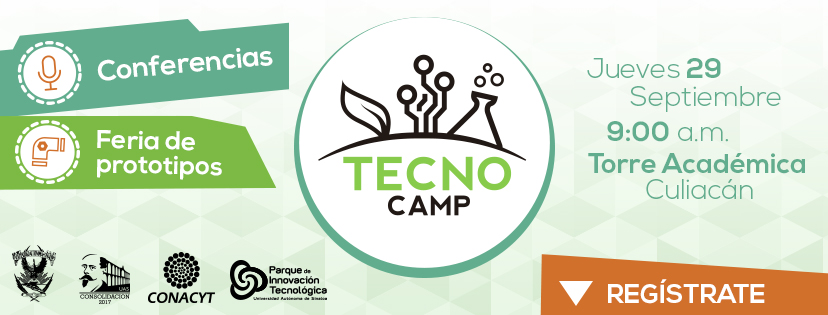
The Technological Innovation Park (PIT, Parque de Innovación Tecnológica) of the Autonomous University of Sinaloa (UAS, Universidad Autónoma de Sinaloa) will carry out, on September 29th and 30th, the Science, Technology and Innovation Camp: TechnoCamp 2016, which objective is to foster the creation of a network integrated by scientist youths within the Park, in order to facilitate training and counselling them by experts, so Sinaloense youth count on tools to develop scientific initiatives and generating technological products subject both to intellectual property registration and the later commercialisation. TechnoCamp focuses on promoting, using and distributing knowledge, motivating like this youths participation in regional events of scientific and technological character, with the goal of strengthening the innovation capacity and creativity of students who are in high school and university levels. Specifically, TechnoCamp centres its attention on identifying talented youths between 15 and 22 years old, Sinaloense students who have been conspicuous in knowledge contests and Olympiads within engineering and technology areas. Registration is available online, through TechnoCamp’s website, portal where those who wish to attend will be able to assure their place. Participant coming from different points of Sinaloa state will have scholarships for transportation, as well as food and, in they are selected for Challenge 10, they will also count on lodging. First day of activities will have as first venue the Academic Tower Culicán, which will function as place for the dissemination of knowledge, will host specialist speakers of distinct areas of knowledge: applied chemistry, artificial intelligence and high energy physics; conferences will be presented from 09:00 a. m. to 02:00 p. m. In addition, by the afternoon will be offered a guided tour by the PIT-UAS’ facilities, so the attendees know the areas, workshops and laboratories where it is possible to develop knowledge based on an abstract concept and turn it into a tangible one. Second day, 16 youths will be chosen and later divided in 4 teams to compete between them. Challenge 10 will consist of the selected students developing the plan of a scientific-technological solution before a given problem; in order to achieve it, they will count on material and human resources of the PIT-UAS itself, during a work day beginning at 09:00 a. m. and finishing at 07:00 p. m., with the award to the Challenge 10 winning team. PIT-UAS is part of the Promotion for the University Innovation Programme, by which over 350 students, professionals and private initiative members were attended via specialised trainings during 2015. In this sense, although more oriented to talented youth training, the Park received the support of the National Council for Science and Technology, through the call for the Encouragement to Scientific and Technological Vocations in Mexican Children and Youths Programme, funding that has made possible the realisation of this project, together with institutional support. Moroni Arellano (Communication and Diffusion, PIT-UAS), translated by Belem Ruiz (Edition and Communication, PIT-UAS).
Nanotechnology, the enormous potential of the science of the tiny

The industries of the future combine knowledge, innovation, entrepreneurship and monetary investment for the development of technologies that are 21st century’s trends. According with the National Institute of the Entrepreneur, among the industries of the future, these are outstanding: education in the cloud and data storage, clean energy, sustainable dwelling and home automation, mobile apps and cyber-security, artificial intelligence, personalized science and medicine, autonomous cars, private space voyage, tourism, robotics and nanotechnology. This last is expected to be the one to take us to a second industrial revolution this century, as announced by Charles Vest, ex-president of the Massachusetts Institute of Technology. Nanotechnology is a combination of techniques used to manipulate and apply functional materials, devices and systems through a nanoscale control of the matter. Greek prefix ‘nano-‘ indicates a measurement, not an object; this is, only speaks of a scale (10-9). There are three generations: first, incorporates a new attribute in a pre-established product; second, interacts with the product; third, it is about a systems interaction. In order to conceive this industry’s potential, we should notice that physical and chemical properties of the matter area modified at nanometric scale, which is due to quantic effects. Electrical conductivity, heat, resistivity, elasticity, reactivity, among other properties, behave in a different way in the same elements at a bigger scale. It is important to know that a nanometre equates to the billionth part of a given unit of measurement. If, for example, we take metre as unit of measurement, we have that: a white paper sheet is 100 000 nanometres wide; a red blood cell, 1000; an haemoglobin molecule, 10; one of C vitamin, 1; an atom, 0.1. On December 29th of 1959, Nobel Prize in Physics Richard Feynman, was the first one to make reference nanoscience and nanotechnology possibilities, during his famous speech at the California Institute of Technology, and thus won the Nanoscience Father title. And it should be pointed out that nanotechnology’s main characteristic is that it constitutes an interdisciplinary assemble of various fields within natural sciences, such as: chemistry and biochemistry, physics and biology, electronics and informatics; hence, it is a convergent technology. What some years ago was considered as an emergent industry, little by little has been achieving great advances and nowadays is having a massive growth, that is used in applications related to environmental activities, energy sector, medicine, electronics, space exploration, building sector, agriculture, cosmetics, among others. One of the more promising aspects of this industry is its application in medicine, better known as nanomedicine, which works in diseases cure at a cellular or molecular level inside the body: tissue repair, control of diseases’ evolution, preventive healthcare and medicine supply to cells. Thus, diabetic patients could receive insulin encapsulated in artificial cells that expel it when glucose rise in blood. Having said that, nanotechnology research and development, also known as the fourth technological revolution, is the key to solve problems in developed countries like United States, China or Japan; in contrast, Mexico has been left behind in this industry. According to Jesús González, ex-president of the Nuevo León’s nanotechnology cluster: «There are 977 enterprises dedicated to nanotechnology in United States, meanwhile Mexico really has few. We have found barely 3 dedicated to nanoparticles». If our country eventually gets into this select group of nations that stand out in nanotechnology, it could benefit from the promising future forecasts for this industry in areas like construction, monitoring and plagues control, remediation for air pollution, food processing, storage, energy production and conversion, diseases screening and diagnosis, drugs supply systems and improvements to agricultural productivity, uses that are in research phase at exclusive organisms like the Belgorod State University’s Nanomaterials and Nanotechnology Centre in Russia. Written by Alfredo Careaga (Communication and Diffusion, PIT-UAS), translated by Belem Ruiz (Edition and Communication, PIT-UAS).
Drones, automated flights for the benefit of society
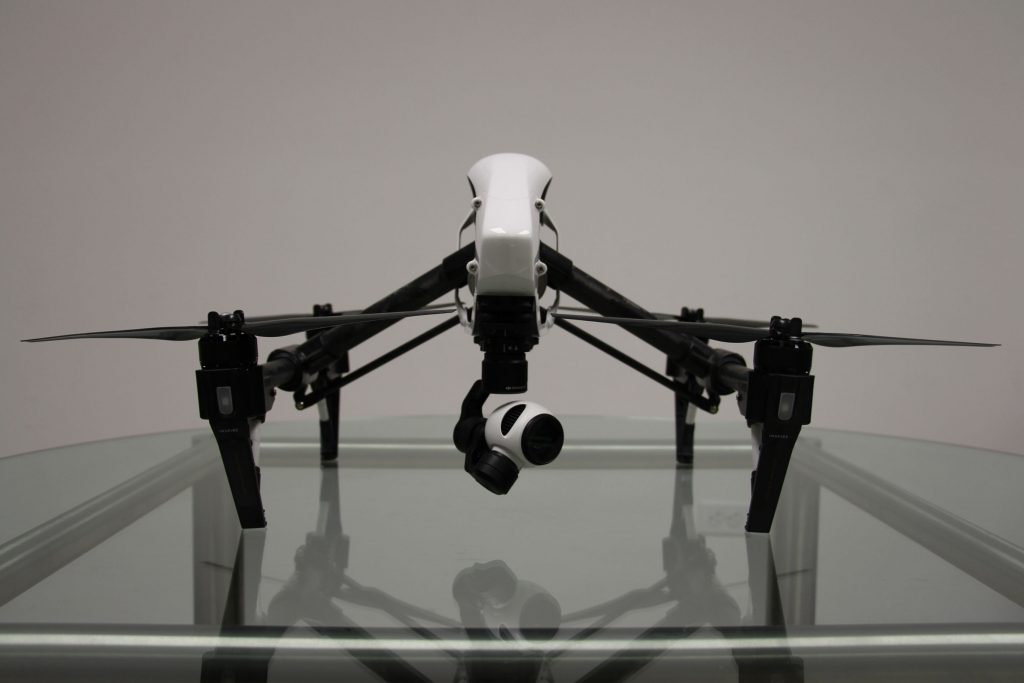
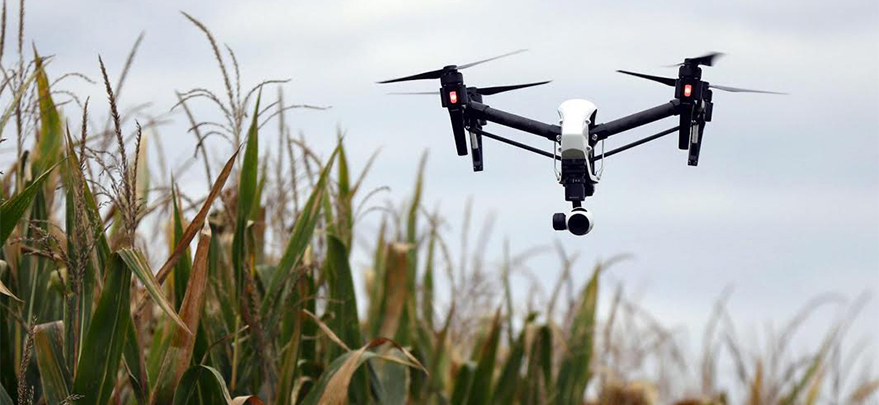
Drones are unmanned aerial vehicles, this is, they fly without crew. These aircrafts can be controlled in two different ways: by themselves, with a computer on-board, or by means of a remote control that is manipulated by a human on ground. This technology began at the early twentieth century, it is very useful in surveillance tasks, mapping, research, among others; although they can also be misused, either intentionally (spying, illegal drugs transportation, explosives…) or accidentally (they might damage public electrical grids, interfere operations…). At the beginnings, unmanned aerial vehicles were used by air forces, some as flying target for training pilots, some for attacks. Now, given this technology’s growing rise, drones are used by militia because their cost is lower than military aircraft’s and these do not require to endanger one or more crew members. These drones are sent to conflict zones, controlled via satellite from military bases of the countries they belong to. However, remote controlled aircrafts’ function diversifies more and more for benefit of the society. For example, one of the fields where drones could be of great use and make the difference is as rescue assistant: flying over a place affected by an earthquake, nuclear accident, hurricane on any natural disaster, bombing or other catastrophe, they could capture high-quality images or videos in order to help designing safer ground rescue missions. Nowadays is made a good use of these device’s agility and efficiency, drones count on better tools for rescue than other equipment, in developing various prototypes for aid transport and detecting people in danger. In this sense, before the high number of persons drowning each year in the sea, Iranian RTS company created a drone of many rotors that contributes to save lives; aside from flying quickly into the sea oriented by a GPS, it transports and throws lifesavers; the prototype has been tested, reaching in 22 seconds a target 75 meters into the sea, while the human lifesaver did it in one minute. There are developing countries where, when there is a raining season, the rural roads become impassable, which causes a big problem to transport food or medicine to the victims. In attention to the problem, Matternet was developed, a system that consists on a net to transport material; it has been tested on countries such as Haiti, Dominican Republic, Bhutan and Papua New Guinea; this autonomous drones could reach 10 kilometers without recharging and count with terrestrial stations to recharge their battery and prolong their flight. The first unmanned aerial vehicle was the Aerial Target, invented on 1917 by Archibald M. Low. That first drone was launched from a truck using compressed air, but the technology has progressively improved and, almost 100 years after the first drone was designed, in 2010 the longest flight by one of these devices was made, it flew for 14 days and 22 minutes, breaking the world record of flight time; it is the Zephyr, a drone developed by the British company QinetiQ and powered by solar energy. Google tested in 2015, the Project Titan, a solar drone prototype that also aids to complement existing internet devices with extra broadband, as well as to bring connectivity to the almost four billion people who still do not have access to the network and assist disaster areas through internet connection. Also, in 2016 Mark Zuckerberg tested his Aquila, a prototype drone that is intended to be solar and which purpose is to bring internet to the more than seven billion people on Earth. The drone must fly for 90 consecutive days, providing high speed connectivity on a 50 kilometer range. The Facebook owner considers that doing it will help improve education, health and will give new opportunities for social mobility. This industry has a lot of future and, unlike its initial applications, it is now being promoted that this technology be applied for charitable actions, on diverse areas like agriculture, journalism, parceling, fiscal control, border surveillance, fire control forestry, archeological, geological and biological research, manipulation of hazardous materials such as satellites, recreational purposes and even to deliver pizza. Hence the United Arab Emirates sponsor the Drones for Good contest, open to individuals, work teams or companies, which in order to compete must present a functional prototype which development is feasible in a maximum period of three years. Written by Alfredo Careaga (Communication and Diffusion, PIT-UAS), translated by Belem Ruiz (Edition and Communication, PIT-UAS). Bibliography: s. a. (2015), «DRONES. Cómo cambiará tu vida con los vuelos no tripulados», en la sección Transporte de la revista Cómo Funciona. Guillermo Cárdenas Guzmán (2015), «DRONES. Ciencia al vuelo», en la revista ¿Cómo ves?
Bioinformatics is one of the keys so Sinaloa can keep its agriculture and livestock exports on the US market
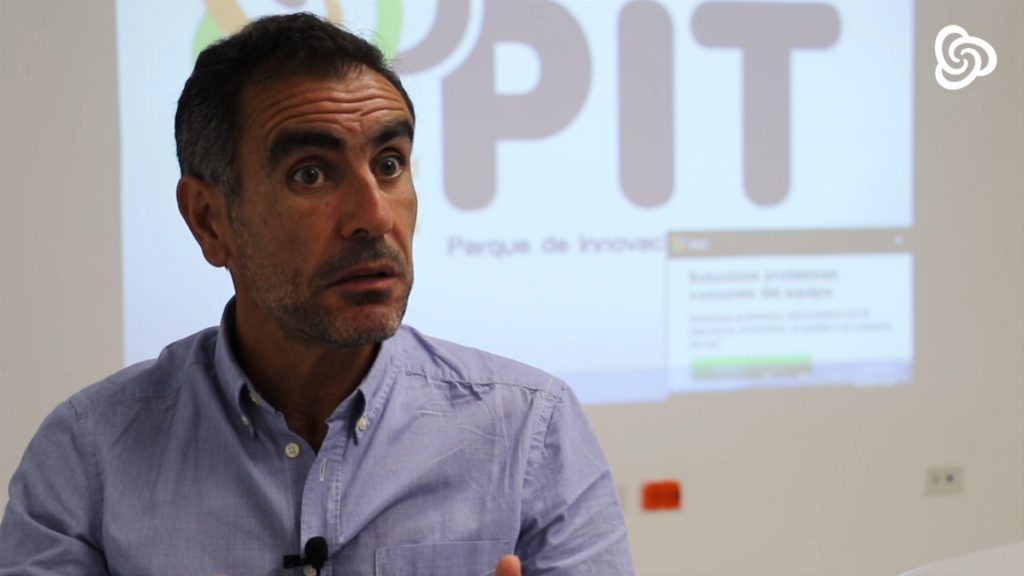
According with information collected by the Economic Development Council of Sinaloa, in 2015 the state of Sinaloa, known as the Mexican Barn, sold abroad agro food products that summed $843.21 million dollars, 33% of the exports total; together, the agro food industry, agriculture and livestock, agro-industry and fishery sectors totaled $2011.60 million dollars, which represented 79% of the state’s total that year. Year by year, around 80% of Sinaloa’s exports are destined to the United States, most of which are agriculture and livestock products. There lies the economic importance of taking the necessary actions on food safety to comply with what is stipulated in the Food Safety Modernization Act (FSMA) from the Food and Drug Administration (FDA), which has been discussed in the United States since 2013 and which purpose is to minimize the risks to human health. It should be noted that the terms of implementation of the FSMA will depend on the date of publication of the final rules; since that dispositions will enter into force, the countries that wish to enter or keep themselves in the American market will have a maximum of one year to conform to the new rules. In an interview with Jaime Martínez Urtaza, PhD in Biochemistry and Molecular Biology at the University of Santiago de Compostela (Spain), he talked to us about the implications that the approval of the FSMA of the FDA will have to Sinaloa: «It is very important to Sinaloa that in this moments they adapt precisely to these new requirements, to these new legal dispositions so, in case there is a new outbreak, it can present what the situation is; this is, that it can present data about the situation here. If there are no strains, if there is no insulation, you cannot say «No, we don’t have that strain» or «Here we had that strain but we have already eradicated it» or «This strain doesn’t come from this site»… ». The researcher made particular emphasis on the repercussions this traceability measures would have on the reduction of the human cost: «… it is important to generate a kind of initiative to adapt, from the classic procedures of food safety that were based on taking samples and tell if they were positives or not positive for a pathogen; now we need that strain… not only to be positive or negative, but that strain must be insolated, must be sequenced and must be incorporated to a data base to know how it is flowing, what is the diversity of this pathogens in a certain place, what is the severity of pollution and, above all, how to implement measures to eradicate it». In this sense, after that in November-December of 2015 a course-workshop on Bioinformatics Tools for the Analysis of Bacterial Genomes in Ecology and Epidemiology was imparted on the Technological Innovation Park (Parque de Innovación Tecnológica, PIT) of the Autonomous University of Sinaloa (Universidad Autónoma de Sinaloa, UAS), a trans disciplinary group was formed by university specialists and from the Research Center for Food and Development, as well as the PhD Jaime Martínez Urtaza from Milner Centre for Evolution from Bath University (United Kingdom). Currently, the Bioinformatics Laboratory of the PIT-UAS is participating in the genomic sequencing of bacterial strains that will allow the development of a traceability methodology especially designed for food safety. Written and translated by Belem Ruiz, (Edition and Communication).
Photovoltaic solar technology, sustainable and clean energy
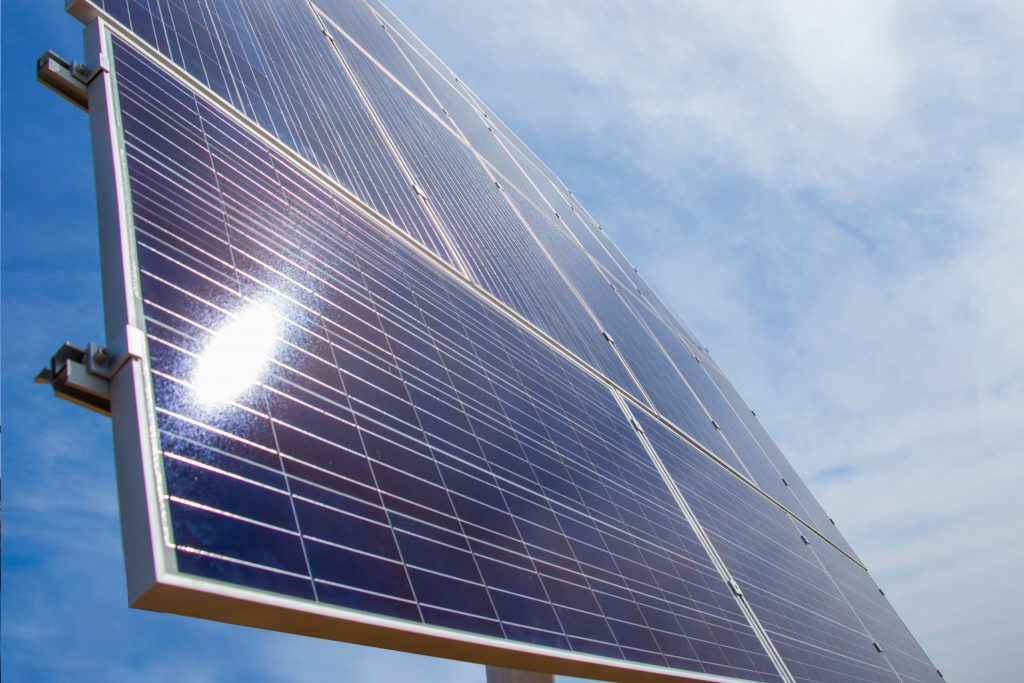
Clean energies are those that do not pollute air, soil or water, since they do not emit toxic sub-products during the process of energy generation. Due to the crisis of conventional or fossil energies, such as gas and petroleum, as well as the harmful effect that the exploitation of these has on the environment, nowadays clean energies like geothermal, wind, hydro and solar, bit by bit, are gaining importance in more and more regions of the planet. Worldwide, solar is the third most important source of sustainable energy, it consists of converting the energy generated by the sun into electrical energy and the most well-known method to carry out this process is through solar cells. In addition to the photovoltaic devices generating no noise when converting sunlight into electric energy, they are robust, reliable and long lasting. Nowadays, some of their applications are: telecommunications, rural electrification, farming, cattle raising, public lighting, signaling, control, rural development, voltage out of range, network outage, network lag, among others. This kind of energy is generated by the photovoltaic process, which starts with the photons emitted by the sun, that are captured by the photovoltaic solar panels, those photons are converted into direct current; this, through an inverter, is transformed into the alternate current which is poured on the net and is ready to use. We must make a precision: the photovoltaic solar panels are composed by cells or solar cells; in terms of generation, the solar cell turns sunlight in electricity but is not capable of generate large masses to connect to the net, a photovoltaic solar panel is a group of cells that together generate large amounts of energy. According with the engineer Jaime Agredano Díaz from the National Institute of Electricity and Clean Energy, around eight years ago the silicon solar cells started to take over the market, in 2008 they reached close to 90% of the modules that were manufactured around the world. The solar cells are mainly manufactured based on silicon, a material that although is abundant on Earth compared to others, is insufficient to cover the prospected demand for the manufacture of photovoltaic solar panels. Today materials such as copper, indium, selenite, cadmium, telluride, and gallium arsenide are also used, among others, and the research to discover new ways and materials to manufacture solar cells continues. In the mid-seventies, the first terrestrial applications of the photovoltaic technology were made, in consumer products such as watches, toys, calculators, among other devices that required a low supply to function. Once the efficiency of the solar cells was proved, technology itself and its prices started to improve, also it started to venture in areas such as signaling devices energizing, control and monitoring processes, and rural electrification. In his text, Agredano Díaz noted that over two million people around the world do not have electrical services, which turns out to be a big problem on rural areas of the developing countries. Now, in Mexico, it has taken advantage of the great growth potential for the photovoltaic energy that the rural communities have, where it is used not only with purposes of electrification, but it is also applied to energize stations of telecommunications rebroadcasting, in telesecondaries and rural clinics. After obtaining encouraging results on their first applications, in the late nineties a new application that started to revolutionize this market was ventured: photovoltaic system connected to the grid. The photovoltaic systems are connected in parallel to the network and have as main advantage that the same consumer generates totally or partially the energy he consumes, this is, the photovoltaic generator captures the sun radiation, which transforms it into electrical energy through an inverter network connection and is used for consumption. In Mexico, thanks to the bidirectional meters of the Federal Electricity Commission (Comisión Federal de Electricidad, CFE), is possible to obtain the benefits of the general utility scheme to the use and payment of the electrical resource known as net balance. The entirety of the photovoltaic system production is poured on the network of the CFE and later, on the date of the billing cut, the produced sum is subtracted to the total consumption, it is taken into account for the emission of the bill: if your photovoltaic system produced 20 kilowatts and you consumed 50 kilowatts, you will only pay 30 kilowatts. By regard to obtaining the maximum performance of photovoltaic technology, different factors affect the actual daily production: the positioning of the photovoltaic system, the orientation, the geographical latitude where it is installed and the shade it receives (because of the clouds or taller buildings around). In places with little space available for the installation of photovoltaic modules, the system can be complemented with solar trackers, which increase the daily energy production up to 30% . Finally, we leave two lists, one with the advantages of this technology and other with the disadvantages. Advantages: It is a source of renewable energy, its resources are unlimited. No emissions (it does not noticeably contribute to the pollution or global climate change). Low operation costs. High reliability and durability in modules (over 20 years). It can integrate to the structures of a new construction or one that already exists. High public acceptance. Great security level. The cost decreases as the technology improves. Disadvantages: Diffuse fuel source (sunlight is a relatively low density energy). High installation costs, it requires a strong initial investment. Lack of economic and reliable energy storage devices. In order to recollect solar energy on a great scale, big extensions of land are required. It has some limitations respecting the consumption because, during periods where there is no sun, it cannot use more energy than the one accumulated. The places with more solar radiation are desert and far from the cities. Written by Alfredo Careaga (Communication and Diffusion, PIT-UAS), translated by Belem Ruiz(Edition and Communication, PIT-UAS).
General director of the PIT-UAS will follow up research project in Germany
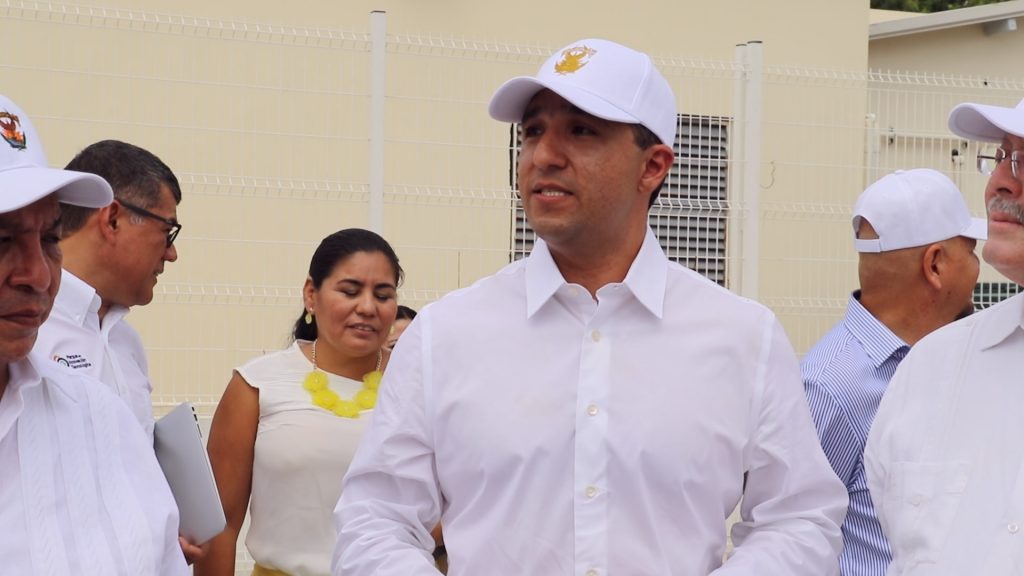
As part of a second phase of a research project along with the University of Oldenburg, the general director of the Technological Innovation Park (Parque de Innovación Tecnológica, PIT) of the Autonomous University of Sinaloa (Universidad Autónoma de Sinaloa, UAS), José Ramón López Arrellano, will make a stay in Germany. The director explained that the project is about the formulation of an institutional structure to the University, in the implementation and development of research programmes, which final goal is to transmit the knowledge and techniques used in German educative centres with universities around the world. He explained that this in-person stage is where developments and advances obtained in this time are reviewed, in addition to receive advice from experts belonging to the University of Oldenburg, in order to align with best practices and to present the advances to the different actors of the European university, also to see the recommendations, to return later, improve and apply it. López Arellano pointed out that this is an important achievement on a national scale to the UAS, because PIT’s project was selected from over 300 universities in the world, and there are only three Mexican participants, being this one the only project involving applied research, as the other two are focused in other kind of programmes. He emphasized that Casa Rosalina (UAS) sets an important precedent on what are the research projects, accentuating the linkage with the business sector framed in the Consolidation Development Plan 2017 leaded by the rector, PhD Juan Eulogio Guerra Liera. Finally, he informed that the idea is to implement this proposal about the methodologies and techniques to be follow for the development of the processes, placing UAS as one of the first universities to count with a process in research, development of projects certified on an international level, endorsed by a university focused on applied research, like the University of Oldenburg is. Source: UAS Social Communication Directorate http://dcs.uas.edu.mx/index.php?sec=3&op=2&tipo=i&id_noticia=6957. Translated by Belem Ruiz (Edition and Communication, PIT-UAS).
Sinaloense Talent at CERN
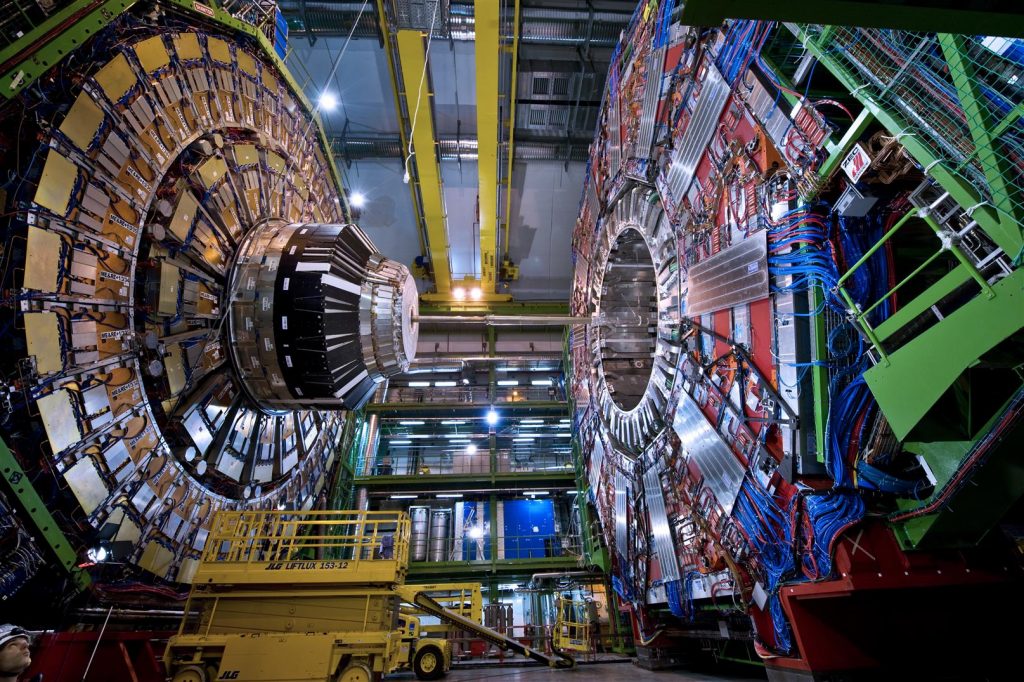
Scientists from 29 countries around the world team up to recreate the explosion that gave life to the Universe. Among them are the Mexicans Gerardo Herrera Corral, PhD in Physics by the University of Dortmund, and PhD Ildefonso León Monzón, from the Autonomous University of Sinaloa (Universidad Autónoma de Sinaloa, UAS) and level ll of the National System of Researchers (Sistema Nacional de Investigadores, SNI). Both of them will collaborate in ALICE project, that is part of the Large Hadron Collider (LHC), located at the European Organization for Nuclear Research (CERN, the French acronym for Conseil Européen pour la Recherche Nucléaire). León Monzón is responsible for the detector ALICE (A Large Ion Collider Experiment), designed for heavy ion collision. The contributions of his team made possible the prolongation of the research until 2022, and along with that the opportunity for more postgraduate student from UAS to join the project. His team designed and built a detector called AD (ALICE Diffractive), which extends ALICE detector efficiency for a type of physics called diffractive physics. Students from UAS participated in the establishment of an Electronics of Printed Circuit Laboratory, and nowadays 3 researchers work in the ALICE project, along with two students belonging to the Informatics Faculty, another one in the area of Electronics and two more are postgraduate students in Physics; among them, Solangel Rojas Torres and Juan Carlos Cabanillas Noris, from the doctorate at the Faculty of Physical-Mathematical Sciences and Information Sciences at the Informatics Faculty of UAS, respectively. Their thesis of master and doctor degree have corresponded with the investigation lines of the ALICE Diffractive project. Solangel Rojas Torres Studies the doctorate at UAS’ Faculty of Physical-Mathematical Sciences. In 2013, while he was on his second grade of master, he received an invitation from León Monzón to be part of the team in the detectors area. At first, points out the 28 year old student, he had no clear idea about the Large Hadron Collider and he started to study everything related to the experiment. “It was a hard thing. I roughly knew about the Large Hadrons Collider and had some pretty wrong ideas. I started reading about what it was, searched for technical documents and scientific literature. I realized it was something completely different from what I expected. It was tough to integrate to all this”, he said. Solangel confessed having imagined that the Large Hadron Collider was a kind of tunnel, where there was the circular accelerator, and were technicians, scientists and researchers always working inside of it, 100 meters underground. “It’s not really like that. There is a tunnel, but only researchers, people specialized in the tunnel part work there. Around that there is a huge amount of things: systems and different areas”, he explained. Also, he remembered, there are 19 detectors, each one integrated by multiple specialists —researchers, theorists, technicians and engineers— from various countries. The invitation to join the most ambitious project in the world, he reminisced, comes naturally, as a need to be part of the project in which now he is involved, because during his master studies he worked in the characterization of materials used for making radiation detectors and are frequently used in the Collider’s detectors. He arrived to CERN on April 2014. He stayed one month. He went as a support to PhD León Monzón and PhD Herrera Corral, to perform a change of sensors at the V0 detector. The contributions to ALICE project The detector was finished in a year, so the work was intense. Solangel joined when the project was just a proposal. “There were meetings where they proposed materials, geometries and discussed about the construction. Then the subject was the construction of the detector. My direct contribution was, partly, in the construction and installation, with PhD Ildefonso León and Juan Carlos Cabanillas, with them and another colleagues form Germany and southern France. The detector was installed on December that year”, he said. The task, he said, was not easy. The systems and security protocols required strict planning, due to the limited time. He had barely two days to finish any project. His main job and contribution to this project, he added, started on September 2015. «A prototype of the detector was subjected to a particle beam to study its behaviour on a more controlled way. We had a lot of results and facts. I worked directly with the results of this test: analysing the behaviour of the detector and understanding all the information the experiment throws», he said. That detector, he pointed out, was designed to make studies of diffractive physics, the kind of physics that occur when two particles pass each other, but do not collide. «It is overwhelming to work in a project of this magnitude. In the end, you realize everything you learn. You set the limits very high. I have thought on keep doing this, going to the post doctorate. When the moment comes I will seek it. I really like research”, he expressed. Juan Carlos Cabanillas Noris Juan Carlos is 36 years old, he’s a student of UAS’ Information Science doctorate. He was invited to join ALICE project in 2014 by León Monzón, within the area Control Systems, developed during a semester. His participation is in the detector number 19, which aims to expand the reading of the diffractive events in collisions lead-lead and proton-proton in the so-called Room 2, of the LHC. It was in December of that year when that detector was installed. It was called ADA. It conducts studies of diffractive physics. It consists of two detectors installed at the ends of the experiments, one on side A (ADA) and the other on side C (ADC); both conform the detector AD. After the installation, continues the assembly stage of the subsystems or online systems. “What it does is to expand the angle of pseudo rapidity. When there is a clash of beams inside the experiment, when hitting the “group of beams” it generates a series of
Accompanied by university authorities, Sinaloa’s elected governor visits the PIT-UAS’ facilities
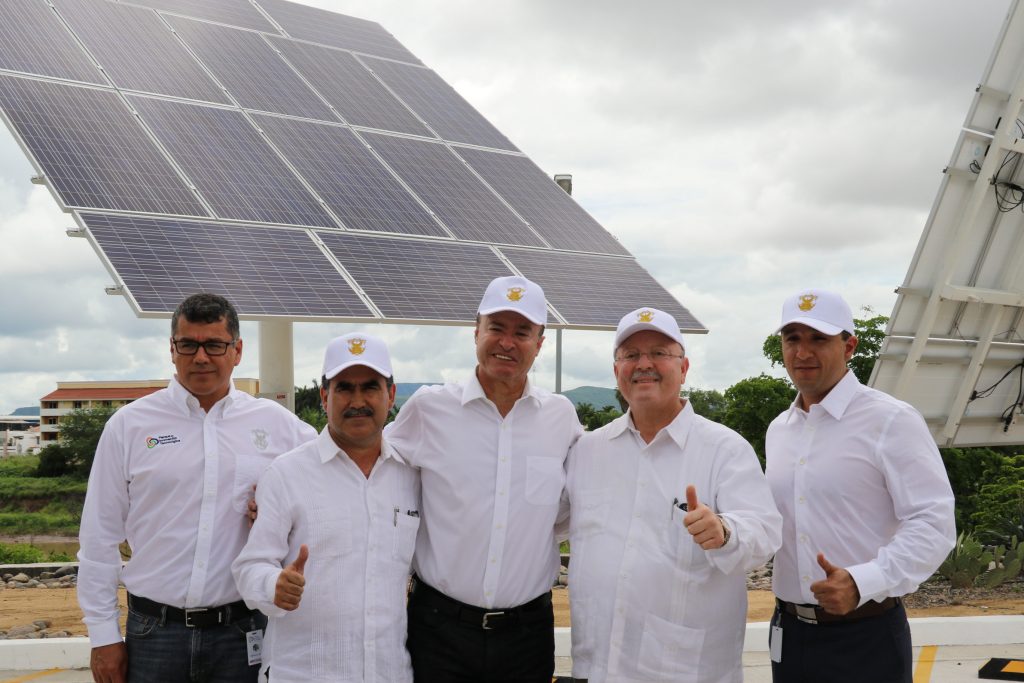
This Monday, August 22nd, Sinaloa’s state elected governor, Quirino Ordaz Coppel, accompanied by authorities from the largest university of Sinaloa, was received by the general director of the Technological Innovation Park (Parque de Innovación Tecnológica, PIT) belonging to the Autonomous University of Sinaloa (Universidad Autónoma de Sinaloa, UAS), José Ramón López Arellano gave the visitors a tour through the university’s innovation centre facilities. During the tour, PhD Juan Eulogio Guerra Liera, UAS’ rector, commented with Ordaz Coppel about the initial investment for the PIT-UAS conformation, which consisted in contributions made by the National Council of Science and Technology (Consejo Nacional de Ciencia y Tecnología, CONACyT) and the university; Guerra Liera also responded to several questions made by the elected governor about the importance of this organizational unit that depends from UAS Rectory. Meanwhile, PIT-UAS’ general director guided the tour, explaining the methodology and functioning of the different labs, areas and workshops visited, where highly trained researchers’ knowledge converge, as well as undergraduate and graduate students, in order to give solutions to specific problems of the private and public sectors, for Sinaloa’s society benefit. MPA Ordaz Coppel showed interest on the projects currently developing at the Park, among them the applied researches in areas like agriculture, information sciences, clean energies, high energy physics and health. He also took special interest on the scientific-technological forecasts that could take place with PIT-UAS collaborators, specifically in the bioinformatics, robotics and 3D printing and modelling areas. Thus, during the back to school period and as a confirmation gesture to the agreed collaboration between Rosalina House (UAS) and the 2016-2019 government, this Sinaloa elected governor’s tour through the Park facilities took part of a guided visits day that the rector gave to the businessman and politician through the different UAS’ organizational and academic units, with the finality of showing him the UAS’ educational and service offer, as well as the great university potential. Written and translated by Belem Ruiz (Edition and Communication, PIT-UAS).