PIT-UAS, presente durante el informe sobre los avances de la reforma de telecomunicaciones y radiodifusión, en la ciudad de México

El maestro José Ramón López Arellano, director del Parque de Innovación Tecnológica (PIT) de la Universidad Autónoma de Sinaloa (UAS), acudió en representación del rector de la UAS al Distrito Federal, para presenciar la reunión donde se dieron a conocer los avances de la reforma de telecomunicaciones y radiodifusión. Ésta, a casi dos años de su promulgación: “… ha logrado que hoy los ojos de los inversionistas del mundo estén puestos en México”, según aseguró Gerardo Ruiz Esparza, titular de la Secretaría de Comunicaciones y Transportes (SCT). Durante la presentación de los avances de la reforma de telecomunicaciones y radiodifusión, Ruiz Esparza manifestó a empresarios del sector, academia y legisladores que México se coloca “como uno de los países con más oportunidades para las actividades económicas y el desarrollo”. Con la reforma “se han formalizado importantes nuevas inversiones por más de seis mil millones de dólares, de firmas de calidad mundial, como AT&T, Eutelsat y Virgin Mobile”, detalló. Dio como referencia que recientemente la Organización para la Cooperación y el Desarrollo Económicos (OCDE) sostuvo que la regulación de las telecomunicaciones en México es ahora significativamente menos restrictiva, incluso situándose por debajo del promedio de los países miembros. En un video transmitido durante la presentación, Thaddeus Arroyo, director de AT&T en México, aseguró que “buenas políticas promueven buenas decisiones de inversión”. Así, la adquisición de Iusacell y próximamente de Nextel, por AT&T, son resultados de las reformas. En otros temas, la SCT anunció que publicará en su portal de internet la solicitud de manifestaciones de interés para el desarrollo de la red compartida, con lo cual iniciará su licitación. La red compartida de servicios móviles al mayoreo implica una inversión aproximada de diez mil millones de dólares para los próximos 10 años, y se trata del proyecto de infraestructura más grande en telecomunicaciones. La expectativa de la dependencia es que, una vez liberada la banda de 700 MHz, se podrán atraer más inversiones privadas y mejorar la cobertura de internet, telefonía celular y la calidad de los servicios. Ruiz Esparza destacó que “gracias a la reforma será posible realizar la transición digital a la televisión”, y que por mandato constitucional deberá concretarse el 31 de diciembre de 2015. A favor Eliminación de la larga distancia nacional. Portabilidad de números en 24 horas. Eutelsat Communications adquirió Satmex por 831 millones de dólares. Virgin Mobile inició operaciones en México, con una inversión de 45 millones de dólares. AT&T invirtió 2500 millones de dólares por la compra de Iusacell y busca invertir 1875 millones de dólares adicionales. En espera Poco avance en el proceso de transición digital de la televisión, el cual deberá terminar el 31 de diciembre de este año, aunque sólo se ha realizado un apagón. El año pasado debió iniciar el despliegue de la red compartida, pero hasta noviembre de 2014 la SCT inició pruebas de campo con la tecnología que se utilizará en la banda de 700 MHz. Aumentar los niveles de conectividad: existe la oportunidad de que en 2018 se haya conectado a 60 millones de los usuarios actualmente desconectados. Mercado, factor de mayor peso para avances de la reforma A casi dos años de la promulgación de la reforma de telecomunicaciones, y uno de la nueva legislación, las inversiones en el sector obedecen fuertemente a la dinámica del mercado internacional, aunque las nuevas reglas han facilitado las operaciones. Aún faltan temas cruciales para el sector, por lo que los verdaderos efectos podrían empezar a verse hasta en un año, de acuerdo con especialistas. Jorge Fernando Negrete, director de Mediatelecom Policy & Law, expresó que en el caso de AT&T los 2500 millones de dólares que invertirá son para comprar activos de empresas, pero no generan necesariamente mayor competencia y cobertura. “AT&T entró a México porque venía de un paquete de adquisiciones en Brasil, Argentina y Colombia, y en ese paquete venía nuestro país”, detalló. Para el Instituto de Derecho de las Telecomunicaciones, las medidas de mayor impacto en la gestación de un entorno de competencia efectiva en los mercados no han alcanzado su materialización. Como, por ejemplo, la compartición de infraestructura y la desagregación de la red local del preponderante: a pesar de que en el caso de la oferta pública ya fue publicada, aún no se ha llevado a cabo ningún acuerdo de uso y compartición de infraestructura de América Móvil. “El foco de atención del órgano regulador y de los agentes involucrados debe centrarse en el cumplimiento e instrumentación efectiva de las medidas pendientes de materialización”, expuso. Adicionalmente, está pendiente el despliegue e inicio de operaciones de la red compartida, para la que se prevén inversiones de diez mil millones de dólares. En televisión digital, la SCT informó que a la fecha ha entregado poco más de dos millones de televisores, pero la dependencia y el Instituto Federal de Telecomunicaciones van contra reloj. De acuerdo con el mandato constitucional, la transición digital en todo el país deberá concretarse a más tardar el 31 de diciembre de este año y apenas se ha hecho un apagón. Negrete consideró que “tenemos que esperar por lo menos otro año para ver efectos reales y objetivos de la reforma, las empresas necesitan ejercicio fiscal para ver si se está invirtiendo en el país o no”. El Economista
PIT-UAS, present during the report about the advances on the reform of telecommunications and broadcasting, at Mexico City
On behalf of the Rector of the Autonomous University of Sinaloa (UAS, Universidad Autónoma de Sinaloa), MBA José Ramón López Arellano, Director of the Technological Innovation Park (PIT, Parque de Innovación Tecnológica) of the University, went to Mexico City in order to witness the meeting which objective was to make known the advances on the reform of telecommunications and broadcasting. The reform, at almost two years of its promulgation: «… has managed to make world investors put their eyes on Mexico», according to Gerardo Ruiz Esparza, principal of the Secretariat of Communications and Transportation (SCT, Secretaría de Comunicaciones y Transportes). During the presentation of the advances on the reform of telecommunications and broadcasting, Ruiz Esparza expressed to sector’s entrepreneurs, academics and legislators that Mexico sets «as one of the countries with more opportunities for economic activities and development». With the reform «important new investments have been formalized for over six billions of dollars, from global quality firms, such as AT&T, Eutelsat and Virgin Mobile», detailed. He gave as a reference that recently the Organisation for Economic Co-operation and Development upheld that the regulation of telecommunications in Mexico is now significantly less restrictive, even placing itself below the average of member countries. In a video transmitted during the presentation, Thaddeus Arroyo, Director of AT&T Mexico, claimed that «good policies promote good investment decisions». Thus, AT&T’s acquisitions of Iusacell and soon Nextel are results of these reforms. In other topics, the SCT announced that on its website will be published the application for expressions of interest for the development of the shared network, wherewith its bidding will begin. The shared network of mobile services at wholesale implies an approximate inversion of ten billions of dollars for the next ten years, and it is the biggest infrastructure project on telecommunications. The government unit expects that, once liberated the 700 MHz band, more private investments will be attracted and internet coverage, mobile telephony and the quality of the services will be improved. Ruiz Esparza emphasized that «TV’s digital transition will be possible to realize thanks to the reform», and that by such constitutional mandate this must be achieved by December 31st of 2015. In favor Elimination of national long-distance. Portability of numbers within 24 hours. Eutelsat Communications acquired Satmex by 831 millions of dollars. Virgin Mobile began operations in Mexico, with an investment of 45 millions of dollars. AT&T invested 2.5 billions of dollars on the purchase of Iusacell and is planning to invest 1875 additional millions of dollars. On hold Scant advance on TV’s digital transition process, which must end by December 31st of this year, although there has been just one analog blackout. Shared network’s deployment should have started last year, but it was until November of 2014 that the SCT began with the field testing of the technology to be used on the 700 MHz band. Raise connectivity levels: there is chance of connecting 60 millions of currently unconnected users by 2018. Market, the most important factor for progress of the reform At almost two years from the promulgation of the reform on telecommunications, and one year of the new legislation, investments on the sector strongly obey the dynamic of international market, although new rules have facilitated the operations. There still a lack of crucial subjects for the sector, therefore, true effects could begin to be noticeable in a year, in accordance to specialists. Jorge Fernando Negrete, director of Mediatelecom Policy & Law, expressed that in the case of AT&T’s 2.5 billions of dollars to be invested, those are for purchasing business assets, even though they do not necessarily generate a bigger competition nor coverage. «AT&T entered in Mexico because it came from a procurement package on Brazil, Argentina and Colombia, and inside of that package came our country», detailed. For the Law Institute of Telecommunications (Instituto de Derecho de las Telecomunicaciones), the measures of higher impact on the gestation of an effective competence environment on markets have not reached its materialization yet. As, for example, infrastructure sharing and unbundling of the local network of the predominant: notwithstanding that in the case of public offer it has already been published, it is not been carried out yet any agreement on usage and sharing of América Móvil’s infrastructure. «The spotlight of the regulatory authority and the agents involved should focus on compliance and effective implementation of the measures which materialization still unreached», stated. Additionally, still to be done the shared network’s deployment and its start of operations, with planned investments of ten billions of dollars. On digital television, the SCT informed that to the date a little bit over two millions of televisions have been delivered, but this agency and the Federal Institute of Telecommunications (Instituto Federal de Telecomunicaciones) go against the clock. In accordance with the constitutional mandate, the digital transition in the whole country must be done at the latest on December 31st of this year, and barely one analog blackout has been done. Negrete considered that «we have to wait at least another year to see real and objective effects of the reform, enterprises need fiscal exercise to see if investments are being done in the country or not». Source: El Economista journal. http://eleconomista.com.mx/industrias/2015/03/11/reforma-telecom-genero-ya-inversion-us6000-millones. Translated by Belem Ruiz (Edition and Communication, PIT-UAS).
Presentan la Agenda de Innovación de Sinaloa, cuenta con 39 proyectos al 2019
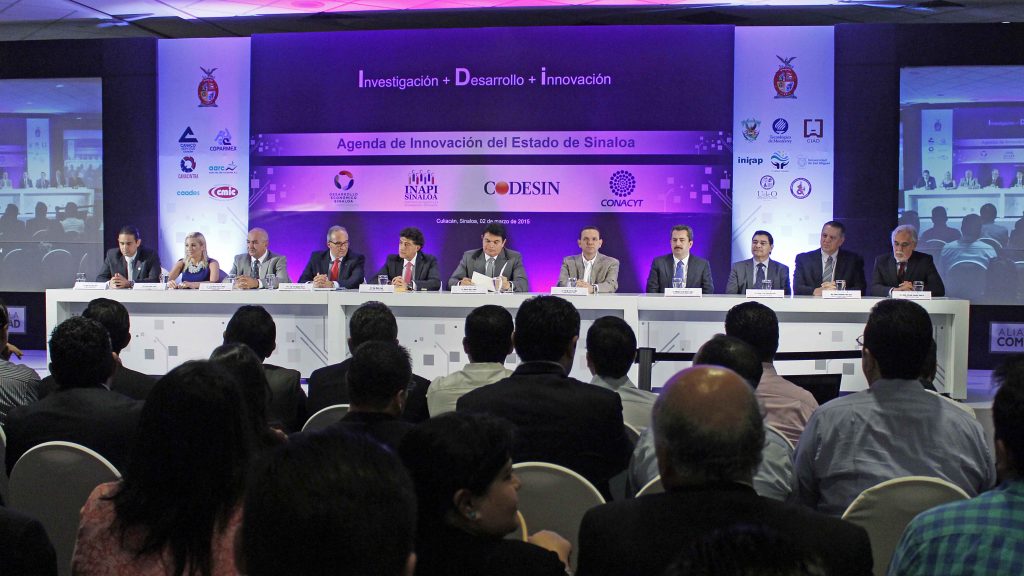
El director adjunto de Desarrollo Regional del Consejo Nacional de Ciencia y Tecnología (CONACyT) señala que los 39 proyectos son producto del consenso de todos los sectores productivos, lo que garantiza su concordancia con la vocación del estado, tomando en cuenta debilidades y fortalezas de cada uno de los sectores. La Agenda de Innovación de Sinaloa forma parte de una estrategia del Gobierno federal para potenciar las capacidades de los 32 estados de la República y eliminar disparidades entre las entidades federativas. Micha Zaga exhorta al sector privado a reconocer la importancia de ciencia, tecnología, investigación e innovación en sus procesos productivos, ya que los países más exitosos invierten recursos privados de manera decidida: “El gasto de países [exitosos] en ciencia y tecnología tiene dos componentes: el público y el privado; eso es algo que en México tenemos que implementar, no podemos alcanzar lo que hacen otros países, donde el gasto privado es mucho mayor. […] En los países más, más exitosos es casi 80-20, algo razonable sería 70-30; aquí estamos totalmente al revés. Tradicionalmente el sector público invierte mucho más, el 70-30, donde el Gobierno invierte mucho más”. Una vez entregada la Agenda a los sectores productivos y al estado y sus municipios, Micha Zaga destaca que la ciencia y la tecnología deben ser vistas como motores indispensables para el desarrollo, a fin de que el estado pueda salir adelante: “La recomendación para los involucrados es que, no hay duda alguna, ciencia, tecnología e innovación son indispensables para el mejoramiento material de la gente, de los ciudadanos, de las familias, es una condición necesaria para el desarrollo; que todos colaboremos en la materia, que hagamos nuestro mayor esfuerzo para canalizar recursos a esto, al Gobierno federal, estatal, municipal y sobre todo la iniciativa privada”. El funcionario federal reconoce que, en materia de inversión pública, el Estado continúa bajo, aunque dice que con Enrique Peña Nieto ha habido un aumento que no había ocurrido en los últimos 20 años: “Hay compromiso de llegar al 1% en el gasto público y privado en los años de esta administración. No se ha calculado el último, estábamos en 0.45% cuando tomó posesión Enrique Cabrero [en CONACyT]; creemos que [ahora] estamos arriba de 0.6%”. Sector alimentario El portafolio de Sinaloa parte de la vocación del estado para producir alimentos, como el hecho de ser el principal productor de hortalizas, producir 33% del camarón mexicano, contar con una estructura ganadera y acuícola importante; lo que lo coloca como el productor de 30% de los alimentos de México. Así, la agenda formada por CONACyT y empresarios cuenta con proyectos en 10 sectores, 7 de los cuales están vinculados a la producción de alimentos o el aprovechamiento de desechos del proceso productivo (como la cáscara de mango o de camarón). “Los proyectos van enfocados a aumentar la competitividad, que se vuelvan productos de mayor valor agregado, que es la tendencia en el mundo actualmente, es el tema de las innovaciones; que las ideas sean lo que marque el camino para estos proyectos en el sector alimentario, sobre todo”, manifiesta. Se toman en cuenta también las debilidades, como la falta de recursos de alto nivel académico y especialización, la oferta poco adecuada para la demanda, que el factor climatológico influye cada vez más, la falta de vinculación entre la academia y los centros de investigación, sector dependiente de altos insumos y tecnología, y un mercado de productos en manos de intermediarios. “Aquí ha intervenido el sector empresarial, sectores productivos, intervino el Gobierno federal, estatal, muchos líderes de opinión, ciudadanos versados en el tema, se ha trabajado desde la base, con los productores. Surgió como un ejercicio natural, no es un ejercicio teórico, es práctico, la metodología es bottom-up, de abajo hacia arriba, y así se hizo”, defiende. Luis Torreblanca, director de Desarrollo Tecnológico e Innovación, plantea que afortunadamente México cuenta aún con el bono demográfico, por lo que hay mucha gente que se está preparando en un alto nivel para el sector: “Todas las competencias que se requieren para aprovechar esta energía barata y crecimiento que en consecuencia van a tener todos los sectores, afortunadamente está en el boom generacional, hay una buena cantidad de jóvenes que están estudiando, un millón que está estudiando ingeniería, hay una buena materia prima de talento que puede aprovecharse en esos sectores”. La energía barata que Sinaloa tendrá a partir del gas natural será una parte estratégica para recomponer la competitividad; que, aunado a los recursos naturales del estado, lo colocan en una buena posición. Reconoce que es en la especialización donde Sinaloa tiene debilidad: “Hay en México… vemos una concentración, 35%, 40% de los investigadores están en el área metropolitana del D. F.; hay que revertir un poco esta tendencia. En ese aspecto, pudiera decirse tenemos alguna desventaja de estados donde está concentrada la investigación y el desarrollo, los laboratorios, grandes universidades. Ahí, Sinaloa tiene algunas deficiencias. Definitivamente, con este esfuerzo de cambiar las prioridades por estado, lo que busca CONACyT es apoyar para que haya mejor distribución regional de las actividades”. Sectores con potencial El potencial del estado no se enfoca únicamente en los alimentos, la Agenda de Innovación de Sinaloa establece proyectos en tecnologías de la información cuya fortaleza principal es el alto volumen de egresados en carreras de informática e ingeniería: cada año, plantea el documento, egresan 2800 jóvenes de las universidades, 50% de ellos certificados en plataformas tecnológicas, por lo que existe un superávit respecto a la oferta y demanda en talento humano. Otras ventajas son los apoyos gubernamentales atractivos, un parque tecnológico y costos competitivos. Las debilidades encontradas para las tecnologías de la información son empresas poco vinculadas con la academia, el alcance de actividades comerciales de las empresas sinaloenses a nivel internacional es mínimo y el mercado es muy variado, en tanto que el campo de las sinaloenses está por debajo de las necesidades. Y es que los principales clientes del sector son dependencias de Gobierno, la industria farmacéutica, los sectores comercial, turístico, agrícola y
With 39 projects to 2019, the Innovation Agenda of Sinaloa is presented
The Assistant Director of Regional Development from the National Council of Science and Technology (CONACyT, Consejo Nacional de Ciencia y Tecnología) notes that the 39 projects are product of every productive sectors’ consensus, which guarantees its concordance with the State’s vocation, considering weaknesses and strengths of each sector. The Innovation Agenda of Sinaloa is part of a federal Government’s strategy to strengthen the capacities of the Republic’s 32 States and to eliminate disparities among the federal entities. Micha Zaga exhorts private sector to recognize the importance science, technology, research and innovation have in their productive processes, being that the most successful countries invest private resources decidedly: «The outlay of [successful] countries in science and technology has two components: public and private; that is something we must implement in Mexico, we cannot reach what other countries make, where private outlay is far greater. […] At the most, most successful is almost 80-20, something reasonable would be 70-30; here we are totally the other way around. Traditionally, the public sector invests much more, 70-30, where the Government invests much more». Once delivered the Agenda to the productive sectors and the State and its municipalities, Micha Zaga emphasizes that science and technology must be seen as indispensable motors for development, so that the State can get ahead: «The recommendation for the involved is that —there’s no doubt— science, technology and innovation are indispensable to the material improvement of people, of the citizens, of the families, it is a necessary condition to development; let’s all collaborate in the matter, let’s make our greatest effort to direct resources to this… [The exhortation is made to] federal, state and local Government, and above all to private initiative». The federal public servant recognizes that, concerning to public investment, the State continues being low, although he says there has been a raise with Enrique Peña Nieto which hadn’t occurred in the past 20 years: «There’s the commitment of reaching 1% on public and private outlay in the years of this administration. The last hasn’t been calculated, we were in 0.45% when Enrique Cabrero assumed his position [in CONACyT]; we believe that [now] we are above 0.6%». Food sector The portfolio of Sinaloa is based on the State’s vocation for food production, as well as on the fact of being the main vegetable producer, producing 33% of the Mexican shrimp, having an important cattle breeding and aquaculture structure; all which makes of Sinaloa the producer of 30% of Mexico’s food. Thus, the agenda designed by CONACyT and entrepreneurs has projects for 10 sectors, 7 of which are associated to food production or the exploitation of productive process’ waste (such as mango peel or shrimp’s). «The projects are focused on increasing competitiveness, so they can become products of major added value, which is the global trend nowadays, is innovation’s topic; that the ideas be what the path marks for these projects in food sector, chiefly», expounds. Weaknesses are also considered, as the lack of human resources with higher academic and specialization levels, the poorly adequate offer to the demand, the each day more influential climatological factor, the absence of linkage between the academy and the research centers, a sector dependent of high inputs and technology, and a market of products in the hands of intermediaries. «Here the business sector has intervened, productive sectors, federal and state Governments took part, many opinion leaders, well versed on the subject citizens, it has been worked from the basis, with the producers. It appeared as a natural exercise, it is not a theoretical exercise, it is practical one, the methodology is bottom-up, and that’s how it was made», defends. Luis Torreblanca, Director of Technological Development and Innovation, considers that fortunately Mexico still count with the demographical bonus, therefore many people is preparing in a high level for the sector: «All the competencies required to take benefit of this cheap energy and growth which in consequence are going to have all the sectors, fortunately is in the generational boom, there is a fair amount of young people who is studying, a million which is studying engineering, there is good raw material of talent that can be used in such sectors». The cheap energy Sinaloa will have based on natural gas will be a strategical part for competitiveness repairing; which, joint to State’s natural resources, place Sinaloa in a good position. He admits that is in specialization where Sinaloa has weakness: «There is in Mexico… we see a concentration, 35%, 40% of researchers is in the metropolitan area of D. F. [Mexico City]; we must revert this trend. In this aspect, it might be said that we have some sort of disadvantage: there are some States where research and development, laboratories and big universities are concentrated. There, Sinaloa has its deficiencies. Definitely, with this effort to change the priorities per State, what CONACyT aims is to support so there will be a better regional distribution of the activities». Sectors with potential State’s potential does not focus just in food, the Innovation Agenda of Sinaloa stablishes projects in technologies of information, which main strength is the high volume of graduates from careers of informatics and engineering: each year, formulates the document, 2800 youths graduate from universities, 50% of them in technological platforms, which is why there is a surplus regarding the offer and the demand of human talent. Other advantages are attractive governmental supports, a technological park and competitive costs. The found weaknesses for technologies of information are enterprises poorly linked with the academy, the international reach of commercial activities the enterprises from Sinaloa have is minimum and the market is very varied, whereas the field of Sinaloa’s enterprises is lower than the actual necessities. And the reason is that the principal clients of the sector are Government units, the pharmaceutical industry, and sectors such as commercial, touristic, agricultural and educational. In tourism, the Agenda considers Sinaloa has strengths, as sun destinies, nautical tourism, besides natural, historical and cultural attractions. As for weaknesses, it is required
Visita guiada para alumnos de la preparatoria La Cruz, extensión Jacola
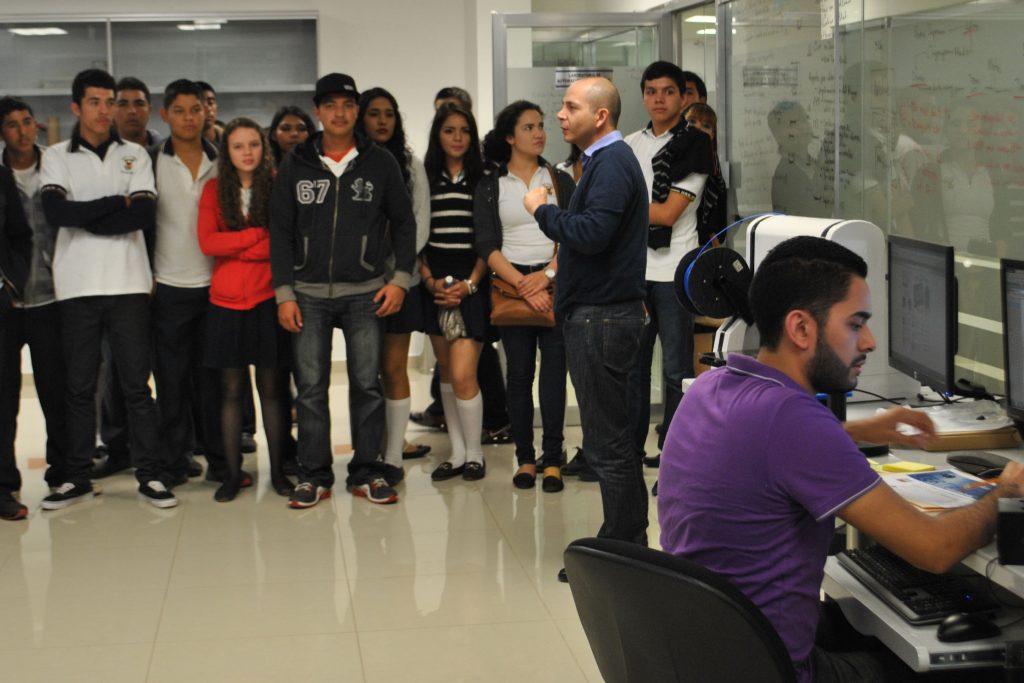
Desde la preparatoria La Cruz, extensión Jacola, visitaron el Parque de Innovación Tecnológica (PIT) de la Universidad Autónoma de Sinaloa (UAS) 23 personas, con la finalidad de conocer las instalaciones y conocer las labores que la Casa Rosalina realiza en materia de proyectos tecnológicos. El maestro Rogelio Prieto Alvarado, de la Coordinación Operativa del PIT-UAS, fue el encargado de guiar a este grupo de preparatorianos en su recorrido. Además de recibir a los alumnos con una charla introductoria sobre los inicios del Parque y las funciones de éste, Prieto Alvarado atendió las inquietudes de los estudiantes conforme visitaban las diferentes áreas que constituyen el PIT-UAS. Al finalizar el recorrido, se les invitó a continuar con sus estudios, se les habló de la importancia y el gran impacto socioeconómico que las carreras de las áreas de ingenierías tendrán en los próximos años para Sinaloa, además de la necesidad de innovar en la materia. En este tenor, el coordinador operativo del Parque planteó la posibilidad de que en un futuro los jóvenes pudieran integrar algún proyecto a través del PIT-UAS. Comunicación Social PIT-UAS
Guided visit to students from La Cruz High School, Jacola Extension
Coming from La Cruz High School, Jacola Extension, 23 students visited the Technological Innovation Park (PIT, Parque de Innovación Tecnológica) of the Autonomous University of Sinaloa (UAS, Universidad Autónoma de Sinaloa), with the purpose of knowing the facilities and the duties realized by the University in matter of technological projects. MSc IT Rogelio Prieto Alvarado, belonging to the PIT-UAS’ Operative Coordination, was the responsible of guiding this group of students in their tour. Besides receiving the youths with an introductory talk about the beginnings of the Park and its functions, Prieto Alvarado attended the students’ curiosity as they were visiting the different areas that constitute the PIT-UAS. At the end of the tour, they were invited to continue with their studies, they were talked about the importance and the great socioeconomic impact careers in engineering areas are going to have in the next years in Sinaloa, also the necessity of innovation in the matter was mentioned. In this vein, the Operative Coordinator contemplated the possibility of these youths integrating some project through the PIT-UAS. Department of Communications PIT-UAS. Translated by Belem Ruiz (Edition and Communication, PIT-UAS).
Banderazo de inicio de obra del proyecto Smart EcoPark PIT-UAS
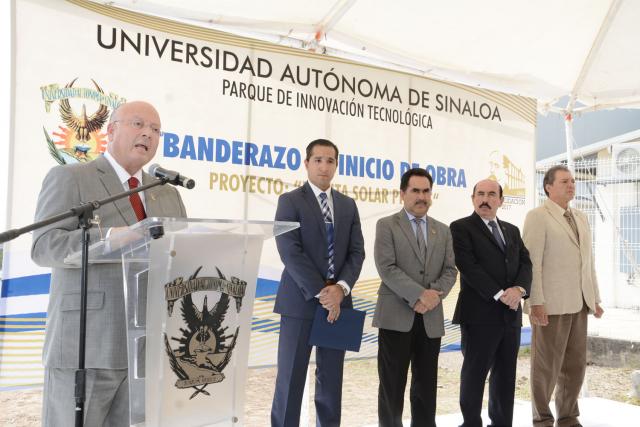
El rector de la Universidad Autónoma de Sinaloa (UAS), doctor Juan Eulogio Guerra Liera, puso en marcha el proyecto de la planta solar para la generación de energía eléctrica en las instalaciones del Parque de Innovación Tecnológica (PIT), en el marco del objetivo institucional de consolidar una universidad verde. Ante autoridades universitarias e investigadores de la UAS, el rector apuntó que una realidad contundente en el contexto actual de la sociedad del conocimiento es la importancia de la innovación y la tecnología en las actividades humanas. Aseguró que en la Universidad se tiene la plena conciencia de esta realidad, por lo que se está enfocando a la generación de ideas y acciones concretas que proyecten hacia nuevos niveles de excelencia. “Las organizaciones que no se atrevan a innovar, quienes no inviertan esfuerzos y recursos en la mejora de procesos, materiales y productos, están condenados al aislamiento o al rezago, en un mundo marcado por el dinamismo y la construcción de asociaciones entre actores de diversas naturalezas”, asentó. Refirió que en el reporte del Foro Económico Mundial, una de las áreas más destacadas tiene que ver precisamente con la energía y las tecnologías limpias. Guerra Liera recordó que este informe subraya la existencia o surgimiento de organizaciones ocupadas en la generación, almacenamiento y distribución de energía, así como la tecnología orientada a incrementar la eficiencia y reducir su impacto en el medio ambiente. En este contexto, consideró que la UAS se está colocando en una ruta de trabajo de clase mundial, gracias a este proyecto. Además, Juan Eulogio Guerra Liera aseguró que, con la sumatoria de esfuerzos del PIT-UAS y la empresa desarrolladora sinaloense HunabSys, esta casa de estudios da cumplimiento al Plan de Desarrollo Institucional Consolidación 2017, donde se contemplan las estrategias de sustentabilidad ambiental y de vinculación. En su intervención, el director del PIT-UAS, maestro José Ramón López Arellano, destacó que este centro de investigación es un impulsor del modelo de la triple hélice, en el cual se generan desarrollos sustentables en proyectos multidisciplinarios. Dio a conocer que la primera etapa del proyecto es la construcción de un sistema fotovoltaico rotatorio de aproximadamente 6 kilowatts/hora, el cual alimentará un estacionamiento que, a la vez, funcionará como centro de carga para autos eléctricos. “Paralelamente se trabajará en la conversión de un auto de combustión interna a uno eléctrico; asimismo, en la segunda etapa se prevé el diseño propio de un automóvil eléctrico, además de la implementación en otras instalaciones universitarias del modelo edificio-prototipo de energías sustentables”, reveló. Finalmente, el director del PIT agradeció al rector de la UAS por el apoyo ofrecido a este espacio, y a José Carlos Castro Padilla, director de la empresa HunabSys, por la confianza depositada en la Universidad para colaborar en actividades de investigación y desarrollo tecnológico. Dirección de Comunicación Social UAS
Starting signal is given to Smart EcoPark PIT-UAS project’s work
The Rector of the Autonomous University of Sinaloa (UAS, Universidad Autónoma de Sinaloa), PhD Juan Eulogio Guerra Liera, set in motion the project of the solar plant for electrical energy generation in the facilities of the Technological Innovation Park (PIT, Parque de Innovación Tecnológica), in the context of the institutional objective of achieving a green university. In the presence of university authorities and researchers, the rector pointed out that a conclusive reality in the current context of Knowledge Society is the importance of innovation and technology in human activities. He claimed that the University has full conscience of this reality, thus, is focusing on generating ideas and concrete actions which point to new excellence levels. «The organizations which do not dare to innovate, which do not invest efforts and resources on the improvement of processes, materials and products, are condemned to isolation or backwardness, in a world marked by its dynamism and the making of associations between diverse natures», assumed. He referred that in the World Economic Forum’s report, one of the most emphasized areas has to do precisely with clean energy and technologies. Guerra Liera recalled that this report highlights the existence or emergence of organizations dedicated to generation, storage and distribution of energy, as well as the technology oriented to increase its efficiency and decrease its impact on the environment. In this context, he considered that, thanks to this project, UAS is taking a work route of world class. Juan Eulogio Guerra Liera claimed that, with the summation of efforts from PIT-UAS and regional developing enterprise HunabSys, the University is complying with the Plan of Institutional Development Consolidation 2017, which considers the strategies of environmental sustainability and linkage. During his intervention, the Director of PIT-UAS, MBA José Ramón López Arellano, emphasized that this center of research functions as a driving force of the triple helix model, in which sustainable developments are generated in multidisciplinary projects. He made known this project’s first phase is the construction of a rotatory photovoltaic system of approximately 6 kW/h, which is going to feed a parking lot that will function, at the same time, as a charge center for electric cars. «Concurrently, the conversion of an internal combustion car into an electric car will be done; likewise, during the second phase, the own design of an electric automobile is planned, besides the implementation on other university facilities of this prototype-building model of sustainable energies», revealed. By last, the director thanked the Rector by the support offered to this space; to José Carlos Castro Padilla (Director of HunabSys), López Arellano thanked by his trust on the University to collaborate in activities of research and technological research. Source: Direction of Communications UAS. http://dcs.uas.edu.mx/index.php?sec=1&op=2&id_nota=5522&tipo=i. Translated by Belem Ruiz (Edition and Communication, PIT-UAS).
Realizan cursos de informática aplicada en el PIT-UAS
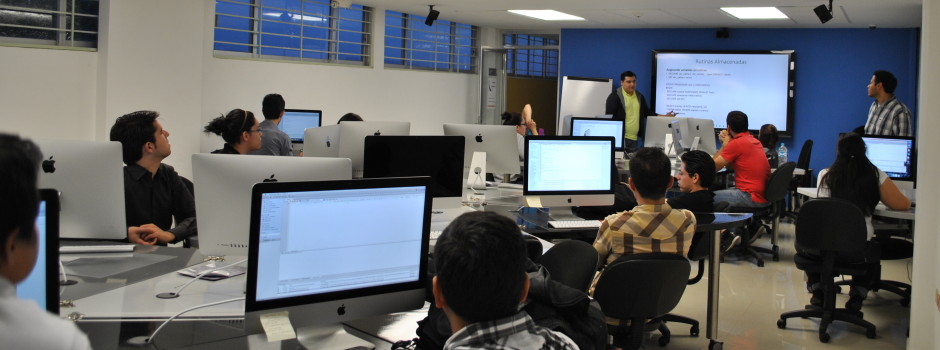
Con el propósito de capacitar en metodologías tecnológicas a empresas residentes en el Parque de Innovación Tecnológica (PIT), así como al personal universitario, se desarrollan cursos de informática aplicada. El director del PIT, maestro José Ramón López Arellano, informó que estos cursos son para la capacitación en sistemas de seguridad informática, generación de prototipos con funcionamiento de sistemas y sistemas de programación, entre otros. El investigador universitario recordó que para llevar a cabo esta capacitación, en vinculación con la empresa HunabSys (una de las residentes dentro del PIT), se aplicó para una convocatoria en el Instituto Nacional del Emprendedor (INADEM). “Después se procedió a platicar con la empresa Qualtop, que se dedica a impartir este tipo de cursos certificados, y hasta el mes de abril ellos estarán certificando empresarios residentes, externos y universitarios”, agregó. Algunos de los cursos certificados se denominan: Scrum Master, Scrum Team Member, Scrum Product Owner, Android OS, LEAN Startup, Java, Prototipado y Algoritmos. El maestro José Ramón López Arellano adelantó que después de haber obtenido este apoyo con el INADEM, los espacios dentro del PIT son para desarrollo de los universitarios, entre otros, los investigadores y tecnólogos que ayudarán a mejorar el desempeño laboral con dichas certificaciones. Fuente: Dirección de Comunicación Social UAS. Morales, J. (2015, 02 de febrero). «Realizan cursos de informática aplicada en el PIT», Buelna: p 11.
Course on applied informatics is given at PIT-UAS
Courses about applied informatics are given with the purpose of training on technological methodologies, the programmes are bound for enterprises resident at the Technological Innovation Park (PIT, Parque de Innovación Tecnológica) of the Autonomous University of Sinaloa (UAS, Universidad Autónoma de Sinaloa). The Director of PIT-UAS, MBA José Ramón López Arellano, informed these courses are for training on systems of informatics security, generation of prototypes with system functioning and programming systems, among other topics. The university researcher recalled that, in order to carry out this training, in linkage with the enterprise HunabSys (one of the residents at the Park), a call from the National Institute of the Entrepreneur (Instituto Nacional del Emprendedor, INADEM) was attended. «Afterwards, there was a talk with Qualtop Enterprise, dedicated to impart this type of certified courses, and until the month of April they will be certifying resident entrepreneurs, both external and university», added. Some of the certified courses are: Scrum Master, Scrum Team Member, Scrum Product Owner, Android OS, LEAN Startup, Java, Prototyping and Algorithms. MBA López Arellano anticipated that after obtaining this support with the INADEM, spaces inside PIT-UAS are now for university personnel development, among others, the researchers and technologists who will help to improve the working performance with such certifications. Source: Direction of Communications UAS. Morales, J. (February 2nd, 2015), «Course on applied informatics is given at PIT», Buelna Magazine, page 11. Translated by Belem Ruiz (Edition and Communication, PIT-UAS).