University of Oxford’s PhD student begins at UAS impartation of interdisciplinary course about health
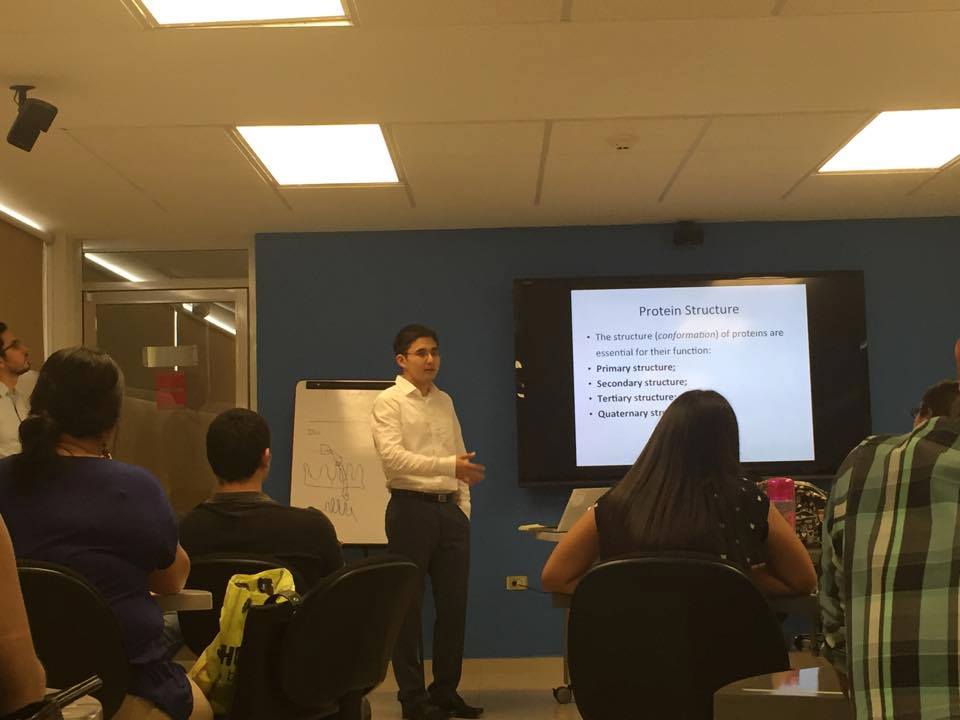
This Monday 5th October the course Mouth, Gut, Health: An Interdisciplinary Journey was started, it is taught by the Brazilian Juliano Morimoto Borges, a young PhD student at the University of Oxford. The course is taking place at the Training Room of the Technological Innovation Park (PIT, Parque de Innovación Tecnológica), belonging to the Autonomous University of Sinaloa (UAS, Universidad Autónoma de Sinaloa), from 15:00 to 18:00 hours, and will end on Friday 9th. The inauguration was attended by 42 university students, 34 undergraduates, 5 master’s and 3 PhD’s, coming from the UAS’ schools and faculties related to health: Dentistry, Psychology, Nutrition and Gastronomy, Bio-Chemicals Sciences and Medicine. As part of the reception and welcome to Morimoto Borges, on behalf of the UAS’ Rector, PhD Juan Eulogio Guerra Liera, PIT-UAS’ Director, MBA José Ramón López Arellano, stated: «Counting with the presence of the researcher Morimoto is an honor to us, since it implies creating with him a bond which will help us to interlace both Universities. At his disposal, there will be UAS’ professionals who are researchers of his field and whose knowledge he will be able to make the most of, so we can begin such bond which —at short and medium term— could lead both institutions to the development of joint investigations. In addition, to you, university students of this house of studies, it is the opportunity of making the most out of this type of researches». PIT-UAS’ Director emphasized that the organization he presides has the objective of making science, technology and innovation the key to reach the economic development, both regional and global. In this context, Morimoto’s course is an action that is part of the institutional strategy of linkage, which allows students to have access to specialized training and at the same time helps researchers to have a higher social impact. Previously to the first session, in interview, the Brazilian PhD student said that during the five days of the course’s duration the topics which compose it would be presented in theoretical and practical manners: “Theoretically, given that the students come from different disciplines, I’ll give them a brief background on bio-chemistry, carbohydrates, proteins’ structure and so on, until we get to microbiota in general. Then we’ll have the practices: students will develop interdisciplinary thinking —and this is actually the culminating part of the course—, task to which they’re not commonly trained to». In the course’s schedule also excel the subject «Microbiota, Cavity and Obesity», as well as the online interview with the Brazilian professor and PhD Elaine M. Benelli, head of the interdisciplinary project Promoting Oral Health (Curitiba, Brazil). During his first visit to our country, the PhD student at the University of Oxford specified that his course’s main objective consists in: «… showing to the students the importance of an interdisciplinary approach… and help them to develop this type of thinking. […] The idea of this course is to make students think outside of that comfort zone that they’re in, and to consider other inputs». By last, it is noteworthy that during his stay in Culiacán (Sinaloa, Mexico) Morimoto will have academic exchange sessions with a medical research team, UAS’ personnel from the Medicine Faculty, investigators who count on important progress in regard to the Brazilian’s investigation topic within the University of Oxford. As a tangible product of these investigations, belonging to the British and the Mexican institutions, its achieved knowledge could be jointly applied in the development of a prototypical nutritional supplement to help in obesity treatment. Written and translated by Belem Ruiz (Edition and Communication, PIT-UAS).
Inicia curso interdisciplinario sobre la salud impartido por doctorando de la Universidad de Oxford
Este lunes 5 de octubre de 2015 se inauguró el curso Mouth, Gut, Health: An Interdisciplinary Journey (La Boca, el Intestino, la Salud: un Viaje Interdisciplinario), impartido por el doctorando brasileño de la Universidad de Oxford Juliano Morimoto Borges. El curso se llevará a cabo en el Aula de Capacitaciones del Parque de Innovación Tecnológica (PIT) de la Universidad Autónoma de Sinaloa (UAS), de 15:00 a 18:00 horas, y culminará el viernes 9. Durante la inauguración se contó con la asistencia de 42 estudiantes universitarios, 34 alumnos de licenciatura, 5 de maestría y 3 de doctorado, provenientes de las escuelas y facultades de la UAS propias del área de la salud: Odontología, Psicología, Nutrición y Gastronomía, Ciencias Químico-Biológicas y Medicina. Como parte del recibimiento y la bienvenida para Morimoto Borges, en nombre del rector de la UAS, doctor Juan Eulogio Guerra Liera, el director del PIT-UAS, maestro José Ramón López Arellano, declaró: “Contar con la presencia del investigador Morimoto es para nosotros un honor, pues implica formar con él un vínculo que nos ayudará a entrelazar a las dos universidades. Se contará con investigadores de su área, cuyos conocimientos él podrá aprovechar, para así comenzar dicho vínculo que a corto y mediano plazo nos lleve, a ambas instituciones, al desarrollo de investigaciones conjuntas. Además, para ustedes, alumnos universitarios de esta casa de estudios, es la oportunidad de sacar provecho de este tipo de investigaciones”. El director del PIT-UAS destacó que el organismo que preside tiene el objetivo de hacer que la ciencia, la tecnología y la innovación sean la llave para el desarrollo económico regional y global. En este contexto, el curso de Morimoto es una acción que forma parte de la estrategia institucional de vinculación, la cual permite que los estudiantes tengan acceso a formación especializada, a la par que contribuye a que los investigadores tengan un alto impacto social. Previamente al inicio de la primera sesión, en entrevista, el doctorando dijo que durante los cinco días del curso los temas que lo componen serían abordados de manera teórica y práctica: “En lo teórico, dado que los estudiantes vienen de distintas disciplinas, les daré algunos antecedentes concisos sobre bioquímica, carbohidratos, la estructura de las proteínas y demás, hasta llegar a la microflora en general. Y luego tendremos las prácticas: los estudiantes desarrollarán el pensamiento interdisciplinario —y esa es la parte en verdad culminante del curso—, tarea para la cual comúnmente no están formados”. En el programa además sobresalen el tema “Microflora, caries y obesidad” y la entrevista en línea con el doctor Elaine Benelli, director del proyecto interdisciplinario Promoción de la Salud Oral (Curitiba, Brasil). En su primera visita a nuestro país, el doctorando de la Universidad de Oxford precisó que el objetivo principal de su curso consiste en: “… mostrar a los estudiantes la importancia de la interdisciplinariedad y ayudarlos a que desarrollen este tipo de pensamiento. […] La idea del curso es hacer que los estudiantes piensen fuera de esa zona confort en la que están inmersos y que consideren otros aportes”. Por último, cabe destacar que durante su estancia en Culiacán Morimoto tendrá sesiones de intercambio académico con un cuerpo de investigación médica, personal de la Facultad de Medicina de la Casa Rosalina que cuenta con importantes avances respecto a la pesquisa que es tema de tesis del brasileño. Como producto de la aplicación conjunta de las investigaciones realizadas tanto en la Universidad de Oxford como en la UAS, podría generarse un prototipo de suplemento alimenticio que ayude para el tratamiento de la obesidad. Comunicación Social PIT-UAS
PhD student Morimoto from the University of Oxford will impart a course at PIT-UAS
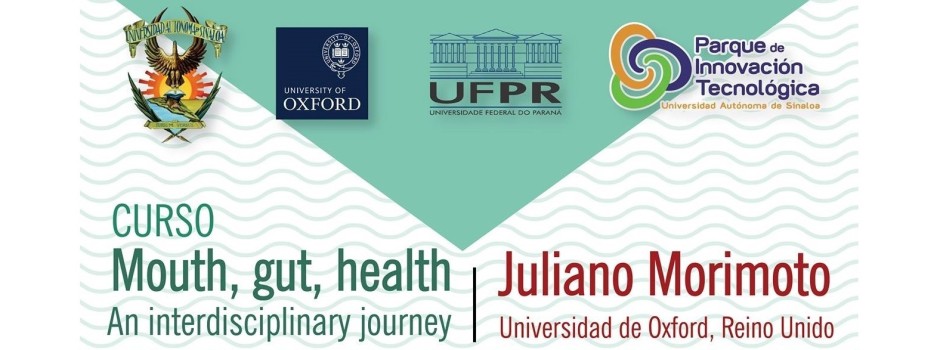
With the objective of innovating on preventive and clinical care through the extension of student’s horizons to different disciplines in Sinaloa, from October 5th to 9th, the Technological Innovation Park (PIT) of the Autonomous University of Sinaloa (UAS) is going to offer the course Mouth, Gut, Health: An Interdisciplinary Journey, that will be imparted by the PhD student Juliano Morimoto, Brazilian scholar from the University of Oxford. To the event will attend UAS’ medicine, nutrition, dentistry, biology and psychology students, who will have the opportunity to get in contact with an international interdisciplinary researcher and, in this way, stimulating such sort of interaction. The program includes the explanation of the importance of developing a common language among the students from different health disciplines, in order to generate preventive and operative standpoints that may provide a complete and efficient treatment to patients from different specialties. Besides, issues of great interest to public health, such as digestion (with emphasis on the hormones that regulate food intake in the brain), depression and obesity, will be addressed from the point of view of nutrition, medicine, dentistry and psychology. Furthermore, in the practical part of the event, the students will work in teams to complete activities. In this sense, it is expected to have collaboration, via a videoconference, with PhD Elaine Benelli (who currently manages an interdisciplinary health project in Brazil), which will bring to the students the opportunity of making some questions about the practice of healthcare’s interdisciplinary perspective and how this changes the result of preventive and operative standpoints. The course is scheduled from Monday to Friday, from 15:00 to 18:00 hours, at the PIT-UAS’ Training Room. It will begin on October 5th and its ending is envisaged to be the 9th day of the same month. Written by Moroni Arellano (Communication and Diffusion, PIT-UAS), translated by Belem Ruiz (Edition and Communication, PIT-UAS).
Doctorando Morimoto Borges de la Universidad de Oxford impartirá curso en el PIT-UAS
Con el objetivo de innovar la atención preventiva y clínica mediante la ampliación de los horizontes de los estudiantes a las diferentes disciplinas en Sinaloa, del 5 al 9 de octubre, el Parque de Innovación Tecnológica (PIT) de la Universidad Autónoma de Sinaloa (UAS) estará ofreciendo el curso Mouth, Gut, Health: An Interdisciplinary Journey (La Boca, el Intestino, la Salud: un Viaje Interdisciplinario), que será presidido por el doctorando Juliano Morimoto Borges, estudiante brasileño de la Universidad de Oxford. Al evento asistirán estudiantes de medicina, nutrición, odontología, biología y psicología de la Casa Rosalina, quienes tendrán la oportunidad de entrar en contacto con un investigador internacional interdisciplinario y así estimular la interacción de este tipo. El programa comprende la explicación de la importancia del desarrollo de un lenguaje común entre los estudiantes de diferentes disciplinas de la salud, para generar enfoques preventivos y de intervención que puedan proporcionar un tratamiento completo y eficaz para los pacientes de diferentes especialidades. Además, se abordarán temas de gran interés para la salud pública, como la digestión (con énfasis en las hormonas que regulan la ingesta de alimentos en el cerebro), la depresión y la obesidad, desde los puntos de vista de la nutrición, la medicina, la odontología y la psicología. Por otro lado, en la parte práctica del evento, los alumnos podrán trabajar en grupos para completar actividades. En este sentido, se prevé la colaboración, a través de una videoconferencia, del doctor Elaine Benelli (quien actualmente dirige un proyecto interdisciplinario de salud en Brasil), que dará la oportunidad a los estudiantes de hacer preguntas sobre la visión interdisciplinaria de la asistencia sanitaria en la práctica y cómo esto cambia el resultado de enfoques preventivos y clínicos. El horario del curso será, de lunes a viernes, de 15:00 a 18:00 horas, en el Aula de Capacitación del PIT-UAS. Dará inicio el 5 de octubre y se prevé que finalice el día 9 del mismo mes. Comunicación Social PIT-UAS
The PIT-UAS becomes first Mexico’s public university organism joining to the IASP
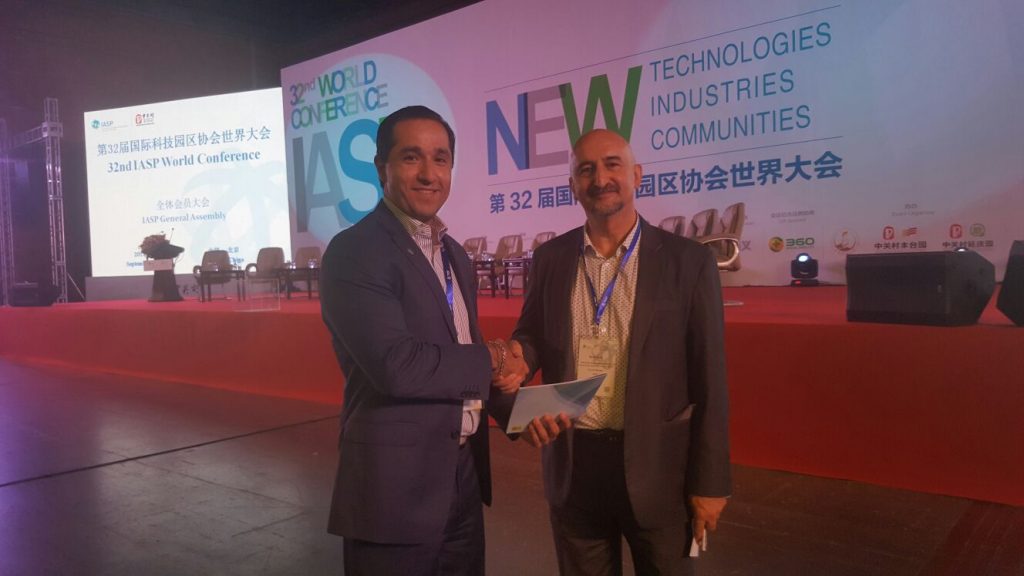
In July of this year, the Technological Innovation Park (PIT, Parque de Innovación Tecnológica) of the Autonomous University of Sinaloa (UAS, Universidad Autónoma de Sinaloa) became an affiliate member of the International Association of Science Parks and Areas of Innovation (IASP), which headquarters are in Málaga (Spain) and also counts on a regional office in Beijing (China). Thus, in the framework of the 32nd IASP World Conference, which this year took place in the ZPark (Zhongguancun Science Park), begun on Monday 21st of September and finished on Friday 25th, MBA José Ramón López Arellano, on behalf of UAS’ Rector, PhD Juan Eulogio Guerra Liera, received the formal letter of affiliate member that certifies PIT-UAS’ integration to the IASP. To this event attended dignitaries such as the Ambassador of Mexico in China, Julián Ventura Valero, and the Governor of the State of Hidalgo, José Olvera; the participation of parks coming from China, Turkey, Russia, Iran and Mexico was prominent. The diverse editions of these conferences are realized with the purpose of gathering experts in Science and Technology Parks (STP) and other Areas of Innovation (AI), technology-based incubators, academy, public and business sectors, so as «to discuss and to debate in depth the trends in all these increasingly complex and efficient structures, tailor-made for professional innovation support to entrepreneurs«. It should be specified that the IASP, as a founding member of the World Alliance for Innovation, is a global network of innovation which purpose consists on enhancing the growth, the internationalization and effectiveness of its members. Among the affiliates stand out organisms like: Kyoto Research Park (Japan), Heidelberg Technology Park (Germany) and Technopark-Alliance (Switzerland). Given the important role assumed by each one of IASP’s members on their respective regions in the matter of business and enterprising competitiveness, as well as for the economic development trough innovation, entrepreneurship and knowledge transfer, this non-governmental organization functions as a Special Consultative Status with the Economic and Social Council of the United Nations. Nowadays, the PIT-UAS, the first institution belonging to a Mexican public university joining to the IASP, participates on the proposals of 10 projects with high levels of innovation, among which impact areas are included spheres such as social, ecologic and business. In this way, the Park continues working on its consolidation as an axis of academic, scientific and technological development that promotes regional productive vocations and makes easier their incorporation to new and wider markets, with the aim of helping for State and country’s economic progress. Written by Moroni Arellano (Communication and Diffusion, PIT-UAS), translated by Belem Ruiz (Edition and Communication, PIT-UAS).
El PIT-UAS, primer organismo universitario público de México en ingresar a la red mundial de innovación IASP
En julio de este año el Parque de Innovación Tecnológica (PIT) de la Universidad Autónoma de Sinaloa (UAS) ingresó como miembro afiliado a la Asociación Internacional de Parques Científicos y Áreas de Innovación (IASP, por sus siglas en inglés de International Association of Science Parks and Areas of Innovation), cuya sede se encuentra en Málaga (España) y además cuenta con una oficina regional en Pekín (China). Así, en el marco de la XXXII Conferencia Mundial de la IASP (32nd IASP World Conference), cuya sede este año es el Parque-Z (Z-Park, abreviación de Zhongguancun Science Park) e inició el pasado lunes 21 de septiembre y culminó el viernes 25 en la capital china, este jueves 24 de septiembre de 2015 el director del PIT-UAS, maestro José Ramón López Arellano, en representación del rector de la UAS, doctor Juan Eulogio Guerra Liera, recibió la carta formal de miembro afiliado que certifica la integración del PIT-UAS a la IASP. A este evento asistieron personalidades como el embajador de México en China, Julián Ventura Valero, y el gobernador del Estado de Hidalgo, José Olvera; destacó la participación de parques provenientes de China, Turquía, Rusia, Irán y México. Las diversas ediciones de estas conferencias se realizan con el propósito de reunir a expertos en parques de ciencia y tecnología (STP, Science and Technology Parks) y otras áreas de innovación (AI, Areas of Innovation), incubadoras de base tecnológica, academia, sectores público y empresarial, a fin de que discutan y debatan a fondo las tendencias en materia de STP y AI como estructuras cada vez más complejas para apoyo a la innovación profesional. Cabe precisar que la IASP, miembro fundador de la Alianza Mundial para la Innovación (WAINOVA, por su acrónimo en inglés de World Alliance for Innovation), es una red global de innovación cuyo propósito consiste en impulsar el crecimiento, la internacionalización y la efectividad de sus miembros. Entre los afiliados destacan organismos como: Kyoto Research Park (Japón), Heidelberg Technology Park (Alemania) y Technopark-Alliance (Suiza). Dado el importante rol que asume cada uno de los integrantes de la IASP en sus respectivas regiones en materia de competitividad empresarial y emprendedora, así como para el desarrollo económico a través de la innovación, el emprendimiento y la transferencia de conocimiento y tecnología, esta organización no gubernamental funge como consultora especial del Consejo Económico y Social de Naciones Unidas. Actualmente el PIT-UAS, la primera institución perteneciente a una universidad pública mexicana en incorporarse a la IASP, participa en la propuesta de 10 proyectos con altos niveles de innovación, entre cuyos ámbitos de impacto se incluyen esferas como la social, la ecológica y la empresarial. Así, el Parque continúa trabajando en su consolidación como polo del desarrollo académico, científico y tecnológico que promueve las vocaciones productivas sinaloenses y facilita su incorporación a nuevos y más amplios mercados, con la finalidad de coadyuvar en el progreso económico del estado y la de la nación. Comunicación Social PIT-UAS
PIT-UAS is going to be certified by the International Association of Science Parks and Areas of Innovation
Thanks to its important technological developments and contributions to science, the Technological Innovation Park (PIT, Parque de Innovación Tecnológica) of the Autonomous University of Sinaloa (UAS, Universidad Autónoma de Sinaloa) is going to receive, this September 24th, the certification as a member of the International Association of Science Parks and Areas of Innovation (IASP). In releasing this information, PIT-UAS’ director, MBA José Ramón López Arellano, expressed that, thanks to this distinction by such organism, the Park might link with other institutions of its own kind, which would mark the beginning of a more specialized promotion of its activities related to science, technology and research, as well as other areas of innovation, tasks which purpose is to provide services for the effective growth of its members. «Belong to the IASP gives us a national and international recognition, considering that we’d be the fifth Mexican member, the third from the northwest of the country; and, the most important, we are the only public university within it. This would help to improve the competitiveness of future projects developed at PIT-UAS», declared. In the next days, informed López Arellano, he’s going to attend to Beijing (China), in order to be part of the IASP’s annual reunion. It will be on the context of such event to be carried out at the Chinese capital that the PIT-UAS will receive the certificate to guarantee its belonging to the IASP as an affiliated member. The manager of this technological complex of the UAS detailed that this specialized international association counts with approximately 402 members, located in 72 countries, to which belong 128 thousand innovative companies, as well as the total of 42 universities registered in the IASP. An important factor of the IASP, said, is that it has the status of Special Consultative with the Economic and Social Council of the United Nations, besides is a founding member of the World Alliance for Innovation. Thus, «The members of the IASP are distinguished by the quality and the boost for technological development they socially have, as well as for the economic growth of their countries», added. López Arellano emphasized that, thanks to this attainment, this university organism on his charge contributes to attend the core idea about internationalization contained in the Plan of Institutional Development Consolidation 2017, which regulates the administration of the rector of our University, PhD Juan Eulogio Guerra Liera. The Director of the PIT-UAS specified that, this way, to the solid academic exchange program of the UAS would be added the linkage in the matter of technological and scientific developments, better known as multidisciplinary networks of applied research. «By having the IASP certification, this implies to us that we have the quality and the added value which define a true park of science and technology, in which business incubators can be created and managed, technological transfer can be made, as well as projects of innovation, entrepreneurship and economic development», opined. He also said that other benefits that this distinction, being member of the IASP, brings consist on: having the right to attend to the General Assembly of the IASP and have the right to make use of the voice in it; discounts in conferences, workshops, as well as in the buying of books and communication material, among many others. In Mexico, besides PIT-UAS, also have this certification: the Technological Innovation Park of the Northwestern Center of Biological Research (Parque de Innovación Tecnológica, Centro de Investigaciones Biológicas del Noroeste), the Research and Technology Innovation Park (Parque de Investigación e Innovación Tecnológica de Monterrey), the Technological Park of Guanajuato (Parque Tecnológico de Guanajuato) and the Chihuahua based Orión Tech Park of the Monterrey Institute of Technology and Higher Education (Parque Tecnológico Orión, Instituto Tecnológico y de Estudios Superiores de Monterrey). To get more information about the IASP, you may consult its official web site. Source: Autonomous University of Sinaloa. Translated by Belem Ruiz (Edition and Communication, PIT-UAS).
El Parque de Innovación Tecnológica de la UAS será certificado por la IASP
Gracias a sus importantes desarrollos tecnológicos y aportes a la ciencia, el Parque de Innovación Tecnológica (PIT) de la Universidad Autónoma de Sinaloa (UAS) recibirá este 24 de septiembre la certificación como miembro de la Asociación Internacional de Parques Científicos y Áreas de Innovación (IASP, por sus siglas en inglés de International Association of Science Parks and Areas of Innovation). Al dar a conocer esta información, el director del PIT-UAS, maestro José Ramón López Arellano, expresó que, gracias a esta distinción por parte de tal organismo, el Parque podrá vincularse con otras instituciones de su índole, lo que marcará el inicio de una promoción más especializada de sus actividades relativas a ciencia, tecnología e investigación, así como otras áreas de innovación, tareas cuya finalidad es proveer servicios para el crecimiento efectivo de sus miembros. “Pertenecer a la IASP nos da un reconocimiento nacional e internacional, ya que seríamos el quinto miembro mexicano, el tercero del noroeste del país; y, lo más importante, somos la única universidad pública dentro de ella. Esto servirá para mejorar la competitividad de futuros proyectos desarrollados en el PIT-UAS”, expuso. Informó López Arellano que en los próximos días asistirá a Pekín (China), para ser parte de la reunión anual de la IASP. Será en el marco de dicho evento por realizarse en la capital china que el PIT-UAS recibirá el certificado que avale su pertenencia a la IASP como miembro afiliado. El encargado de este complejo tecnológico de la UAS detalló que esta asociación internacional especializada cuenta con aproximadamente 402 miembros, ubicados en 72 países, a los cuales pertenecen 128 mil compañías innovadoras, así como el total de 42 universidades registradas en la IASP. Un factor importante de la IASP, dijo, es que tiene la categoría de consultor especial para el Consejo Económico y Social de la Organización de las Naciones Unidas, además de que es fundadora de la Alianza Mundial por la Innovación (WAINOVA, por su acrónimo en inglés de World Alliance for Innovation). Así: “Los miembros de la IASP se distinguen por la calidad y el impulso para el desarrollo tecnológico que tienen a nivel social, también así para el crecimiento económico de los países a los que pertenecen”, agregó. López Arellano destacó que, gracias a este logro, se atiende el eje de internacionalización del Plan de Desarrollo Institucional Consolidación 2017, que rige la administración del rector de nuestra Universidad, doctor Juan Eulogio Guerra Liera. Precisó el director del PIT-UAS que, de esta manera, al sólido programa de intercambio académico de la UAS se sumaría la vinculación en materia de desarrollos tecnológicos y científicos, mejor conocida como redes multidisciplinarias de investigación aplicada. “Al contar nosotros con la certificación de la IASP, ello implica que tenemos la calidad y el valor agregado que definen a un verdadero parque de ciencia y tecnología, en el que se pueden crear y administrar incubadoras, realizar transferencia de tecnología, proyectos de innovación, emprendimiento y desarrollo económico”, destacó. Otros beneficios que trae consigo la distinción de ser miembro de la IASP, agregó, consisten en: tener derecho a asistir a la Asamblea General de la IASP y contar con el derecho de hacer el uso de la voz en ella; descuentos en conferencias, seminarios, así como en la compra de libros y materiales de comunicación, entre muchos más. En México se encuentran certificados, además del PIT-UAS: el Parque de Innovación Tecnológica del Centro de Investigaciones Biológicas del Noroeste, el Parque de Investigación e Innovación Tecnológica de Monterrey, el Parque Tecnológico de Guanajuato y el Parque Tecnológico Orión del Tecnológico de Monterrey (con sede en Chihuahua). Para tener más información sobre la IASP, puede consultar su página web oficial. Universidad Autónoma de Sinaloa
Conceptual demonstration of Smart EcoPark PIT-UAS is presented
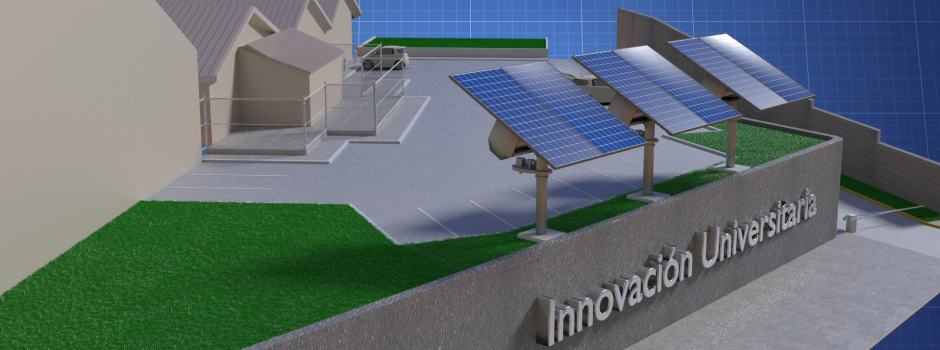
Once the starting signal for the beginning of this project was given on February of this year in front of researchers and university authorities, during the last week of August it was made known in the official channel of the Technological Innovation Park (PIT, Parque de Innovación Tecnológica) of the Autonomous University of Sinaloa (UAS, Universidad Autónoma de Sinaloa) the conceptual video of this built-in ecologic model for implementing sustainability and the Internet of Things (IoT) in urban complexes, project realized as part of the participation agreement between PIT-UAS and the regional enterprise HunabSys. The Smart EcoPark PIT-UAS will be constituted by the design and the implementation of a building prototype that integrates diverse models designed to incorporate sustainability as much as IoT on urban complexes. This project is composed by: an eco-parking with automatized access control via a mobile app; an internal combustion car turned into one of electric functioning, for which there will be two charging stations; a vertical garden which purpose will be to embellish spaces and to make the most of this type of urban agriculture’s ecologic benefits; and, as core element, a solar plant equipped with a system of solar trackers to optimize electric energy generation. On February, within the framework of the beginning labors for the execution of this project, regional entrepreneur José Carlos Castro Padilla, whose company, HunabSys, is dedicated to develop new technologies researching and innovative computer solutions of high quality, expressed: «The idea, at the beginning, was to have solar panels that were more efficient than normal… And the only way to do that was building a solar tracking system, which means the panels will orient themselves depending on the Sun’s trajectory in order to obtain about 30% more solar energy production». For his part, MBA José Ramón López Arellano, PIT-UAS’ Director, specified that the rotatory photovoltaic system of approximately 12 Kw/h will feed the eco-parking, which will function as charging station for electric cars. Likewise, he claimed that, as part of the second phase of this built-in model, it is planned to make an own design of an electric car that includes IoT elements. This initiative, the IoT, was defined by the MBA as a «… big global project in which all devices are interconnected and generate relevant information in real time in order to improve the quality of life». In addition to the above, it is proposed that the sustainable energy model to be implemented in the facilities of the PIT-UAS be extended to other university buildings. Finally, according to the University’s Rector, PhD Juan Eulogio Guerra Liera, this project’s implementation puts the UAS «… on a work route of world class». Besides, he added, «… the fact that this initiative is being possible thanks to the sum of efforts between the University, through the PIT, the Federal Government, through the CONACyT [National Council of Science and Technology, Consejo Nacional de Ciencia y Tecnología], and private initiative, by means of the enterprise HunabSys, positions it [this project] in a guideline of work linked to the servicing and the knowledge transfer». In this way, the PIT-UAS complies with two of its tasks: objectifying the triple helix model (University-Government-Enterprise) as well as the technological transfer. It is noteworthy that this project represents the opportunity for enriching the technical and scientific training of UAS’ and HunabSys’ human resources, on the base of an environmental culture, thought according to current tendencies directed to the adoption of technology as a tool to reach a rational usage of energy and the gradual inclusion of clean energy sources that contribute to mitigate climate change and global warming. Thus, in alignment with the Plan of Institutional Development Consolidation 2017, the PIT-UAS contributes to strengthen the University as a green higher education institution, committed with taking care and preserving the environment through research and education, as well as by designing and developing technologies that allow to promote the establishment of a more respectful and conscious relation with the environment in the region. Written by Moroni Arellano (Communication and Diffusion, PIT-UAS), translated by Belem Ruiz (Edition and Communication, PIT-UAS).
Es presentada la demostración conceptual del Smart EcoPark PIT-UAS
Luego de que ante investigadores y autoridades universitarias fuera dado el banderazo para el inicio de este proyecto en febrero del presente año, durante la última semana del mes de agosto se dio a conocer en el canal oficial del Parque de Innovación Tecnológica (PIT) de la Universidad Autónoma de Sinaloa (UAS) el video conceptual de este modelo ecológico integral para la implementación de sustentabilidad e Internet de las Cosas (IoT, por sus siglas en inglés de Internet of Things) en complejos urbanos, proyecto realizado como parte del convenio de participación entre el PIT-UAS y la empresa sinaloense HunabSys. El Smart EcoPark PIT-UAS estará constituido por el diseño y la implementación de un prototipo de edificio que integra diversos modelos orientados a incorporar tanto la sustentabilidad como el IoT en complejos urbanos. Este proyecto se compone por: un eco-estacionamiento con control de acceso automatizado mediante una aplicación móvil; un auto de combustión interna convertido en uno de funcionamiento eléctrico, para el cual se contará con dos estaciones de carga; un jardín vertical que busca embellecer los espacios y aprovechar los beneficios ecológicos de este tipo de agricultura urbana; y, como eje principal, una planta solar que se vale de un sistema de seguidores solares para optimizar la obtención de energía eléctrica. En febrero, dentro del marco del inicio de labores para la ejecución de este proyecto, el empresario sinaloense José Carlos Castro Padilla, cuya compañía, HunabSys, se dedica a la investigación de nuevas tecnologías y el desarrollo de soluciones informáticas innovadoras de alta calidad, externó: “La idea, en un principio, era tener paneles solares que fueran más eficientes de lo normal… Y la única manera de hacer eso era construyendo un sistema de seguimiento de sol, o sea, que los paneles se orientaran dependiendo de la trayectoria del sol para ganar alrededor de 30% más de producción de energía solar”. Por su parte, el maestro José Ramón López Arellano, director del PIT-UAS, precisó que el sistema fotovoltaico rotatorio de aproximadamente 12 Kw/h alimentará el eco-estacionamiento, mismo que además funcionará como centro de carga de autos eléctricos. Asimismo, aseguró que, como parte de una segunda etapa de este modelo integral, se planea el diseño propio de un automóvil eléctrico que incluya elementos del IoT. Esta iniciativa, el IoT, fue definida por el maestro como un “… gran proyecto mundial donde todos los dispositivos están interconectados y generan información relevante en tiempo real para mejorar la calidad de vida”. En adición a lo anterior, se plantea que el modelo de energías sustentables a ser implementado en las instalaciones del PIT-UAS se haga extensivo a otros inmuebles universitarios. Por último, de acuerdo con el rector de la Casa Rosalina, doctor Juan Eulogio Guerra Liera, la puesta en marcha de este proyecto coloca a la Universidad “en una ruta de trabajo de clase mundial”. Además, agregó, “… el hecho de que esta iniciativa esté siendo posible gracias a la sumatoria de esfuerzos entre la Universidad, a través del PIT, el Gobierno federal, a través del CONACyT [Consejo Nacional de Ciencia y Tecnología], y la iniciativa privada, mediante la empresa HunabSys, lo posiciona [al proyecto] en una línea de trabajo ligada a la prestación de servicios y transferencia del conocimiento”. De esta manera, cumple el PIT-UAS con dos de sus cometidos: la concreción del modelo de la triple hélice (Universidad-Gobierno-Empresa) y la transferencia tecnológica. Cabe destacar que este proyecto representa la oportunidad de enriquecer la formación técnica y científica de los recursos humanos de la UAS y de HunabSys sobre la base de una cultura ambiental, concebida de acuerdo con las tendencias actuales dirigidas a la adopción de la tecnología como herramienta para lograr el uso racional de la energía y la inclusión gradual de fuentes de energías limpias que contribuyan a mitigar el cambio climático y el calentamiento global. Así, en alineación con el Plan de Desarrollo Institucional Consolidación 2017, contribuye el PIT-UAS al fortalecimiento de la Universidad como una institución de educación superior verde, comprometida con el cuidado y la preservación del medio ambiente a través de la investigación y la educación, así como mediante el diseño y el desarrollo de tecnologías que permitan fomentar el establecimiento de una relación más respetuosa y consciente de los sinaloenses con su entorno. Comunicación Social PIT-UAS