Guided visit to students from the UAS’ PhD Salvador Allende High School
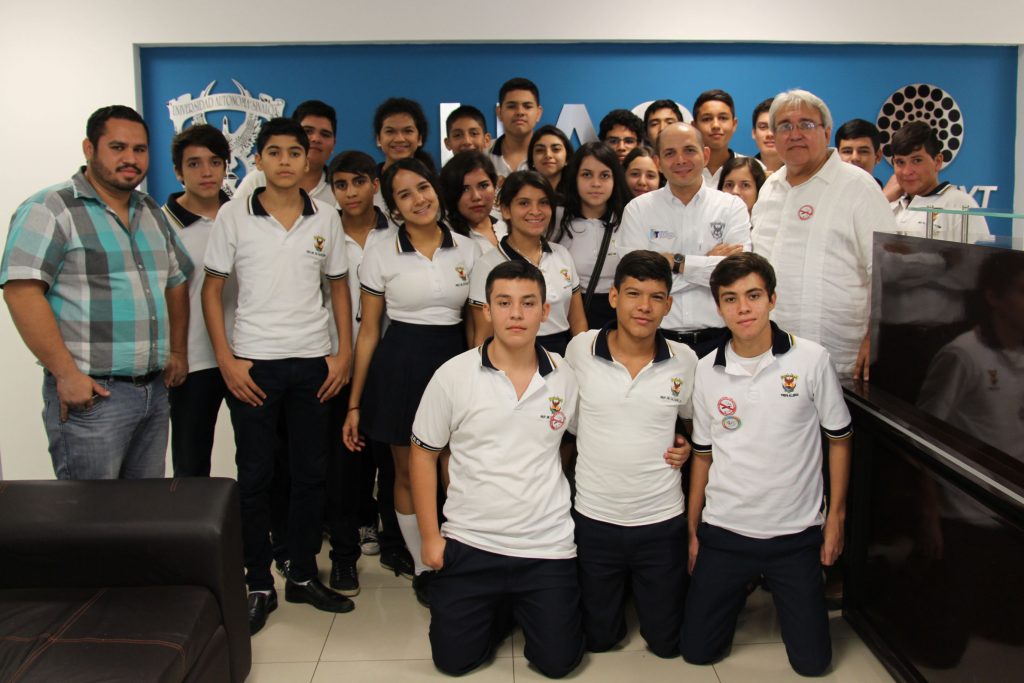
Within the framework of the 22nd National Week of Science and Technology of the National Council of Science and Technology (CONACyT, Consejo Nacional de Ciencia y Tecnología), students from the academic unit PhD Salvador Allende High School of the Autonomous University of Sinaloa (UAS, Universidad Autónoma de Sinaloa) visited the facilities of the Technological Innovation Park (PIT, Parque de Innovación Tecnológica) with the purpose of knowing the different Park’s areas where a wide variety of multidisciplinary projects can be developed. The group was integrated by around forty students, who were divided in two different groups, on charge of the professor Emigdio Urrea. The young visitors were received by one of the PIT-UAS’ operative coordinators, MSc IT Rogelio Prieto Alvarado, who at the beginning talked to them about the objective and the functions of this university organism, in order to later begin a guided tour by the facilities. First were shown the areas of Projects Development, Robotics Laboratory, 3D Printing, among others. In such points, was explained to the students, are facilitated both spaces and expert attention by researchers, for the training that may be necessary during the current researches taking place at the PIT-UAS. In the course of the students’ visit, which was used to invite them to participate in the development of projects and its subscription through the Park, Prieto Alvarado outlined that the PIT-UAS is focused on the strengthening of Sinaloa’s technological capabilities in essential fields of knowledge, from the strategic transversal platform represented by the information and communication technologies. Thus, this university research center makes its contribution to 2015 edition of the National Week of Science and Technology, one of which objectives is precisely awaking the interest by scientific and technological disciplines among children and youth, through the approach of this particular public to the different actors of science and technology in our country (scientists, popularizers, researchers, entrepreneurs, technologists and authorities). Written by Moroni Arellano (Communication and Diffusion, PIT-UAS), translated by Belem Ruiz (Edition and Communication, PIT-UAS).
Visita guiada para alumnos de la preparatoria Doctor Salvador Allende de la UAS
En el marco de la XXII Semana Nacional de Ciencia y Tecnología del Consejo Nacional de Ciencia y Tecnología (CONACyT), alumnos de la unidad académica preparatoria Doctor Salvador Allende de la Universidad Autónoma de Sinaloa (UAS) visitaron las instalaciones del Parque de Innovación Tecnológica (PIT) con el propósito de conocer las distintas áreas del Parque en las que puede ser desarrollada una amplia variedad de proyectos multidisciplinarios. El grupo estuvo integrado por aproximadamente cuarenta alumnos, que fueron divididos en dos grupos diferentes, a cargo del profesor Emigdio Urrea. Los visitantes fueron recibidos por uno de los coordinadores operativos del PIT-UAS, el maestro Rogelio Prieto Alvarado, quien al inicio habló a los preparatorianos sobre el objetivo y las funciones del PIT-UAS, para después comenzar un recorrido guiado por las instalaciones. Al inicio les fueron mostradas las áreas Desarrollo de Proyectos, Laboratorio de Robótica, Impresión 3D, entre otras. En dichos puntos, se explicó a los alumnos, son facilitados tanto espacios físicos como atención experta por parte de investigadores para las capacitaciones que sean necesarias durante las investigaciones en desarrollo. Durante la visita de los alumnos, que fue aprovechada para invitarlos a participar en el desarrollo de proyectos y a la inscripción de los mismos a través del PIT-UAS, Prieto Alvarado resaltó que el Parque está enfocado en el fortalecimiento de las capacidades tecnológicas de Sinaloa en campos esenciales del conocimiento, desde la plataforma transversal estratégica que representan las tecnologías de la información y la comunicación. Así, hace su aporte este centro de investigación de la Casa Rosalina a la edición 2015 de la Semana Nacional de Ciencia y Tecnología, uno de cuyos objetivos es precisamente despertar el interés por las disciplinas científicas y tecnológicas entre el público infantil y juvenil, a través del acercamiento de este público particular a los diferentes actores de la ciencia y la tecnología en nuestro país (científicos, divulgadores, investigadores, empresarios, tecnólogos y autoridades). Comunicación Social PIT-UAS
Is concluded the course Mouth, Gut and Health: An Interdisciplinary Journey, imparted by Juliano Morimoto Borges
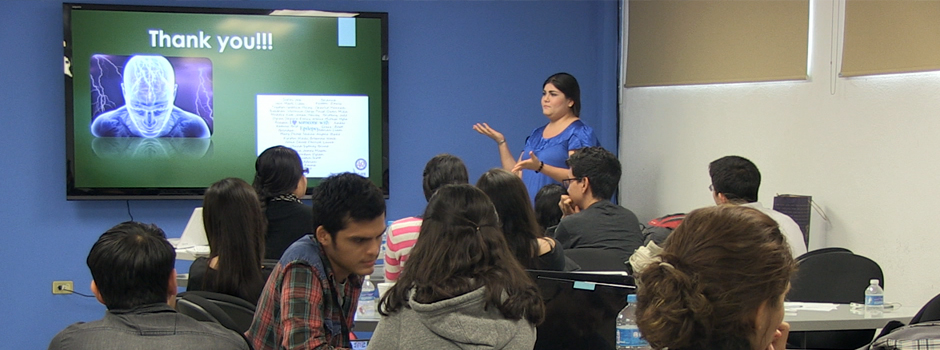
The workshop had the participation of over forty university students from schools and faculties of the Autonomous University of Sinaloa (UAS, Universidad Autónoma de Sinaloa), belonging to health areas. The course imparted by the PhD student at the University of Oxford Juliano Morimoto culminated this Friday, it was carried out in the facilities of the Technological Innovation Park (PIT, Parque de Innovación Tecnológica) of the UAS, from October 5th to 9th this year. The seminar Mouth, Gut and Health: An Interdisciplinary Journey was well received by the attendees, who with great interest received the knowledge transmitted by Morimoto about interdisciplinary thinking. For his part, the speaker from the British university considers that, at the end, thanks to the feedback, he and the students acquired new knowledge. In addition to the impartation of this course, the Brazilian PhD student also had sessions of academic exchange with a University’s medical research body, due to which Morimoto Borges supposes feasible the development of a joint project: «I hope so. I really enjoyed the faculties, the University, and I long to develop interdisciplinary projects in collaboration with the UAS». Likewise, he used his stay in Culiacán to know different faculties of the University. About this experience, he commented: «It was profitable. I tried to connect with diverse faculties of the University and to get collaborations with them, it was really good to see what each faculty is doing, the researches that are being developed at the UAS». Once finished his academic stay in our University during his first visit to the country, Morimoto Borges got a good impression of the State’s capital city and hopes this to be barely the first of many others visits: «I loved Culiacán. I wish to come back, I hope to come back next year, give a course again or interact another time with the University. And I hope this to be the beginning of a perdurable relation of collaboration with the UAS». Written by Alfredo Careaga (Communication and Diffusion, PIT-UAS), translated by Belem Ruiz (Edition and Communication, PIT-UAS).
Finaliza el curso Mouth, Gut and Health: An Interdisciplinary Journey, impartido por Juliano Morimoto Borges
El taller contó con la participación de más de una cuarentena de alumnos universitarios de escuelas y facultades de la Universidad Autónoma de Sinaloa (UAS) pertenecientes al área de la salud. El curso impartido por el doctorando de la Universidad de Oxford Juliano Morimoto Borges culminó este viernes, se llevó a cabo en las instalaciones del Parque de Innovación Tecnológica (PIT) de la UAS, del 5 al 9 de octubre del presente año. El seminario Mouth, Gut and Health: An Interdisciplinary Journey tuvo buena aceptación por parte de los universitarios, quienes con gran interés recibieron el conocimiento transmitido por Morimoto Borges sobre el pensamiento interdisciplinario. Por su parte, el ponente de la universidad británica considera que, al final, gracias a la retroalimentación, tanto él como los alumnos adquirieron nuevos conocimientos. Además de impartir el curso, el doctorando brasileño aprovechó para tener sesiones de intercambio académico con un cuerpo de investigación médica de la Casa Rosalina, a raíz de lo cual supone factible el desarrollo de un proyecto en conjunto: “Eso espero. Realmente disfruté las facultades, la Universidad, y ansío desarrollar proyectos interdisciplinarios en colaboración con la UAS.” Asimismo aprovechó su estancia en Culiacán para conocer diferentes facultades de la Casa Rosalina. En torno a esta experiencia, comentó: “Fue provechoso en verdad. Traté de conectarme con distintas facultades de la Universidad y conseguir colaboraciones con ellos, fue realmente bueno ver lo que cada facultad está haciendo, las investigaciones que se están desarrollando en la UAS”. Finalizada su estancia académica en nuestra Universidad durante su primera visita al país, Morimoto Borges se lleva una buena impresión de la capital sinaloense y espera que sea apenas la primera de muchas más: “Amé Culiacán. Deseo poder regresar, espero regresar el próximo año, dar un curso otra vez o volver a interactuar con la Universidad. Y espero que esto sea el inicio de una perdurable relación de colaboración con la UAS”. Comunicación Social PIT-UAS
The importance of an interdisciplinary perspective in public health. An interview to Juliano Morimoto Borges

How did the idea of giving this course at the Autonomous University of Sinaloa (UAS) come up? At the beginning, when I was studying as an undergraduate at Brazil, we had a project, which was an interdisciplinary project to improve public health. And, well, I decided to increase the scale of this project to include Latin America, not only Brazil, but also other countries; because I think sometimes Latin America is a forgotten continent, we sometimes don’t care about our own continent. And why these topics: mouth, gut, health? Because I think the mouth and the gut are very related, and studies have being showing this more and more, that they’re more related to our health. So, if you spot imbalance in either mouth or gut microbiota, you can actually treat the disease better or you can identify the disease better, and find ways to treat that thing. So the subject of the course is that it aims to give the students this idea that you have to treat not only the disease, so if you have one bacteria it means you have a disease: that’s not true. So the idea of the course is to broaden the view of the students in this sense. Could you tell us about what the UAS’ students will learn in your course during this week? The course is structured in theoretical and practical parts. In theoretical parts, I’m gonna give the students a brief background —because they come from different disciplines, psychology, dentistry and so on— on basic things like bio-chemistry, carbohydrates, the structure of proteins… until we get to microbiota in general. And then we’ll have the practical parts of the course, in which the students will develop the interdisciplinary thinking —and that’s the part of the course where it will blow up, in a sense—, the students will develop things they’re not usually trained to develop. So, your idea is to teach the students how to make a correct analysis? No, not necessarily a correct analysis, but to look at the problem in a different way. So, if you have a bacteria, for example, it doesn’t mean that you have a disease: that’s the holistic view. The holistic view tells you: “Okay, you have a bacteria, but what are the other factors that contribute?”. You have beneficial bacteria, they can balance the presence of detrimental ones; sometimes actually the beneficial bacteria is the same that causes the disease. You give a lot of importance to this interdisciplinary perspective, why? Yes, I do. So, the idea of the course is to make the students think in an interdisciplinary way. And I think that’s what makes a difference when you, for example, if you are a doctor, when you go and treat a patient, because you see the patient in a holistic way, not necessarily as: “Oh, I’m gonna prescribe a pill or something that will treat the problem and that’s it”; so, if that pill that you prescribed had other effects —and not necessarily symptom effects, you can have psychological effects— that you might not be aware of, and if you had an interdisciplinary holistic view, then you could start considering these things, and how can they affect and how can you improve these things. What’s the main result you’re aiming through this course at UAS? Is to show the students the importance of interdisciplinary thinking. We’re gonna have students from psychology, dentistry… they don’t usually interact in a normal way, which they’re gonna be forced to in this course. The aim is to develop this interdisciplinary thinking in the students and that kind of researching. But that kind of thinking is not how the normal academy functions… Yes, so, when you study only, for example, chemistry, you know how to solve problems in chemistry and you look all the problems in a mindset of a chemist. The idea of the course is to make students think outside of that comfort zone they’re in and to consider other inputs. So, I am a chemist, I have this problem which affects public health: “How can I tackle that problem with the knowledge that I have? But how can I consider looking at this problem with a different tool that comes from psychology?”, for example. Do you provide the correct tools to change that? Well, the tools are developed by yourself: that’s the beauty of interdisciplinary research. We never know when we’re gonna have to adopt or bring a tool from a different discipline for the problem we have. So, is not like the recipe of a cake that you have: add flour and butter, and so on. Is when you have a problem and you start talking to people from different fields that you actually come up with the idea: “That looks similar to my problem, can I apply those methods that they use in economics to the problem that I have in biology?”. And that actually has led to a lot of developing within biology. Written and translated by Belem Ruiz (Edition and Communication, PIT-UAS).
Entrevista a Juliano Morimoto Borges: la importancia de la interdisciplinariedad en el ámbito de la salud pública
¿Cómo surgió la idea de impartir este curso en la UAS? En un principio, cuando estaba estudiando la licenciatura en Brasil, teníamos la idea de desarrollar un proyecto interdisciplinario con el fin de mejorar la salud pública. Y, bueno, decidí incrementar la escala de este proyecto para incluir toda Latinoamérica, no sólo Brasil; porque creo que a veces Latinoamérica es un continente olvidado, a veces ni nosotros mismos nos interesamos en nuestro continente. ¿Y por qué estos temas, la boca, el intestino, la salud? Porque considero que la boca y el intestino están muy relacionados, y existen estudios que lo han estado demostrando, dejando cada vez menor lugar a dudas. Boca e intestino están muy relacionados a nuestra salud: si puedes localizar el desequilibrio de la microflora en uno de ellos, entonces puedes realmente tratar de una manera más adecuada la enfermedad o puedes identificarla mejor y encontrar mejores maneras para tratarla. De manera que el curso pretende transmitir a los estudiantes esta idea, que no sólo tienes que tratar la enfermedad en sí, pensando que si tienes una bacteria tienes una enfermedad: eso no es cierto. La idea del curso es ampliar la perspectiva de los estudiantes en este sentido. ¿Podrías contarme acerca de lo que los estudiantes de la UAS aprenderán en tu curso durante esta semana? El curso está estructurado en partes teóricas y prácticas. En lo teórico, dado que los estudiantes vienen de distintas disciplinas, les daré algunos antecedentes concisos sobre bioquímica, carbohidratos, la estructura de las proteínas y demás, hasta llegar a la microflora en general. Y luego tendremos las prácticas: los estudiantes desarrollarán el pensamiento interdisciplinario —y esa es la parte en verdad culminante del curso—, tarea para la cual comúnmente no están formados. ¿Entonces, la idea es enseñarles cómo hacer diagnósticos correctos? No necesariamente a realizar un diagnóstico correcto, sino a ver el problema de una manera diferente. Si, por ejemplo, tienes una bacteria, eso no significa que tienes una enfermedad. Esto es lo que dice la perspectiva holística: “Sí, tienes una bacteria, pero ¿cuáles son los otros factores que contribuyen?”. También se tienen bacterias beneficiosas que pueden crear un balance respecto a las dañinas; y en ocasiones incluso es la bacteria beneficiosa la que causa la enfermedad. Das mucha importancia a esta perspectiva interdisciplinaria, ¿por qué? La idea del curso es precisamente hacer que los estudiantes piensen desde la interdisciplinariedad. Yo creo que esto es lo que hace la diferencia cuando, ya como doctor, tratas a un paciente, porque lo ves de una manera holística, no simplemente como: “Ah, prescribiré un píldora que tratará el problema y eso será todo”; no, porque esa píldora que prescribas tendrá efectos secundarios que podrían ser asintomáticos o sicológicos. Efectos de los cuales sabrás si cuentas con una visión interdisciplinaria u holística, de manera que podrás comenzar a considerar estas consecuencias, cómo pueden afectar a las personas y cómo puedes mejorar dicha situación. ¿Cuál es el principal resultado que buscas a través de este curso en la UAS? Es mostrar a los estudiantes la importancia de la interdisciplinariedad y ayudarlos a que desarrollen este tipo de pensamiento. Así que tendremos estudiantes de sicología, odontología, etcétera, quienes usualmente no interactúan, pero mediante este curso se verán forzados a hacerlo. Lo que pretendo es desarrollar en los estudiantes este pensamiento interdisciplinario y ese mismo tipo de investigación. No es así como opera la academia tradicional, tú mismo vienes de una formación distinta a la que ahora planteas. Sí, por ejemplo, cuando estudias química, tú sólo sabes cómo resolver problemas en el campo de la química, ves todos los problemas con la mentalidad de un químico. La idea del curso es hacer que los estudiantes piensen fuera de esa zona confort en la que están inmersos y que consideren otros aportes. Digamos que, como químico, yo tengo un problema que afecta la salud pública: “¿Cómo lo ataco con el conocimiento que yo tengo? Pero ¿y cómo puedo examinar este problema con una herramienta diferente, que venga, por ejemplo, de la sicología?”. ¿Tú provees las herramientas para operar este cambio? No, la belleza de la investigación interdisciplinaria es que tú mismo desarrollas tus propias herramientas. Nunca sé cuándo tendré que adoptar o producir una herramienta de una disciplina diferente a la mía para resolver el problema que tengo. De suerte que no es como la receta de un pastel: agrega harina y mantequilla, y así sucesivamente. No, es cuando tienes un problema y comienzas a hablar con personas de diferentes campos que te surge la idea: “Ah, parece similar a mi problema, ¿puedo aplicar esos métodos que usan en economía al problema que yo tengo en biología?”. Y esto, en efecto, ha contribuido mucho al perfeccionamiento dentro de la biología. Comunicación Social PIT-UAS
PIT-UAS’ Director imparts conference in the National Week of the Entrepreneur
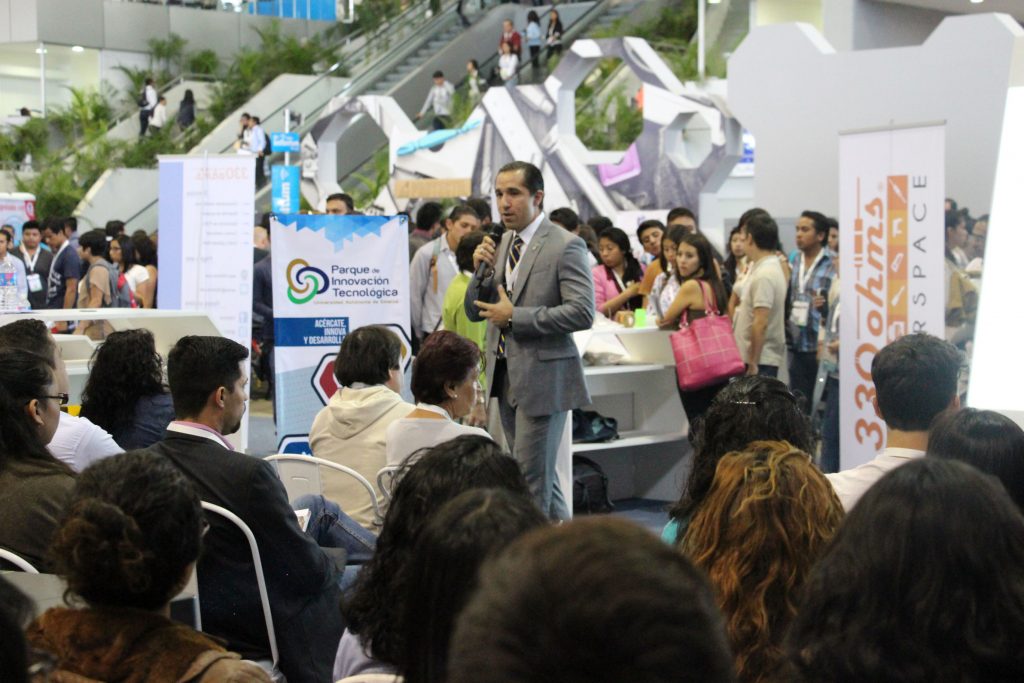
Mexico City. Within the framework of the third National Week of the Entrepreneur (SNE, Semana Nacional del Emprendedor), which is organized by the Government of the Republic through the National Institute of the Entrepreneur (INADEM, Instituto Nacional del Emprendedor) and the Secretariat of Economy, was imparted the presentation titled «The advantages of technological innovation parks by integrating as makerspaces and their contribution to national development», by the Director of the Technological Innovation Park (PIT, Parque de Innovación Tecnológica) of the Autonomous University of Sinaloa (UAS, Universidad Autónoma de Sinaloa), MBA José Ramón López Arellano. Such participation took place in the expositions forum of the Innovation Area’s Maker Section in the SNE, was attended by business owners and entrepreneurs of all ages and from different parts of the country. López Arellano talked about PIT-UAS’ objectives, which consist in promoting Sinaloa’s development via the strengthening of its technological capabilities, by providing knowledge essentials from the strategic transversal platform that are the information and communication technologies. He pointed out that this helps to promote regional economy’s productivity and competitiveness, given that contributes to knowledge generation, as well as to produce, apply and integrate technologies’ knowledge oriented to the solution of problems in our surroundings. As main theme, he mentioned that the PIT-UAS is aligned to the Plan of National Development, the State Plan of Development and the Plan of Institutional Development Consolidation 2017, which emphasize the importance of generating scientific, technological and innovational development, pillars for the socioeconomic progress. Besides, photographs of the PIT-UAS’ facilities were shown to the attendees, settlements where business owners and entrepreneurs can develop their projects under the tutelage of diverse renowned researchers and through the faculties of higher level. In this way, by making business owners and entrepreneurs of the whole nation know that thanks to the services it offers the PIT-UAS progresses in the innovation and the technological developments that favor a higher development level for the country and society in general, there is a contribution so this unit of our University can be nationally identified as an ideal space for hosting and developing enterprising projects of high impact. The foregoing, for benefit of the national progress and as a contribution to the institutional prestige, impact and growth of the UAS. Written by Moroni Arellano (Communication and Diffusion, PIT-UAS), translated by Belem Ruiz (Edition and Communication, PIT-UAS).
Director del PIT-UAS imparte conferencia en la Semana Nacional del Emprendedor
Ciudad de México, D. F. En el marco de la tercera Semana Nacional del Emprendedor (SNE), que es organizada por el Gobierno de la República a través del Instituto Nacional del Emprendedor (INADEM) y la Secretaría de Economía, fue impartida la ponencia titulada “Ventajas de los parques de innovación tecnológica al integrarse como makerspace y su contribución al desarrollo nacional”, por el director del Parque de Innovación Tecnológica (PIT) de la Universidad Autónoma de Sinaloa (UAS), maestro José Ramón López Arellano. Dicha participación tuvo lugar en el foro para exposiciones del espacio Maker del área de Innovación del INADEM en la SNE, al que asistieron empresarios y emprendedores de todas las edades y de diferentes partes del país. López Arellano habló sobre los objetivos del PIT-UAS, los cuales consisten en promover el desarrollo de Sinaloa mediante el fortalecimiento de sus capacidades tecnológicas, al brindar lo esencial del conocimiento desde la plataforma transversal estratégica que son las tecnologías de la información y la comunicación. Se destacó que esto ayuda a potenciar la productividad y la competitividad de la economía regional puesto que contribuye para la generación de conocimiento, así como para producir, aplicar e integrar el conocimiento de tecnologías orientado a la solución de problemas en nuestro entorno. Como tema central, se mencionó que el PIT-UAS está alineado con el Plan Nacional de Desarrollo, el Plan Estatal de Desarrollo y el Plan de Desarrollo Institucional Consolidación 2017, los cuales hacen hincapié en la importancia de generar desarrollo científico, tecnológico y de innovación, pilares para el progreso socioeconómico. Además, se mostraron a los asistentes fotografías de las instalaciones del PIT-UAS, donde empresarios y emprendedores pueden desarrollar sus proyectos bajo la tutela de distintos investigadores de reconocido prestigio y a través de las facultades de más alto nivel. De esta manera, al hacer del conocimiento de empresarios y emprendedores de toda la nación que mediante la oferta de sus diversos servicios el PIT-UAS avanza en la innovación y en los desarrollos tecnológicos que propician un desarrollo de alto nivel para el país y la sociedad en general, se contribuye a que esta dependencia de nuestra Universidad sea identificada a nivel nacional como un espacio idóneo para albergar y desarrollar proyectos emprendedores de alto impacto. Lo anterior, para beneficio del progreso nacional y como aportación al prestigio, la proyección y el crecimiento institucional de la UAS. Comunicación Social PIT-UAS
The PIT-UAS participates in the National Week of the Entrepreneur 2015
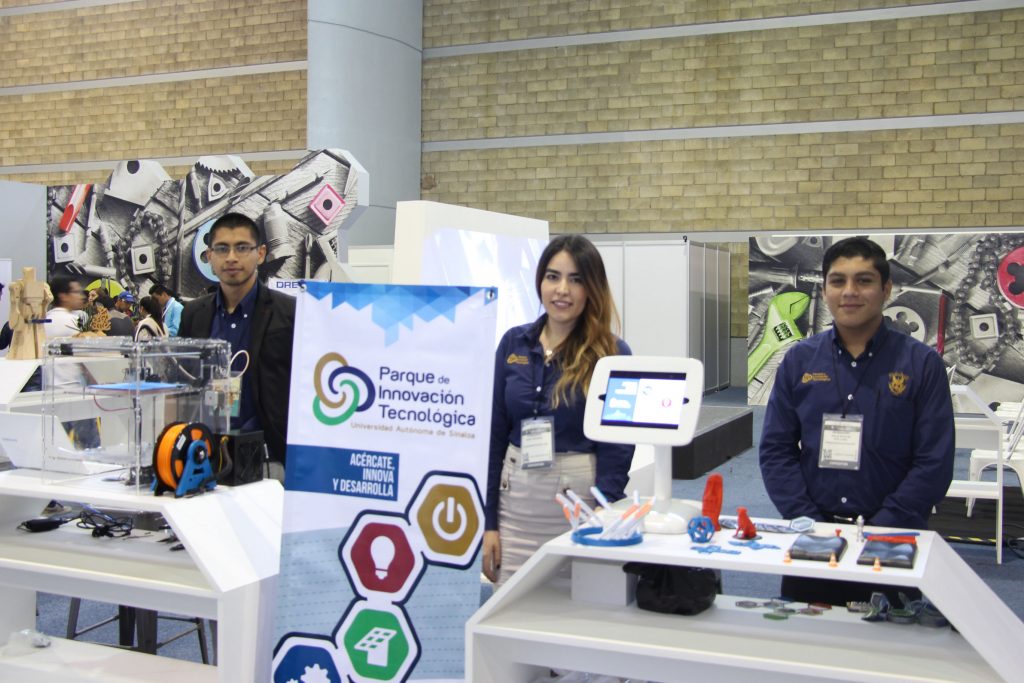
The Technological Innovation Park (PIT, Parque de Innovación Tecnológica) of the Autonomous University of Sinaloa (UAS, Universidad Autónoma de Sinaloa) participates in this year’s edition of the National Week of the Entrepreneur (SNE, Semana Nacional del Emprendedor), which is taking place at Expo Bancomer Santa Fe, in Mexico City, began on Monday 5th and will end on Saturday 10th of October. Known by being the business event more important of its category, the SNE is organized by the Government of the Republic through the National Institute of the Entrepreneur (INADEM, Instituto Nacional del Emprendedor) and the Secretariat of Economy, its objective is to grant backing and concrete solutions to begin business or help the growth of micro, small and medium enterprises. It is foreseen that the President of the Republic make a tour by the stands of the SNE on Friday and, according to the INADEM, the event will gather almost seventy thousand visitors and eight hundred thousand people will virtually access to workshops and conferences. As part of the third edition of the SNE, on its role as an INADEM’s makerspace, the PIT-UAS has an important intervention in the innovation ecosystem, through an exposition belonging to the 3D designing, modeling and printing field. In this way, the 3D printer developed by students in the facilities of the PIT-UAS is shown to the attendees; such printer is part of a project which purpose is to invent low-cost 3D printers, improving quality and rapidity so, in the future, these can be of common use, as if they were conventional paper printers. Moreover, it is scheduled a conference to be imparted on Thursday 8th of October at 13:00 hours, by the Director of this UAS’ innovation center, MBA José Ramón López Arellano, which is titled «The advantages of technological innovation parks by integrating as makerspaces and their contribution to national development». With his talk, López Arellano will make known the advantages institutions as the PIT-UAS provide by functioning as makerspaces, since contribute to achieve the success of the projects they host, thanks to the multidisciplinary scientific and technological development, besides applied innovation, contributions that also help to consolidate a sustainable socioeconomic development of national impact. Finally, it should be noted that the PIT-UAS was accredited with the makerspace title on February 6th of this year, date on which the Direction of Innovation and Promotion of the INADEM recognized the PIT of our University as part of the Innovation Network, under cover of the Support Network to the Entrepreneur (within the framework of the 2.9 Call, Encouragement for the Prototypes Development through Workshops of High Specialization). Consequently, Park’s personnel takes care of generating contacts with entrepreneurs and the enterprising community of the country, also students and other attendees to the event, within the Maker Area of the SNE; this, with the purpose of sharing resources, knowledge and tools, based on incentives to creation and creativity, in order to create new products, focused in the fabrication of elements that unite the physical with the technological. Written by Moroni Arellano (Communication and Diffusion, PIT-UAS), translated by Belem Ruiz (Edition and Communication, PIT-UAS).
El PIT-UAS participa en la Semana Nacional del Emprendedor 2015
El Parque de Innovación Tecnológica (PIT) de la Universidad Autónoma de Sinaloa (UAS) participa en la edición de este año de la Semana Nacional del Emprendedor (SNE), que se está llevando a cabo en la Expo Bancomer Santa Fe en la ciudad de México, dio inicio el lunes 5 y culminará el sábado 10 de octubre. Conocido por ser el evento empresarial más importante de su categoría, la SNE es organizada por el Gobierno de la República a través del Instituto Nacional del Emprendedor (INADEM) y la Secretaría de Economía, su objetivo es otorgar apoyos y soluciones concretas para iniciar negocios o ayudar al crecimiento de micros, pequeñas o medianas empresas. Se prevé que el presidente de la República haga un recorrido por los estands que conforman la SNE el día viernes y, de acuerdo con el INADEM, el evento reunirá a cerca de setenta mil visitantes y ochocientas mil personas accederán virtualmente a los talleres y las conferencias. Como parte de la tercera edición de la SNE, en su rol de makerspace del INADEM, el PIT-UAS tiene una importante intervención en el ecosistema de innovación, mediante una exposición perteneciente al ámbito de diseño, modelado e impresión 3D. Así, se muestra a los visitantes la impresora 3D que fue desarrollada en el Parque por estudiantes universitarios de la UAS, misma que forma parte de un proyecto cuyo propósito es inventar impresoras 3D de bajo costo, mejor calidad y más rapidez para que, en un futuro, éstas puedan llegar a ser de uso común, cual si se tratara de una impresora convencional de papel. Por otra parte, se tiene programada una conferencia que será impartida el día jueves 8 de octubre a las 13:00 horas por el director de este centro de innovación de la UAS, el maestro José Ramón López Arellano, la cual se titula “Ventajas de los parques de innovación tecnológica al integrarse como makerspace y su contribución al desarrollo nacional”. Con su charla, López Arellano dará a conocer a los asistentes las ventajas que instituciones como el PIT-UAS brindan al desempeñarse como makerspace, pues contribuyen a concretar el éxito de los proyectos que albergan, gracias al multidisciplinario desarrollo científico y tecnológico, además de la innovación aplicada, aportes que a su vez coadyuvan para el desarrollo económico y social sostenible de impacto nacional. Por último, cabe destacar que el PIT-UAS fue acreditado con el título de makerspace el 6 de febrero de 2015, fecha en la cual la Dirección de Innovación y Promoción del INADEM reconoció al PIT de nuestra Universidad como parte de la Red de Innovación al amparo de la Red de Apoyo al Emprendedor (en el marco de la Convocatoria 2.9, Fomento para el Desarrollo de Prototipos a través de Talleres de Alta Especialización). En consecuencia, personal del Parque se ocupa de la generación de contactos con empresarios y con la comunidad emprendedora del país, además de estudiantes y otros asistentes al evento, dentro del área Maker de la SNE; esto, con el fin de compartir recursos, conocimiento y herramientas, fundamentados en estímulos a la creación y la creatividad, para así generar nuevos productos, enfocados en la fabricación de elementos que unan lo físico con lo tecnológico. Comunicación Social PIT-UAS