Se realiza en el PIT-UAS conferencia de prensa sobre el Cleantech Challenge México 2016
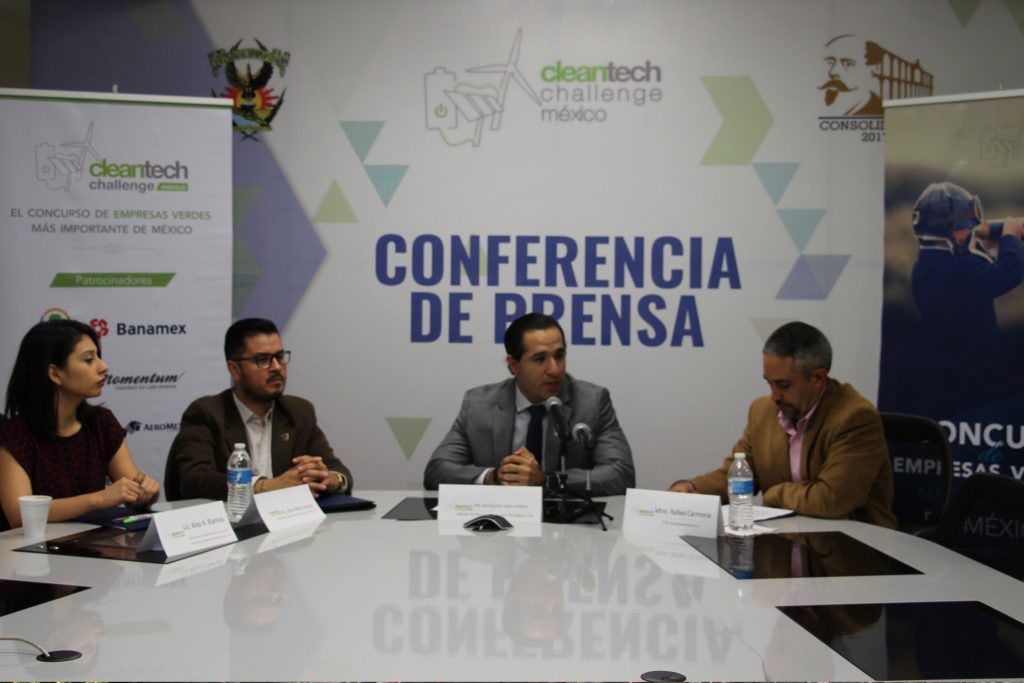
Este lunes 22 de febrero de 2016 se llevó a cabo, en la Sala de Videoconferencias del Parque de Innovación Tecnológica (PIT) de la Universidad Autónoma de Sinaloa (UAS), una conferencia de prensa para presentar la edición 2016 de la convocatoria del Cleantech Challenge México. Se trata del concurso de empresas verdes más importante del país, el cual impulsa el desarrollo económico a través de la innovación sustentable y el emprendimiento en materia de tecnologías limpias. Al evento se invitó a universitarios, investigadores, emprendedores, empresas emergentes y a personas que hayan identificado, fabricado, utilizado o promovido tecnologías limpias que ayuden a minimizar el impacto sobre el medio ambiente, tecnologías que tengan el potencial de ser adaptables como idea de negocio para desarrollarse con fines comerciales. Autoridades de la Casa Rosalina estuvieron presentes en dicha conferencia de prensa: el maestro José Ramón López Arellano , en representación del rector, doctor Juan Eulogio Guerra Liera, y en su calidad de director general del PIT-UAS; el maestro Omar Beltrán Zazueta, director del Sistema de Gestión de la Calidad; la licenciada Alep Blancas, de la Dirección General de Vinculación y Relaciones Internacionales; además, el maestro Rafael Carmona, director de Tecnología de la empresa Green Momentum y organizador del Cleantech Challenge México 2016. Durante su intervención, el maestro Rafael Carmona puntualizó: “… en el estado de Sinaloa ha habido muy poca participación en años anteriores, y eso es parte de lo que se quiere cambiar… Seguramente, con la participación por parte de la Universidad, Sinaloa podrá tener una mayor presencia [en el Cleantech Challenge México]”. Por su parte, el director general del PIT-UAS destacó: “Dentro del Plan de Desarrollo Institucional Consolidación 2017 se plasma, en uno de los ejes, fomentar la cultura empresarial y de emprendimiento; y para ello se han entablado conversaciones con las facultades, a fin de laborar en diferentes proyectos aplicados”. Asimismo recordó el compromiso institucional de consolidar esta institución de educación superior como una universidad verde. De esta manera se reconoce la importancia del rol que en Sinaloa tiene el PIT-UAS para la incorporación de tecnologías renovables a la vida cotidiana, como lo ha demostrado este centro de investigación por medio del proyecto Smart Eco-Park PIT-UAS, que consiste en el innovador diseño y la implementación de un prototipo de edificio que integra diversos modelos orientados a incorporar tanto la sustentabilidad como el internet de las cosas (Internet of Things) en complejos urbanos. Para obtener más información en torno al Cleantech Challenge México, visite: http://innovacion.uas.edu.mx/2016/02/22/a-traves-del-pit-participa-la-uas-en-el-cleantech-challenge-mexico-2016/. Jesús Moroni Arellano (Comunicación y Difusión, PIT-UAS).
PIT-UAS’ General Director will develop in Germany a project on applied research
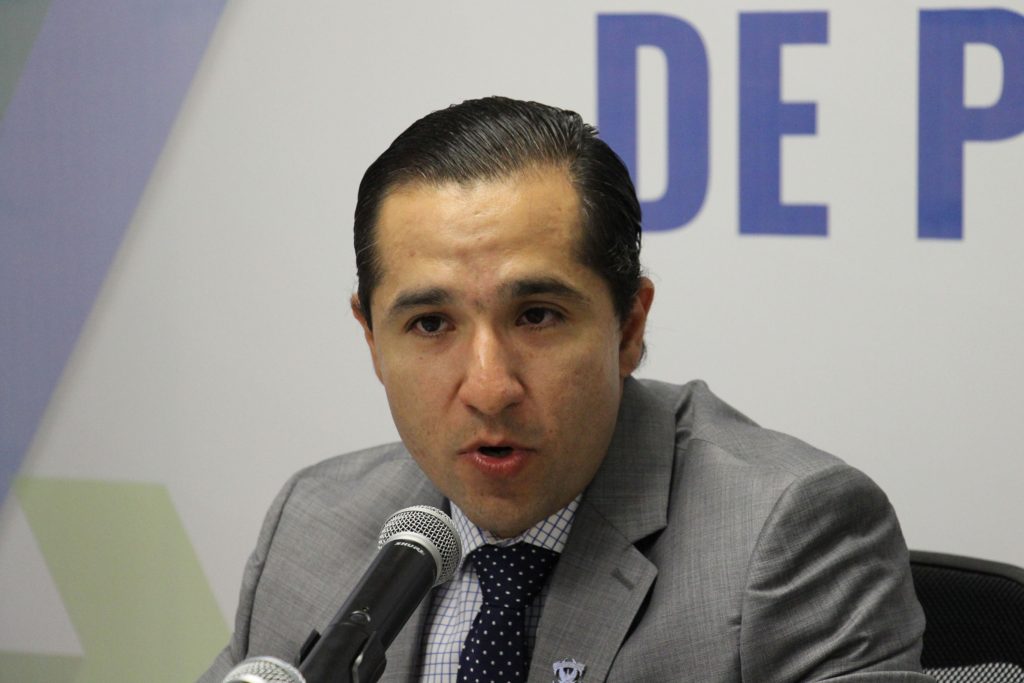
The General Director of the Technological Innovation Park (PIT), belonging to the Autonomous University of Sinaloa (UAS), obtained a scholarship from the Intensive Blended Learning University Leadership and Management Training Programme (UNILEAD), which is proper to the Carl Von Ossietzky University (Oldenburg, Germany). The master of Business Administration José Ramón López Arellano specified that his work, Internal administration of applied research projects, was 1 of the 25 chosen, among the 400 international proposals that were sent. In addition, just two Mexican universities were accepted in the programme and the UAS is the only public institution of higher education in. «The objective is to promote innovative projects in the field of organizational and administrative development … Specifically in my case, the research I’m going to participate with is about internal administration within the framework of applied research projects, in developing countries», declared. He explained the transcendence of such initiative, due to the great experience of the Carl Von Ossietzky University, internationally one of the most important in projects administration issues, field this institution has being working already for over thirty years. The MBA emphasised that coursing this academic programme will serve so, in a near future, a culture of applied research is promoted within the UAS, as well as relationships with national industry, intellectual property and, also, an academic culture of entrepreneurship and intra-entrepreneurship for the creation of new sustainable technology- based enterprises. López Arellano mentioned that the UNILEAD is going to have a duration of 10 months, during which he will work online; in complementation, he will make two stays and the first one is to be carried out from February 28th to March 18th: «We are going there to adjust the project; and we will continue applying the recommendations they are going to give us. Then, on September we will go back to Germany to expound the final project», detailed. Finally, it is noteworthy that the expenses of research and academic stays in Germany are paid by the institutions that jointly develop the initiative: Carl Von Ossietzky University, German Academic Exchange Service and Nelson Mandela Metropolitan University. Written and Translated by Belem Ruiz (Edition and Communication, PIT-UAS).
Director del PIT-UAS desarrollará en Alemania un proyecto sobre investigación aplicada
El director general del Parque de Innovación Tecnológica (PIT) de la Universidad Autónoma de Sinaloa (UAS) obtuvo una beca académica del Programa Intensivo de Aprendizaje Semipresencial para la Capacitación en Liderazgo y Administración Universitarios (UNILEAD, Intensive Blended Learning University Leadership and Management Training Programme), propio de la Universidad Carl Von Ossietzky (Oldenburg, Alemania). El maestro en Administración José Ramón López Arellano precisó que su trabajo, Administración interna de proyectos de investigación aplicada, fue 1 de los 25 elegidos, de 400 propuestas que fueron enviadas a nivel mundial. Además, de las dos universidades mexicanas aceptadas en el programa, la UAS es la única pública. “Se tiene como objetivo el fomentar proyectos innovadores en el ámbito del desarrollo organizacional y administrativo… En mi caso específicamente, la investigación con la que participaré trata sobre administración interna en el marco de proyectos de investigación aplicada, en países en vías de desarrollo”, precisó. Explicó que la trascendencia de tal iniciativa se debe a que la Universidad Carl Von Ossietzky es una de las más importantes a nivel mundial en cuestiones de administración de proyectos, enfoque que esa institución ha trabajado ya por más de treinta años. Destacó que cursar este programa académico servirá para que en un futuro cercano se fomente en la UAS una cultura de investigación aplicada, así como las relaciones con la industria nacional, la propiedad intelectual y asimismo se fomente la cultura académica de emprendimiento e intraemprendimiento para la creación de nuevas empresas sustentables de base tecnológica. López Arellano mencionó que el programa de liderazgo en universidades tendrá una duración de 10 meses, tiempo durante el cual trabajará en línea; en complementación, efectuará dos estancias presenciales, la primera, a llevarse a cabo del 28 de febrero al 18 de marzo: “Vamos para allá para adecuar el proyecto; y seguiremos aplicando las recomendaciones que ellos nos darán. Entonces, en septiembre volveremos a Alemania para exponer el proyecto final”, detalló. Por último, cabe señalar que los gastos de la investigación y las estancias académicas en Alemania son cubiertos por las instituciones que en conjunto desarrollan la iniciativa: Universidad Carl Von Ossietzky, Servicio Alemán de Intercambio Académico y Universidad Nelson Mandela. Belem Ruiz (Edición y Comunicación, PIT-UAS).
The UAS, through its PIT, is going to participate in the 2016 Cleantech Challenge Mexico
Cleantech Challenge Mexico (CTCM) is the most important competition of green enterprises in Mexico, which on its seventh annual edition continues promoting economic development by means of sustainable innovation and entrepreneurship in matters of clean technology. CTCM counts on an acceleration open process focused on promoting the commercial scaling and the development of technical, commercial and business abilities of young and new entrepreneurs; besides, via the linkage with different national and international actors, CTCM functions as a platform for the strengthening of enterprises that generate clean technology. Among its objectives stand out creating, strengthening and financing technological innovation enterprises, as well as protecting, licensing and commercialising Mexican clean technology, with the purpose of offering a productive alternative to reach the country’s sustainable prosperity. The 2016 edition of CTCM includes two categories: Cleantech Innovation Challenge: intended for projects in early stages, generating prototypes and still without commercializing their technologies. Cleantech Startups Challenge: may participate startups that have being invoicing for at least a year; the best projects of the abovementioned category will incorporate to this one. Additionally and for the first time, within the framework of a last phase which will be international, entrepreneurs and former participants from all over the world will be received in order to create networking, so markets can be opened in other parts of the globe, through the Cleantech Global Challenge. CTCM is distinguished by working in the strengthening of all the selected projects, through multiple benefits, such as networking events and continuous training during five months; meanwhile, semi-finalists receive specialized consultancy and follow-up. The finalists have the opportunity of winning several prizes, among which are an amount of $250,000 Mexican pesos, postgraduate scholarships, consultancy hours, international stays, and also the opportunity of receiving an inversion by private funds with a co-investment capacity of up to $30 million dollars. The impact generated by CTCM in the past six years —thanks to which it has been consolidated as a motor of economic development— are: 3633 received proposals from all the country. 847 projects have gone through our process. We have attended 3902 entrepreneurs. We helped for the creation of 381 enterprises. Approximately five thousand and three hundred jobs have been generated. 316 industrial property applications have been supported. Source: Cleantech Challenge, translated by Belem Ruiz (Edition and Communication, PIT-UAS).
A través del PIT, participa la UAS en el Cleantech Challenge México 2016
Cleantech Challenge México (CTCM) es el concurso de empresas verdes más importante de México y en su séptima edición anual continúa impulsando el desarrollo económico a través de la innovación sustentable y el emprendimiento en materia de tecnología limpia. CTCM cuenta con un proceso de aceleración abierta enfocado en promover el escalamiento comercial y el desarrollo de capacidades técnicas, comerciales y empresariales de jóvenes emprendedores y nuevos empresarios; además, a través de la vinculación con diferentes actores a nivel nacional e internacional, funciona como una plataforma para el fortalecimiento de empresas generadoras de tecnología limpia. Entre sus objetivos destacan la creación, el fortalecimiento y el financiamiento de empresas de innovación tecnológica, así como la protección, el licenciamiento y la comercialización de tecnología limpia mexicana con el fin de ofrecer una alternativa productiva para alcanzar la prosperidad sustentable del país. La edición 2016 de CTCM incluye dos categorías: Cleantech Innovation Challenge: dirigido a proyectos que están en etapas tempranas, generando prototipos y aún sin comercializar sus tecnologías. Cleantech Startups Challenge: pueden participar empresas emergentes que han facturado durante al menos un año; a esta se incorporarán los mejores proyectos de la categoría anterior. Adicionalmente y por primera vez, en el marco de una última etapa que será internacional, se recibirán emprendedores de todo el mundo y exconcursantes para generar networking que permita abrir mercados en otras partes del globo, a través del Cleantech Global Challenge. CTCM se distingue por trabajar en el fortalecimiento de todos los proyectos seleccionados, a través de múltiples beneficios, como eventos de networking y capacitación continua durante cinco meses; mientras que los semifinalistas reciben asesoría y seguimiento especializado. Los finalistas tienen la posibilidad de ganar varios premios, entre los que se encuentran una bolsa de $250 000 pesos mexicanos, becas de posgrado, horas de consultoría, estancias internacionales, así como la oportunidad de recibir inversión por parte de fondos de capital privado con una capacidad de coinversión de hasta $30 millones de dólares. El impacto que ha generado CTCM en los últimos seis años, mismos que lo destacan como un motor de desarrollo económico, son: 3633 propuestas recibidas de todo el país. 847 proyectos han pasado por nuestro proceso. Hemos atendido a 3902 emprendedores. Ayudamos para la creación de 381 empresas. Se han generado aproximadamente 5300 nuevos empleos. Se ha apoyado al ingreso de 316 solicitudes de Propiedad Industrial. Fuente: Cleantech Challenge México.
At the PIT-UAS is developed mobile app for smart parking lot prototype

As part of the Smart Eco-Park PIT-UAS project, which consists on the innovative design and implementation of a building prototype that integrates diverse models oriented to incorporate both sustainability and the Internet of Things (IoT) in urban complexes, an homonymous mobile application has been developed, such app complements the functions of the high technology parking lot built in the facilities of the Technological Innovation Park (PIT, Parque de Innovación Tecnológica), belonging to the Autonomous University of Sinaloa (UAS, Universidad Autónoma de Sinaloa). The aforementioned mobile application fulfils three functions, allowing the users to: 1) control vehicular access remotely, 2) visualise the location of available parking spaces in the high technology parking lot, in the previous moments of the arrival to the place, 3) automatize the vehicular access, by lifting, via mobile telephone, the parking lot’s electric barrier gate. Therefore, with this system the ingress of automobiles is secured to be controlled and organized. Thanks to the IoT’s incorporation to its functioning, such system offers the possibility of knowing in real time, even previously to the ingress in the parking lot, the availability of the parking spaces. This, through an interactive map that shows the information about the occupied and available spaces. Smart Eco-Park is nowadays executed in this university research center and its design and implementation were on charge of an interdisciplinary team composed of a software architect, programmers, graphic designers, electronic engineers, among other specialists. By last, it is noteworthy that the interdisciplinary collaboration, one of the PIT-UAS’ methodological pillars, facilitates the execution of such innovative sustainable project, same which sets the technological basis for its implementation on a broad scale and marks the beginning of its adoption in Sinaloa and in Mexico. Written and translated by Belem Ruiz (Edition and Communication, PIT-UAS).
Se desarrolla en el PIT-UAS aplicación móvil para prototipo de estacionamiento inteligente
Como parte del proyecto Smart Eco-Park PIT-UAS, que consiste en el innovador diseño y la implementación de un prototipo de edificio que integra diversos modelos orientados a incorporar tanto la sustentabilidad como el Internet de las Cosas (IoT, por sus siglas en inglés de Internet of Things) en complejos urbanos, se desarrolló una aplicación móvil homónima, la cual complementa las funciones del estacionamiento de alta tecnología erigido en las instalaciones del Parque de Innovación Tecnológica (PIT) de la Universidad Autónoma de Sinaloa (UAS). La mencionada aplicación móvil cumple tres funciones, permite a los usuarios: 1) controlar el acceso vehicular de forma remota, 2) visualizar la ubicación de los cajones disponibles en el estacionamiento de alta tecnología momentos antes de arribar a éste, 3) automatizar el acceso vehicular, al levantar, vía teléfono móvil, la pluma del estacionamiento. De manera que con este sistema se asegura que el ingreso de automóviles sea de manera controlada y organizada. Gracias a la incorporación del IoT en su funcionamiento, dicho sistema brinda la posibilidad de conocer en tiempo real, incluso previamente al ingreso en el aparcamiento, la disponibilidad de los cajones del estacionamiento. Esto, a través de un mapa interactivo que facilita la información sobre los lugares ocupados o disponibles. Smart Eco-Park se implementa actualmente en el antes mencionado centro universitario de investigación y su diseño e implementación están a cargo de un equipo interdisciplinario conformado por un arquitecto de software, programadores, diseñadores gráficos, electrónicos, entre otros especialistas. Por último, cabe destacar que la colaboración interdisciplinaria, uno de los pilares metodológicos del PIT-UAS, facilita la ejecución de dicho proyecto de innovación sustentable, mismo que sienta las bases tecnológicas para su implementación a gran escala y marca el inicio de su adopción en Sinaloa y en México. A continuación pueden apreciarse imágenes del funcionamiento de la aplicación móvil. Belem Ruiz (Edición y Comunicación, PIT-UAS).
The role of global warming in the emergence and spread of epidemics

The scientist, member of the University of Bath’s Department of Biology and Biochemistry, specified that he is dedicated to the research about Salmonella because it is the main pathogen associated with foods in the world, and detailed: «I began working in the detection, and from detection, to the characterization, and then to the molecular epidemiology, and now we are doing genomics». As for the Vibrio: «… it seems to me that this is a fascinating bacteria, because Vibrio is an organism that naturally lives in the marine environment, and suddenly certain specific populations cause diseases. Nobody understands why a bacteria which is normal and lives in the environment becomes pathogen and suddenly can cause an epidemic; and, despite all the years of research and efforts, it still cannot be clearly understood». In his article «Climate change and pathogens in the water: El Niño phenomenon and its impact in health» he emphasizes the irreversibility of the climate change originated by the global warming produced by human activities and he writes about the possibility of, based on his researches, predicting new Vibrio outbreaks. To the express question about why predicting but not preventing, he explained: «We try to develop models that may predict the adequate conditions for the presence of the pathogen, if you are capable of anticipating and knowing when there are risk periods, you can implement measures and one of the most important measures is avoiding exposure: then, by avoiding people from exposure to this pathogen, you will reduce the infections. And through these measures you will reduce the total of infections’ cases, and that will beneficially affect not just in health but also in economy». Great part of this biochemist’s researches in diverse coasts and nearby areas in Africa and America (included the Mexican bay Todos Santos and the valley of Culiacán) are related to global warming. And, in this sense, it should be pointed out that, according to the Mexican Report of Climate Change, 46.2% of the 120 millions of Mexicans are currently enduring the effects of such phenomenon, among which is mentioned the diseases transmission, and it is emphasized that are precisely the coastal zones the more affected. Thus, Martínez-Urtaza shared part of his discoveries in the matter of the consequences that this phenomenon has on the emergence and spread of epidemics. «When we talk about climate change we always think in it in general terms, but the climate change has a very important impact regionally. Basically, some extreme weather events are pronounced, more intense rains and hotter temperature. Well, the combination of these two factors is going to influence the survival of these pathogens in the environment; and if they are going to live longer, they are going to be transmitted with greater ease. That is, more or less, the theoretical framework we work.» «What happens with the coasts? Well, if you work with Vibrio, this is a bacteria fond of warm environments and a low salinity, for example; when there is plenty of rain, sea’s salinity decreases and the climate change heats up the zones, thus the areas which are going to be propitious for those organisms to exist are going to broaden with climate change: those bacteria are going to appear in more places (which is what we are studying and detecting in our studies). In general terms, Vibrio diseases are spreading to the poles, reaching latitudes more to the North and the South; until some years ago, it was almost just in tropical and subtropical zones, and in the last researches we have finished, we have detected Vibrio associated diseases up to 60 miles from the Artic Circle.» The aforementioned Mexican Report of Climate Change emphasizes the fact that, despite the decades of scientific research about global warming, the information that reaches to Mexican population —which main source is the governmental sector— still insufficient and unreliable. Martínez-Urtaza declared that in order to improve such perception it is essential to divulge the scientific labor, and assured: «It is our function as scientists to be always trying to make the greatest divulge activities of our results and those works we are involved in; but it is also truth that our activity is so frenetic that we don’t have many opportunities for those matters. […] It must be recognized that it ain’t easy and the Governments don’t assemble the mechanisms so we can do this type of divulgations». Written and translated by Belem Ruiz (Edition and Communication, PIT-UAS).
Estudiantes de la FCA, extensión Badiraguato, visitan las instalaciones del PIT-UAS
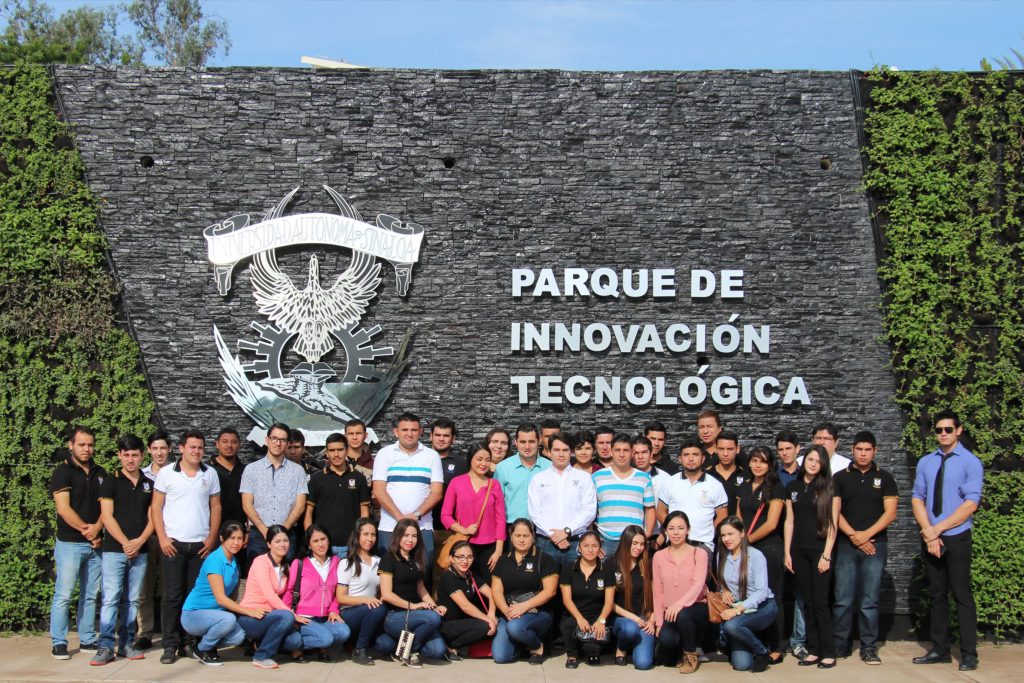
Alumnos de primer año de la Facultad de Contaduría y Administración (FCA), extensión Badiraguato, se dieron cita en las instalaciones del Parque de Innovación Tecnológica (PIT) de la Universidad Autónoma de Sinaloa (UAS) el pasado viernes 11 de diciembre, con el objetivo de conocer las instalaciones del Parque e informarse acerca de las actividades que en él se realizan. Como parte de la explicación dada al inicio de la visita, se dijo a los jóvenes el significado de la adopción del modelo de la triple hélice, que forma parte de la metodología adoptada por el Parque para su operación y la realización de los proyectos de ciencia aplicada desarrollados en sus instalaciones: conjugar los esfuerzos tanto de la Universidad, como de la iniciativa privada y de los tres niveles de Gobierno. Durante su visita, a los 39 alumnos les fue dado un recorrido guiado a través de las distintas áreas que conforman el PIT-UAS. Así, conocieron el área Desarrollo de Proyectos, donde se llevan a cabo las actividades del cuerpo académico Innovación Educativa, en el marco del Desarrollo Administrativo de las Empresas UAS-CA-288, que permite a estudiantes de la FCA campus Culiacán vincular sus proyectos por medio del PIT-UAS. En este contexto, los visitantes fueron invitados a participar en el Parque por medio de proyectos de innovación, mismos que pueden desarrollar con el apoyo de fondos federales y en vinculación con la iniciativa privada, gracias a la gestión que forma parte de las labores del PIT-UAS en tanto organismo encargado de promover la implementación del modelo de la triple hélice. Comunicación Social PIT-UAS
Students from the FCA Badiraguato visit the PIT-UAS’ facilities
On Friday 11th of December, first year students from the Faculty of Accounting and Administration (FCA, Facultad de Contaduría y Administración), Badiraguato Extension, made an appointment in the facilities of the Technological Innovation Park (PIT, Parque de Innovación Tecnológica) of the Autonomous University of Sinaloa (UAS, Universidad Autónoma de Sinaloa), with the objective of knowing the Park’s facilities and getting information about the activities that are realized in it. As part of the explanation given at the beginning of the visit, the triple helix model’s meaning was told to the students, model that is part of the methodology adopted by the Park for its operation and the realization of applied science projects developed within its facilities: to combine efforts from the University, the private initiative and the Government’s three levels. During their visit, the 39 students were guided through the PIT-UAS’ different areas. This way, they knew the area Projects Development, were activities from the academic body Educative Innovation are carried out, within the framework of the Enterprises’ Administrative Development UAS-CA-288, which allows to FCA Culiacán’s students linking their projects by means of the PIT-UAS. Within this context, the visitors were invited to participate in the Park through innovation projects, same which may be developed with the support of federal funds and in linkage with the private initiative, thanks to the management that is part of the PIT-UAS’ duties as an organism in charge of promoting the implementation of the triple helix model. Written by Moroni Arellano (Communication and Diffusion, PIT-UAS), translated by Belem Ruiz (Edition and Communication, PIT-UAS).