Sinaloa’s Technological Innovation Park: academy-industry-government synergy
Culiacán, Sinaloa. May 24th, 2016 (Conacyt Information Agency).- Specialized human resources formation to offer technological services to the state, the country and the world, these are some objectives pursued by the Technological Innovation Park (Parque de Innovación Tecnológica, PIT) of the Autonomous University of Sinaloa (Universidad Autónoma de Sinaloa, UAS), a research centre that has two years in operation. The park’s director, José Ramón López Arellano, pointed out that the idea for PIT creation started four years ago, upon the initiative of state government and UAS. It was until 2014 when the project was consolidated, with extraordinary resources from the National Council of Science and Technology (Consejo Nacional de Ciencia y Tecnología, Conacyt), an amount of 22 million pesos, allocated to UAS. «We work on different axis, at world level. First task was searching regional opportunity areas and how to foster university’s strengths so these could have an impact in the region», he commented. During its first month, he added, UAS’ and PIT’s authorities held talks with business area. At that point, was managed a project with the National Electoral Institute (Instituto Nacional Electoral, INE), related to the monitoring system for local elections. However, due to structural reforms and INE’s operative changes, the project was stopped; it is contemplated to pick up the idea this year. During its first three months, PIT-UAS achieved to define its position in the state, thanks to its multidisciplinary work with teachers and students from different UAS’ faculties. «Some enterprises contacted us, some were trying to solve problems of projects for Innovation Incentives Programme (Programa de Estímulos a la Innovación, PEI), and in practically three months we managed to have the work done by a university workers group. That gave us very good fame in Sinaloa, given that us, as an option, turned out to be effective and efficient for the necessities of the business sector», commented López Arellano. The triple helix PIT-UAS fuses economic development’s three axis: industry, government and academic abilities. For its first operation year, the park had four institutional projects, subsidized by Conacyt, due to UAS management. And this is why, said the rector of the institution, Juan Eulogio Guerra Liera, the park aims contributing to specialised human resources formation. «It’s about integrating multidisciplinary teams, offering services, growing ideas and commercializing technological products, that’s why we’re looking for the approach of the public and private sectors.» «Within this institution appropriate researches take place inside its Educative Technologies, Motion Capture, Automation and Control, and Mobile Computing and Tracking laboratories», he said. Connected Mexico Project The Technological Innovation Park was selected as State Operative Instance for the Connected Mexico Project in Sinaloa. State authorities announced that the programme seeks to provide free wireless network access to all the public centres of the country, reason why, through PIT, UAS work was requested in order to elaborate a market and feasibility assessment. In 2018 the goal is to connect 250 thousand places all over the country and at least 8 thousand public areas in Sinaloa, according to the programme characteristics. PIT-UAS general director, José Ramón López Arellano, emphasised that the Project was jointly worked with the Technological Institute of Sinaloa. «Connected Mexico Project needed a market and feasibility assessment, so we reached to the faculties of Accountability and Administration, Economy and Earth Sciences for help». «We created another multidisciplinary group that helped us with the research and feasibility studies for the project. This is where the university participated and basically opened a new offer in the market for telecommunication and internet technologies within the state, to give the necessary means so the places where is plausible or not the connection can be visited», he explained. 16 people participated at PIT-UAS’ facilities, 6 more were involved in the market study, and for the field survey 8 teams were assigned, each with 4 to 6 members (working temporarily). All was made with students support. International projects The level II researcher from the National System of Researchers (Sistema Nacional de Investigadores, SNI), Ildefonso León Monzón, at present time works in the Technological Innovation Park. He announced that on next July an agreement will be sign with German research centres. «It will be an agreement with the Research German Centre in Berlin. We’re looking to establish a collaboration link with the Oldenburg University, in Germany, which stands out in the computational audition research subject», said. Nowadays, PIT collaborates in the creation of a national network named Innovation and Knowledge Transfer Network (Red de Innovación y Transferencia del Conocimiento), in which participates universities such as the Autonomous University of Hidalgo, Quintana Roo, Tabasco, San Luis Potosí and Coahuila states. Written by Janneth Aldecoa (CONACYT Informative Agency), translated by Belem Ruiz (Edition and Communication, PIT-UAS).
Cuerpo académico Innovación Educativa participa en el III Congreso Internacional sobre Sustentabilidad, Competitividad y Gestión en las Organizaciones
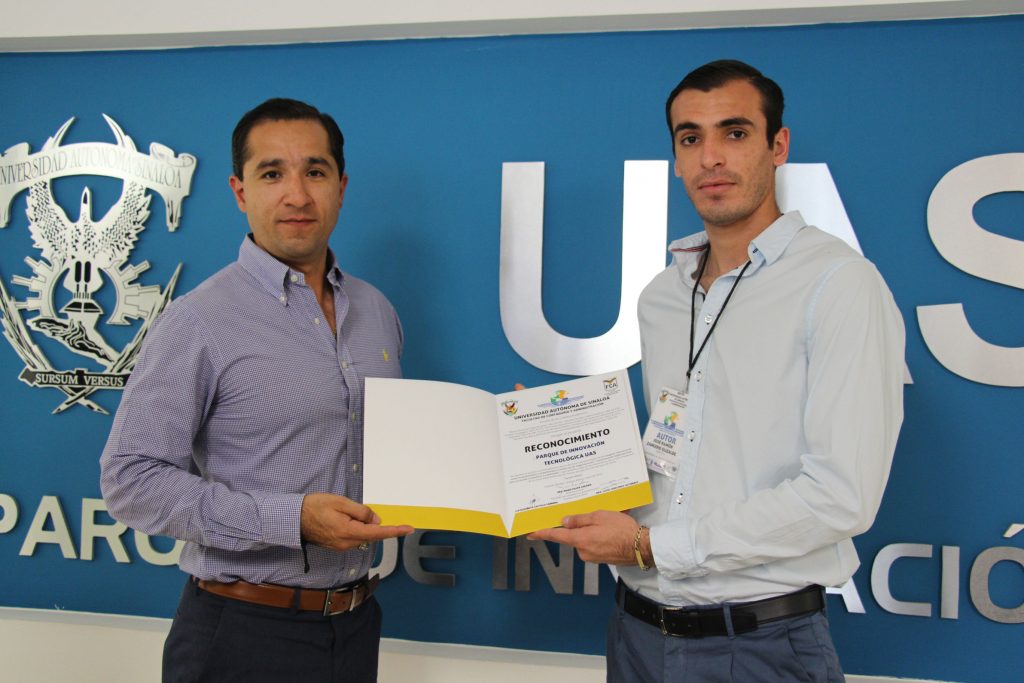
El cuerpo académico Innovación Educativa en el Marco del Desarrollo Administrativo de las Empresas (UAS-CA-288) participó como organizador en el Tercer Congreso Internacional sobre Sustentabilidad, Competitividad y Gestión en las Organizaciones, titulado “Transformando organizaciones para un mundo competitivo y sustentable”. Dicho cuerpo académico universitario está integrado por profesores e investigadores de tiempo completo de la Universidad Autónoma de Sinaloa (UAS); entre sus objetivos destacan la formación en desarrollo económico y competitividad financiera de las pymes, además de la educación y la innovación estratégica en la enseñanza profesional, dentro del campo de la administración. Es preciso mencionar que dicho ente, reconocido por la Facultad de Contaduría y Administración de la UAS, reside operativamente en las instalaciones del Parque de Innovación Tecnológica (PIT) universitario, y entre sus miembros se encuentran la doctora Marifeli Avendaño (Directora de auditoría), el maestro José Ramón López Arellano (director general del PIT-UAS), además de otros docentes universitarios. La participación del PIT-UAS consistió en ofrecer a los participantes del congreso una visita guida por las instalaciones de este centro institucional de investigación científico-tecnológica e innovación. Así, se explicó a estudiantes y académicos cómo se aplican actualmente en el Parque conocimientos propios de las áreas de sustentabilidad, competitividad y gestión organizacional. A través de la colaboración con el UAS-CA-288, este espacio universitario dedicado a la ciencia, la tecnología, la innovación y el emprendimiento abre sus puertas para que estudiantes de la FCA campus Culiacán vinculen sus proyectos por medio del PIT-UAS, oportunidad que también podría ser aprovechada por los asistentes a los recorridos guiados de los días 03 y 04 de mayo. Jesús Moroni Arellano (Comunicación y Difusión, PIT-UAS)
Educative Innovation academic body participates in the III International Congress on Sustainability, Competitiveness and Administration in Organizations
Within the Enterprises Administrative Development Framework (UAS-CA-288), the Educative Innovation academic body participated as organizer in the III International Congress on Sustainability, Competitiveness and Administration in Organizations, titled «Transforming organizations for a competitive and sustainable world». This university academic body is integrated by full-time professors and researches belonging to the Autonomous University of Sinaloa (UAS, Universidad Autónoma de Sinaloa); among its objectives stand out formation in economic development and financial competitiveness of small and medium-sized enterprises, besides strategic education and innovation in professional teaching, within administration field. It should be mentioned that such entity, recognized by UAS’ Accounting and Administration Faculty (FCA, Facultad de Contaduría y Administración), resides, operatively, within the university facilities of the Technological Innovation Park (PIT, Parque de Innovación Tecnológica), and among its members are PhD Marifeli Avendaño (Audit director), MBA José Ramón López Arellano (PIT-UAS’ general director), as well as other university teachers. PIT-UAS’ participation consisted in offering a guided visit to this institutional centre of scientific-technological research and innovation. Thus, students and academics knew about how knowledge on sustainability, competitiveness and organizational management are applied in the Park at present. Through UAS-CA-288’s collaboration, this university space dedicated to science, technology, innovation and entrepreneurship opens its doors to FCA’s students in Culiacán campus, so they can link their projects through PIT-UAS, an opportunity that could also be leveraged by the attendees to these guided visits of May 3rd and 4th. Written by Moroni Arellano (Communication and Diffusion, PIT-UAS), translated by Belem Ruiz (Edition and Communication, PIT-UAS).
Consolida UAS investigación en física de altas energías
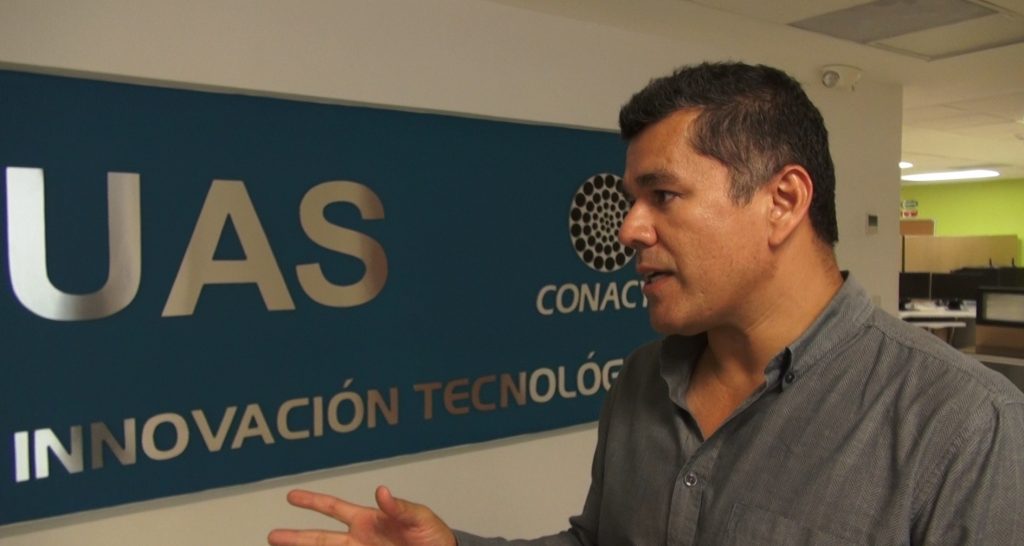
Culiacán, Sinaloa. 29 de abril de 2016 (Agencia Informativa Conacyt).- Hace 12 años, Sinaloa incursionó en el proyecto internacional más ambicioso de física de partículas, el Gran Colisionador de Hadrones de la Organización Europea para la Investigación Nuclear (CERN), en Ginebra, Suiza. El doctor e investigador de la Facultad de Ciencias Físico Matemáticas de la Universidad Autónoma de Sinaloa (UAS), Ildefonso León Monzón, es responsable del detector ALICE (A Large Ion Collider Experiment), diseñado especialmente para la colisión de iones pesados. Los descubrimientos de dicho proyecto lograron la prolongación de la investigación hasta el 2022, así como la oportunidad de que más estudiantes de posgrado se sumen al proyecto. León Monzón trabaja junto a casi mil científicos de 29 países, entre ellos el mexicano Gerardo Herrera Corral. El equipo busca recrear la explosión que dio vida al universo. En entrevista para la Agencia Informativa Conacyt, el doctor nivel II del Sistema Nacional de Investigadores (SNI), recuerda que en 2004 la UAS ingresó al proyecto como institución reconocida. “El objetivo es hacer una recreación de lo que fueron los primeros instantes del Big Bang, es decir cómo se conformaba la materia en los primeros instantes desde su primera millonésima de segundo”, comentó. Apoyo Conacyt En 2013, el Consejo Nacional de Ciencia y Tecnología (Conacyt) aprobó el proyecto para la creación del Laboratorio de Instrumentación en Física de Altas Energías, mediante el cual científicos y estudiantes de posgrado trabajan a distancia con el Gran Colisionador de Hadrones desde Culiacán. “Se invirtieron tres millones y medio de pesos para la instalación del laboratorio en la Facultad de Ciencias Físico Matemáticas. Esto es lo que permitió que la UAS incrementara su permanencia en el proyecto hasta el año 2022”, destacó. Alumnos de la licenciatura de electrónica se sumaron también en el levantamiento de un Laboratorio de Electrónica de Circuito Impreso. Actualmente, dijo, tres investigadores trabajan en el proyecto ALICE, junto a dos estudiantes del área de la Facultad de Informática, otro más del área de Electrónica y dos estudiantes más de posgrado en física. Se sumarán al menos 10 estudiantes de la UAS. En el trabajo de recreación de los primeros instantes del Big Bang y en la búsqueda de responder a la incógnita del tiempo de formación de la materia, principalmente sus características, el equipo integrado por León Monzón sorprendió con el descubrimiento del universo líquido. “Hasta hace unos años se pensaba que el universo temprano tenía una propiedad como de estado gaseoso, y el experimento ALICE arrojó que no es gas, es líquido; es un universo líquido, pero además extraño, es perfecto, fluye sin barreras”. “Es decir, es un estado de la materia muy especial, no lo puedes contener. Desborda las fronteras. No se trata de un estado nuevo en la física, pero no se había caracterizado este estado de la materia en esos instantes. Fue una sorpresa que fuera líquido”, dijo respecto a la hazaña del equipo sinaloense. Otra contribución, explicó, es la responsabilidad del diseño, construcción y operación de un nuevo instrumento para estudios de física. “Esto no es algo que exista como programa en el experimento; sin embargo, forma parte de las responsabilidades de la UAS, en coordinación con el Centro de Investigación y de Estudios Avanzados (Cinvestav) del Instituto Politécnico Nacional (IPN) y el CERN. El equipo diseñó y construyó un detector denominado AD (Alice Difractive), que amplía la eficiencia del detector ALICE para un tipo de física al que se llama física difractiva. Fue validado en 2012 como sistema de diagnóstico, y en 2015 funcionó como detector de lectura para mejorar la capacidad del experimento para la física difractiva. Esta consiste en la investigación de la colisión de protones contra protones. “Casi 30 por ciento de las ocasiones en que un protón se cruza con otro ocurren procesos ‘difractivos’, donde, después de la interacción, los protones siguen siendo protones”. El detector AD se ubica en dos puntos lejanos, explicó León Monzón, es donde se realiza la colisión de partículas. “Es en esos puntos donde se produce el fenómeno de la física difractiva”. De la UAS, el mayor recurso humano La UAS es la institución que aporta la mayor cantidad de recursos humanos y de diseño para los detectores actualmente, destacó León Monzón. Las responsabilidades de los estudiantes, añadió, son muy puntuales. El equipo de investigación tiene como sede la Facultad de Ciencias Físico Matemáticas, ubicada en Ciudad Universitaria. El grupo es denominado Altas energías. “Represento el grupo mexicano por la universidad, y hay otro colega del área de la electrónica que está vinculándose también, entonces la UAS está colocando científicos del área de la Física y de la Electrónica para el desarrollo de los dispositivos y tecnología que se utilizará en los nuevos instrumentos que serán instalados en el CERN, en ALICE”, señaló. Agencia de Noticias CONACYT.
UAS consolidates research on high energy physics
Culiacán, Sinaloa. April 29th, 2016 (Conacyt Information Agency).- Twelve years ago, Sinaloa started its incursion into the most ambitious international project of particle physics, the Large Hadron Collider (LHC) of the European Organization for Nuclear Research (CERN, Centre Européen pour la Recherche Nucléaire), based on Geneva, Switzerland. Ildefonso León Monzón, PhD and researcher from the Physics-Mathematics Science Faculty of the Autonomous University of Sinaloa (UAS, Universidad Autónoma de Sinaloa), is responsible of the detector ALICE (A Large Ion Collider Experiment), specially designed for the collision of heavy ions. The discoveries of such project have achieved the prolongation of this research up to 2022, as well as the opportunity for more postgraduate students to join this project. León Monzón works along with almost a thousand of scientists from 29 countries, among them is the Mexican Gerardo Herrera Corral. The work team aims to recreate the explosion that gave life to the Universe. In the interview for Conacyt Information Agency, the PhD level II of the National System of Researchers recalled that in 2004 UAS, as a recognised institution, joined the project. «The objective is to make a recreation of the Big Bang’s first moments, that is, how was formed the matter in the first instants, since its first millionth of second», commented. Conacyt subvention In 2013, the National Council of Science and Technology (Conacyt, Consejo Nacional de Ciencia y Tecnología) approved the project for creating the Instrumentation Laboratory on High Energies Physics, through which scientists and postgraduate students remotely work with the LHC, from Culiacán. «The investment for the installation of the laboratory in the Physics-Mathematics Science Faculty was of 3.5 million of pesos. This is what allowed UAS to increase its permanence in the project up to 2022», emphasised. Undergraduate students of electronics also joined, through the Electronics Laboratory of Printed Circuit. Nowadays, said, three researchers work on ALICE project, together with two students from Informatics Faculty, one from Electronics and two postgraduate Physics students. There are at least 10 UAS students. In the framework of recreating the first moments of the Big Bang and the quest of answering the mystery matter formation time (mainly its characteristics), the team gathered by León Monzón surprised with the discovery of the liquid Universe. «Until a few years ago, it was thought that the early Universe had a property of gaseous state, and the ALICE experiment showed it ain’t gas, is liquid. Is a liquid universe, but, besides, strange, is perfect, flows without barriers.» «That is to say, a very special matter state, you cannot restrain it: overflows boundaries. It is not a new state for physics, but such state hadn’t been characterised in those instants. It was a surprise that it was liquid», said regarding to the great achievement made by the sinaloense team. Another contribution, he explained, is the responsibility of designing, constructing and operating a new instrument for physics studies. «This is not something that exists as a programme within the experiment; nevertheless, it is part of UAS’ responsibilities, in coordination with the Centre for Research and Advanced Studies of the National Polytechnic Institute and CERN». The team designed and constructed a detector entitled AD (Alice Diffractive), which broadens ALICE detector’s efficiency for a physics type named diffractive. It was validated in 2012 as a diagnosis system and in 2015 functioned as detector of reading to improve the experiment’s capacity for diffractive physics. This consists on the research on protons collision against protons. «»Diffractive» processes occur almost 30% of times a proton crosses with another, after which interaction protons still protons.» The AD detector is placed in two distant points, explained Léon Monzón. Is where particles collision happens. «It is in those points where the diffractive physics phenomenon happens.» From UAS, most of human resources Currently, UAS is the institution that provides most of human resources and designs for the detectors, emphasised León Monzón. The responsibilities of the students are very specific. The research team’s headquarters is the Physics-Mathematics Science Faculty, located in University City. The group is called High Energies. «I represent the Mexican group, on behalf of the University. And there is another colleague from electronics who is also linked. Then, UAS is placing scientists from physics and electronics areas fro the development of devices and technologies to be used in the new instruments that will be installed in CERN, in ALICE», noted. Source: CONACYT Informative Agency, translated by Belem Ruiz (Edition and Communication, PIT-UAS).
Imágenes del proyecto “Smart EcoPark PIT-UAS”
Conoce las imágenes de los avances del proyecto colaborativo desarrollado en este centro universitario de innovación. El Smart EcoPark PIT-UAS está constituido por el diseño y la implementación de un prototipo de edificio que integra diversos modelos orientados a incorporar tanto la sustentabilidad como el IoT en complejos urbanos. Este proyecto se compone por: un eco-estacionamiento con control de acceso automatizado mediante una aplicación móvil; un auto de combustión interna convertido en uno de funcionamiento eléctrico, para el cual se contará con dos estaciones de carga; un jardín vertical que busca embellecer los espacios y aprovechar los beneficios ecológicos de este tipo de agricultura urbana; y, como eje principal, una planta solar que se vale de un sistema de seguidores solares para optimizar la obtención de energía eléctrica. Jesús Moroni Arellano (Comunicación y Difusión, PIT-UAS). Fotografías: Emigdio Urrea.
The Smart Eco-Park PIT-UAS in pictures
The Smart Eco-Park PIT-UAS is going to be constituted by the design and the implementation of a building prototype that integrates diverse models oriented to the incorporation of both sustainability and the internet of things in urban complexes. This project is composed of: an eco-parking lot with automatized control access through a mobile app; an internal combustions car converted into an electric one, for which the parking lot will have two charging stations; a vertical garden, seeking to embellish the spaces and to leverage the benefits of this type of urban agriculture; and, as main axis, a solar plant that optimizes electric energy production, thanks to its solar tracking system. Below, some images that register the advances of this collaborative project developed in our university centre of innovation, the Technological Innovation Park of the Autonomous University of Sinaloa. Written by Moroni Arellano (Communication and Diffusion, PIT-UAS), translated by Belem Ruiz (Edition and Communication, PIT-UAS).
The PIT-UAS will participate in the 33rd World Conference of the IASP
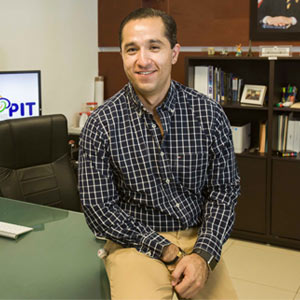
With the paper An innovation and knowledge transfer network to enhance scientific-technological capabilities and the impact of applied research projects as a tool to improve the country’s competiveness (México), the General Director of the Technological Innovation Park (PIT) of the Autonomous University of Sinaloa (UAS) will participate in the 33rd World Conference of the International Association of Science Parks and Areas of Innovation (IASP). Master of Business Administration José Ramón López Arellano specified that this event will be carried out in Moscow (Russia), from September 22nd to 27th, and the UAS, through its centre for technological innovation, will become the first Mexican institution presenting a paper before the IASP. «Our work was accepted because it seemed to them [the organizers] a good proposal: we expressed the great practices of research projects within an university park in developing countries; model that may be replicated and launched in Latin America countries», explained. López Arellano informed that since last year, jointly with other national universities, the PIT-UAS has been working 10 diverse projects of applied research, collaborative researches which also were decisive factors for this paper to be included in the 2016 programme of the aforementioned world conference. Regarding such linkage with other national technological parks —of which there are few in Mexico—, he emphasised that currently the PIT-UAS is working with the universities of Juárez, Tabasco, San Luis Potosí, Querétaro, Michoacán and Chiapas; the MBA also commented that an approach with the University of Sonora has already been made. The General Director of this university area detailed that in past months the institution he presides received the certification as affiliate member of the IASP, thanks to which the UAS turned into the first Mexican public institution incorporated to the association. Nowadays, the IASP is formed by 398 members belonging to 74 countries, affiliates among which are counted the 42 registered universities; these nations, together, have around one hundred and twenty-eight thousand innovative companies. Source: http://dcs.uas.edu.mx/index.php?sec=3&op=2&tipo=i&id_noticia=6550 translated by Belem Ruiz (Edition and Communication, PIT-UAS).
Participará el PIT-UAS en la XXXIII conferencia mundial de la IASP
Con la ponencia Red de Universidades para Potenciar las Capacidades Científico-Tecnológicas y el Impacto de Proyectos de Investigación Aplicada como Herramienta para Mejorar la Competitividad del País, el director general del Parque de Innovación Tecnológica (PIT) de la Universidad Autónoma de Sinaloa (UAS) participará en la XXXIII Conferencia Mundial de la Asociación Internacional de Parques Científicos y Áreas de Innovación (IASP, por sus siglas en inglés de International Association of Science Parks and Areas of Innovation). El maestro en Administración José Ramón López Arellano precisó que este evento se desarrollará en Moscú (Rusia), del 22 al 27 de septiembre, y la UAS, a través de su centro para la innovación tecnológica, se convertirá en la primera institución mexicana que presente una ponencia ante la IASP. «Nuestro trabajo fue aceptado porque les pareció una buena propuesta: nosotros plasmamos en papel las grandes prácticas de proyectos de investigación de un parque universitario en países en vías de desarrollo; modelo que puede ser replicado y puesto en marcha en países de América Latina», explicó. López Arellano informó que desde el año pasado, en conjunto con otras universidades del país, el PIT-UAS ha estado trabajando 10 proyectos diversos de investigación aplicada, investigaciones conjuntas que también fueron un factor decisivo para que esta ponencia fuera incluida en el programa 2017 de la mencionada conferencia mundial. Respecto a dicha vinculación con otros parques tecnológicos nacionales —de los cuales en México existen pocos—, destacó que actualmente el PIT-UAS está trabajando con las universidades de Juárez, Tabasco, San Luis Potosí, Querétaro, Michoacán y Chiapas; además comentó que ya existe un acercamiento con la Universidad de Sonora. El director general de esta área de la Universidad detalló que en meses pasados la institución que preside recibió la certificación como miembro afiliado de la IASP, con lo que la UAS se convirtió en la primera institución pública de México incorporada a la asociación. Hoy día, la IASP está conformada por 398 miembros originarios de 74 países, entre los cuales se cuentan las 42 universidades registradas; naciones que en conjunto suman un total de aproximadamente ciento veintiocho mil compañías innovadoras. Dirección de Comunicación Social UAS.
2016 Cleantech Challenge Mexico press conference is carried out at the PIT-UAS
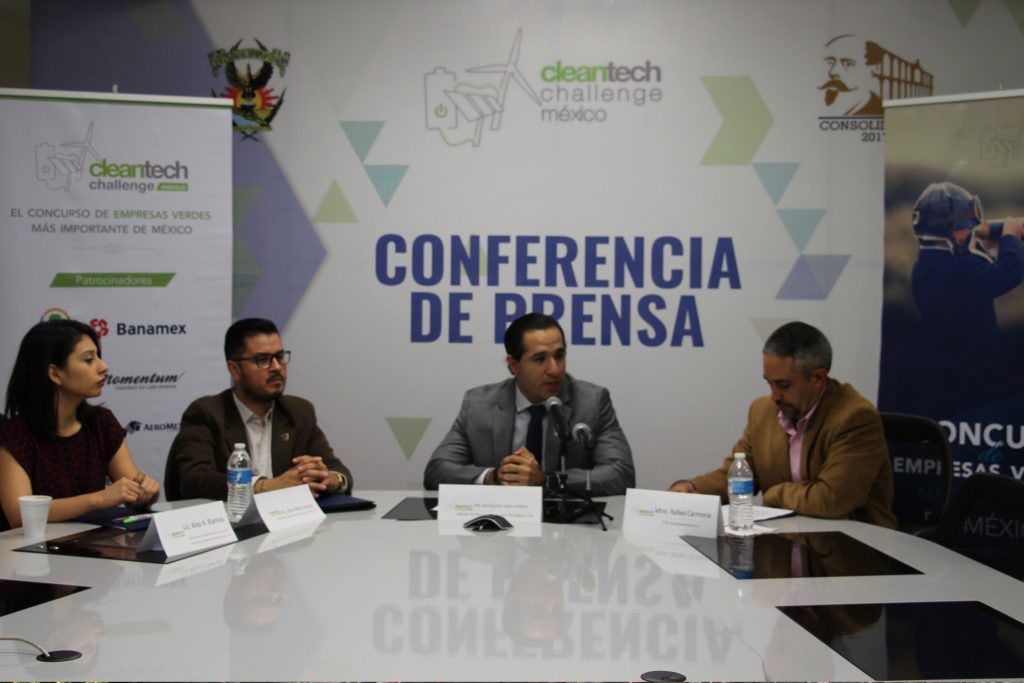
This Monday 22nd February of 2016 was carried out, at the Videoconferences Hall of the Technological Innovation Park (PIT) of the Autonomous University of Sinaloa (UAS), a press conference to present the 2016 edition of the Cleantech Challenge Mexico call. It is the most important green enterprises competition of the country, which encourages economic development through sustainable innovation and entrepreneurship in matters of clean technologies. To the event were invited university authorities, researchers, entrepreneurs, startups and people who have identified, produced, used or promoted clean technologies that help to minimize the impact on the environment, technologies with the potential to be adapted as a business idea to be developed with commercial purposes. Among the attendees to the press conference were university members like José Ramón López Arellano, on his role of PIT-UAS’ General Director and on behalf of the Rector, Juan Eulogio Guerra Liera; Omar Beltrán Zazueta, Director of the Quality Management System; Alep Blancas, belonging to the External Affairs & International Relations Office. Also Rafael Carmona was present, as Technology Director of the enterprise Green Momentum and organiser of the 2016 Cleantech Challenge Mexico. During his participation, Rafael Carmona detailed: «… in previous years, the participation of Sinaloa state has been scant, and that is part of what we want to change… Surely, with the University’s participation, Sinaloa will have a greater presence [in the Cleantech Challenge Mexico]». For his part, the General Director of the PIT-UAS emphasised: «Within the Plan of Institutional Development Consolidation 2017 is expressed, as part of one of its core ideas, the objective of encouraging business and entrepreneurship culture; and with this purpose conversations have been initiated with the faculties, so they can collaborate in different applied projects». Likewise, he recalled the institutional compromise of consolidating this institution of higher education as a green university. In this way is recognised the importance of the role the PIT-UAS has in Sinaloa for the incorporation of renewables technologies to daily life, as this university centre for innovation has demonstrated through its project Smart Eco-Park PIT-UAS, which consists of the innovative design and implementation of a building prototype that ingrates models oriented to incorporate both sustainability and the Internet of Things in urban complexes. To obtain more information about the Cleantech Challenge Mexico, you can visit: http://innovacion.uas.edu.mx/2016/02/22/a-traves-del-pit-participa-la-uas-en-el-cleantech-challenge-mexico-2016/. Written by Moroni Arellano (Communication and Diffusion, PIT-UAS), translated by Belem Ruiz (Edition and Communication, PIT-UAS).