Martínez Carranza: «Existe la necesidad de tener robots que nos puedan ayudar en la casa»
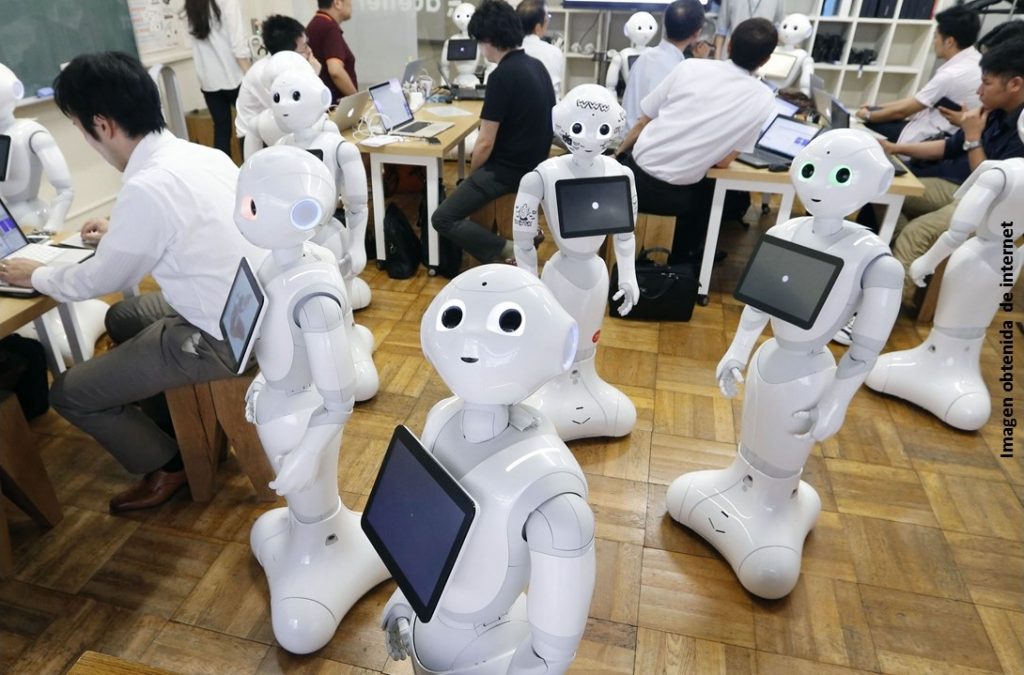
El investigador mexicano promueve proyectos relacionados con la inteligencia artificial en el ámbito doméstico Luego de su participación como conferencista en la primera edición del Campamento de Ciencia, Tecnología e Innovación (TecnoCamp 2016), José Martínez Carranza dialogó con nosotros respecto a las investigaciones y los avances recientes que marcan positivamente el devenir de la informática aplicada. Asimismo, comentó las inquietudes que le han servido de respaldo para la planeación de algunos de sus proyectos, específicamente los relacionados con la robótica. «No sólo en México, en todo el mundo existe la necesidad de tener robots que nos puedan apoyar en la casa, robots que puedan limpiar. Hay empresas que ya venden robots que limpian el piso, por ejemplo. Entonces, es tener un robot que pueda cuidar a los niños, les pueda hacer compañía, pueda platicar contigo», comentó el investigador. El científico mexicano compartió otras de las posibles utilidades por validar en dicho modelo de robot doméstico, entre ellas, servir de asistencia a personas de la tercera edad. «Entonces, si piensas, por ejemplo, en los adultos mayores: en ocasiones están solitarios en sus casas, por decisión o circunstancias de la vida. A veces un adulto mayor requiere cierta atención y cuidados, si hay un robot que está junto a él y que pueda platicar con él, por ejemplo», expuso el doctor en Ciencias Computacionales. Así también, explicó el importante progreso que representaría desarrollar robots con capacidades cada vez más cercanas a las humanas. «Si de veras lo ponemos en términos, ni siquiera de ciencia ficción, sino algo que está siendo posible: que tú entables conversación con una máquina… eso sería muy bueno. El adulto estaría acompañado pero además estaría siendo cuidado», agregó. El investigador respalda una futura aceptación social de la inteligencia artificial en la vida diaria y colabora en el desarrollo de este tipo de proyectos. Cabe destacar que en 2016, por segunda vez consecutiva, el equipo de Martínez Carranza, que conforma junto con dos colegas del Instituto Nacional de Astrofísica, Óptica y Electrónica (INAOE), obtuvo el primer lugar en el Torneo Mexicano de Robótica por la presentación del modelo Sabina, un robot de servicio competente para distintas labores domésticas, capacidad de traslado a través de un sistema de ruedas, reconocimiento de voz, habilidad conversacional, identificación de objetos, entre otras características. «Tenemos un robot que se llama Sabina. Ya la jubilamos. Éste fue su último año porque ya adquirimos otro. Éste es un robot que queremos que esté en la casa, nos traiga bebidas, que navegue en el hogar sin estar chocando con los muebles», declaró el académico. «Éste es un proyecto que iniciaron dos investigadores que ya tienen bastante trayectoria en INAOE. A mí me invitaron a participar cuando regresé a México. Es un proyecto que lleva desde 2008. Eduardo Morales y Enrique Súcar son investigadores del Laboratorio de Robótica. Ellos comenzaron con este sueño de tener un robot de servicio», puntualizó. La trayectoria académica del científico mexicano es extensa. En 2004 José Martínez Carranza terminó la licenciatura en Ciencias de la Computación en la Benemérita Universidad Autónoma de Puebla, en 2005 obtuvo la maestría en Ciencias Computacionales en la Coordinación de Ciencias Computacionales del INAOE y es doctor por la Universidad de Bristol (Inglaterra), gracias al apoyo de la Beca Newton. El TecnoCamp 2016 tuvo lugar los días 29 y 30 de septiembre, reunió a más de quinientos asistentes a las ponencias impartidas en la Torre Académica Culiacán de la Universidad Autónoma de Sinaloa (UAS) durante su primer día y, producto del Reto 10, durante seis semanas cinco jóvenes talentos desarrollaron su proyecto denominado Sensor de Flujo de Semillas en Sembrados Tradicionales para una Mayor Precisión en la Distribución de Insumos Agrícolas con apoyo económico institucional en las instalaciones del Parque de Innovación Tecnológica de la UAS. Andrés Márquez (Comunicación y Difusión, PIT-UAS)
Deep Learning: AI in pursuit of emulating human brain’s functioning
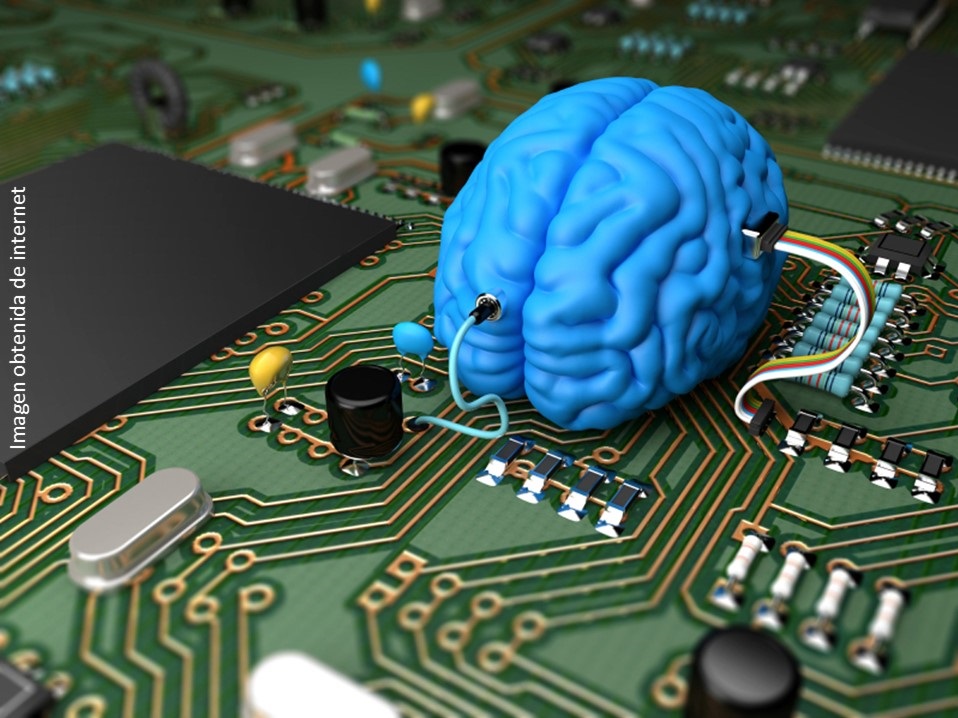
In the words of Jeff Dean (senior fellow in Google Research): «Deep learning is a really powerful metaphor for learning about the world». What differentiates a human brain from a machine?, what makes our grey matter so special? Regardless of the approach (biological, psychological or philosophical), stand out characteristics like perception, action, articulate language and cognition. In past editions of our STI Wednesday, we talked to you about artificial intelligence (AI) and autonomous agents: the unreachable dream of emulating human brain and the polemical creation of «thinking machines». As we commented to you before, the prevailing technological trend that is currently a key within AI key is deep learning: AI «is finally getting smart»; it is outlined that new autonomous agents be capable of understanding human language and do both inferences and decision making by themselves. Experts on technological research and consultancy note that deep learning will start having a huge impact in most of industries over the next few years. Now, if you wonder why this should be of your concern, we invite you to continue reading our article, where we’ll present some basic theoretical issues and some applications of this group of techniques to extract, transform, classify and analyse information. Human brain neural networks as inspiration The work that begun in the sixties of the 20th century as something conceptually attractive but difficult to prove, started to have a wide range of commercial uses in the early nineties of the same century. According to the US Association for Computing Machinery (ACM), artificial neural networks (neural nets) follow brain neurons’ patterns, as well as the connections or synapses between neurons. Thus, artificial neural networks are systems that consist of highly interconnected and simple processing elements which behaviour changes according to the «weights» assigned to each connection; contrary to traditional computing programmes, deep learning requires training: the greater the amount of input information, the better the results. During many years, most of neural nets had only one layer of «characteristics detectors» and were mainly trained with data classified through a process called «supervised» training; afterwards would appear the multilayer and hybrid types. In the eighties appeared a more powerful deep learning type, which used multiple layers. In the years of futuristic unreal robots proper to movies like Blade Runner (1982), The Terminator (1984) and Aliens (1986), within the scientific sphere, computers were not fast enough to deal at the same time with the learning processes of multiple layers of characteristics since this meant a huge amount of calculations, in addition, there were not enough labelled data and developers did not count on an efficient way to initiate the «weights». Geoffrey Hinton (University of Toronto), computer scientist and machine learning pioneer, claims that: «The basic approach back then was, you hand-engineered a bunch of features, and then you learned what weights to put on the features to make a decision. For example: if it’s red, it’s more likely to be a car than a refrigerator». The newest in AI: layers and layers of artificial reasoning Li Deng and Dong Yu from Microsoft Research, in their article «Deep Learning: Methods and Applications» (2014), place these techniques in the intersection of neural nets research, AI, graphic modelling, optimisation, patter recognition and signals processing. They claim that since 2006 deep structured learning, more commonly known as deep learning or hierarchical learning, has emerged as a great new research area within machine learning. An area which essence is «to automate the process of discovering effective features or representations for any machine learning task, including automatically transferring knowledge from one task to another concurrently». Microsoft Research’s scientists emphasised three important reasons for deep learning’s current popularity: 1) chip’s drastically augmented processing abilities, 2) significantly increased size of data used for training, 3) recent research advances on machine learning and signals/information processing; also, for its part, the ACM points out the improvements in algorithms and apps architectures. As a whole, all this makes possible a greater increase in the machine learning systems; in particular, multilayer artificial neural nets are producing amazing advances in the matter of precision within fields like computer vision and voice recognition. Listening, speaking, observing and learning «like a human» Deng and Yu highlight the fact that there are numerous active researches in the field, carried out by higher education institutions like University of Toronto, New York University, University of Montreal, Stanford University and Massachusetts Institute of Technology, as well as companies of the size of Microsoft, Google, IBM, Baidu and Facebook. Such researchers, they assert, have showed to have empirical success on deep learning in diverse uses of: computer vision, phonetic recognition, search by voice, oral speech recognition, voice and image codification functions, semantic expressions classifications, natural language comprehension, handwriting recognition, SPAM filtering, fraud detection, audio processing, information retrieval, robotics, «and even in the analysis of molecules that may lead to discovery of new drugs». Below we explain some of the newest deep learning applications and a fruitful research group which products you probably use more than once a day. IBM PowerAI(IBM and NVIDIA, 2016). A software toolkit for enterprises that «will help to train systems into thinking and learning in a more human way at a faster rhythm». DeepText(Facebook, 2016). Tool that can understand the textual content of various thousands of publications per second with almost-human precision, spanning more than twenty languages. Deep Voice(Baidu, 2017). Production-quality text-to-voice system that synthesises in real time, entirely constructed from deep neural networks. DeepCoder(Microsoft and Cambridge University, 2017). This software will allow people who don’t know any programming language to code, create new programmes taking «borrowed» other programming codes. Brain Team(Google, since 2011). This research group is responsible for Android’s voice recognition systems, Google’s search by images and YouTube’s video recommendations. Genetic interpretation (Universidad of Toronto and NVIDIA, in process). Powered by a graphic processing unit, this method will identify cancer-causing mutations. Are we truly each time closer to creating «thinking machines»? About three years ago, the aforementioned Microsoft Research’s duo ventured that the
Aprendizaje profundo: IA en pos de emular el funcionamiento del cerebro humano
En palabras de Jeff Dean (colaborador principal en Google Research): «El aprendizaje profundo es realmente una poderosa metáfora para aprender sobre el mundo». ¿Qué diferencia un cerebro humano de una máquina?, ¿qué hace que nuestra materia gris sea tan especial? Independientemente de si el abordaje es biológico, psicológico o filosófico, destacan características como percepción, acción, lenguaje articulado y cognición. En ediciones anteriores de nuestros Miércoles de CTI, te hablamos sobre la inteligencia artificial (IA) y los agentes autónomos: el inalcanzable sueño de emular el cerebro humano y la polémica creación de «máquinas pensantes». Como te comentábamos anteriormente, la imperante tendencia tecnológica que hoy por hoy es clave dentro del campo de la IA es el aprendizaje profundo (deep learning): la IA «finalmente se está poniendo inteligente»; se plantea que los nuevos agentes autónomos sean capaces de entender el lenguaje humano y hacer tanto inferencias como tomar decisiones por sí mismos. Expertos en investigación y consultoría tecnológica señalan que el aprendizaje profundo comenzará a tener un gran impacto en la mayoría de las industrias durante los próximos años. Ahora bien, si te preguntas por qué esto te atañe, te invitamos a continuar leyendo nuestra nota, donde expondremos algunos planteamientos teóricos básicos y unas cuantas aplicaciones de este conjunto de técnicas para extraer, transformar, clasificar y analizar información. Las redes neuronales cerebrales humanas como inspiración El trabajo que inició en la década de los sesentas del siglo XX como algo conceptualmente atractivo pero difícil de probar, comenzó a tener un amplio rango de usos comerciales a inicios de los noventas del mismo siglo. De acuerdo con la estadounidense Asociación de Ingenieros Informáticos (Association for Computing Machinery, ACM), los sistemas neuronales artificiales (redes neuronales) siguen los patrones de las neuronas cerebrales, así como las conexiones o sinapsis entre las neuronas. Así, las redes neuronales artificiales son sistemas altamente conectados, elementos de procesamiento simples cuyo comportamiento cambia según los «pesos» asignados a cada conexión; contrario a los programas computacionales tradicionales, el aprendizaje profundo requiere entrenamiento: entre mayor sea la cantidad de información de entrada, mejores serán los resultados. Durante muchos años la mayoría de las redes neuronales contenían una sola capa de «detectores de características» y eran principalmente entrenados con datos clasificados a través de un proceso llamado entrenamiento «supervisado»; posteriormente aparecerían los tipos multicapa e híbrido. Ya para la década de los ochentas apareció un tipo de aprendizaje profundo más poderoso, que empleaba múltiples capas. En los años de irreales robots futurísticos propios de películas como El cazador implacable (Blade Runner, 1982), El exterminador (The Terminator, 1984) y Aliens: el regreso (Aliens, 1986), en la esfera científica, las computadoras no eran suficientemente veloces para lidiar con los procesos de aprendizaje de múltiples capas de características al mismo tiempo pues implicaban una enorme cantidad de cálculos o cómputos, además no había suficientes datos catalogados y los desarrolladores no contaban con una forma eficiente de iniciar los «pesos». El pionero en aprendizaje automático Geoffrey Hinton (Universidad de Toronto) asegura: «El enfoque básico de entonces era que tú manualmente hacías un montón de características, y luego aprendías qué peso ponerles para tomar una decisión. Por ejemplo: si es rojo, es más probable que sea un carro que un refrigerador». Lo más nuevo en IA: capas y capas de razonamiento artificial Li Deng y Dong Yu de Microsoft Research, en su artículo «Aprendizaje profundo: métodos y aplicaciones» («Deep Learning: Methods and Applications», 2014), sitúan estas técnicas en la intersección de las áreas de investigación de redes neuronales, IA, modelado gráfico, optimización, reconocimiento de patrones y procesamiento de señales. Aseguran que desde 2006 el aprendizaje estructurado de manera profunda, más comúnmente conocido como aprendizaje profundo o aprendizaje jerárquico, ha surgido como una nueva área de investigación dentro del aprendizaje automático. La esencia del aprendizaje profundo es automatizar el proceso de descubrimiento de características o representaciones efectivas para cualquier tarea de aprendizaje automático, incluida la transferencia automática simultánea de conocimiento de una tarea a otra. Los investigadores de Microsoft Research destacan tres importantes razones para la actual popularidad de esta vertiente: 1) las habilidades de procesamiento drásticamente incrementadas de los chips, 2) el significativamente aumentado tamaño de los datos usados para entrenamiento, 3) los recientes avances de investigaciones sobre aprendizaje automático y procesamiento de señales/información; en adición, por su parte, la ACM además señala las mejoras en arquitecturas de algoritmos y aplicaciones. En conjunto, todo esto posibilita un mayor incremento en el poder de los sistemas de aprendizaje automático; en particular, las redes neuronales artificiales multicapa están produciendo sorprendentes avances en materia de precisión dentro de campos como visión computacional y reconocimiento de voz. Escuchar, hablar, observar y aprender «como un ser humano» Deng y Yu hacen hincapié en el hecho de que existen numerosas investigaciones activas en el área, llevadas a cabo por instituciones de educación superior como la Universidad de Toronto, la Universidad de Nueva York, la Universidad de Montreal, la Universidad de Stanford y el Instituto Tecnológico de Massachusetts, así como empresas de la talla de Microsoft, Google, IBM, Baidu y Facebook. Dichas investigaciones, aseguran, han demostrado éxito empírico del aprendizaje profundo en diversas aplicaciones de: visión computacional, reconocimiento fonético, búsqueda por voz, reconocimiento de discurso oral, codificación de funciones de voz e imagen, clasificación de expresiones semánticas, comprensión del lenguaje natural, reconocimiento de escritura a mano, filtro de correros electrónicos basura, detección de fraudes, procesamiento de audio, recuperación de información, robótica, e incluso en el análisis de moléculas que tal vez lleven al descubrimiento de nuevos medicamentos. A continuación te exponemos algunas de las aplicaciones del aprendizaje profundo más novedosas y un fructífero equipo de investigación cuyos productos seguramente usas más de una vez al día. IBM PowerAI (IBM y NVIDIA, 2016). Un kit de herramientas de software para empresas que «ayudará a entrenar a los sistemas a pensar y aprender en una forma más humana, a un ritmo más rápido». DeepText (Facebook, 2016). Herramienta que puede comprender el contenido textual de varias miles de publicaciones por segundo con precisión casi humana, abarcando casi veinte
Course for a recently acquired robot’s usage is imparted at PIT-UAS
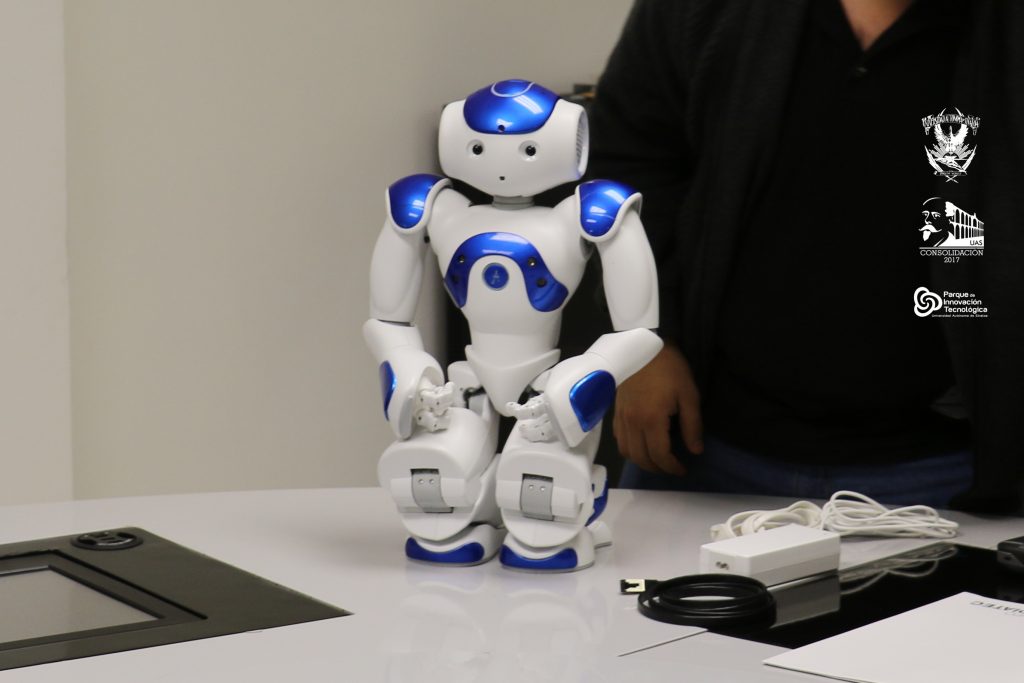
As part of the equipment and work material acquisition activities to strengthen applied research, and in order to foster programmes and strategies developed in the matter of robotics and artificial intelligence at the Technological Innovation Park (Parque de Innovación Tecnológica, PIT) belonging to the Autonomous University of Sinaloa (Universidad Autónoma de Sinaloa, UAS), it was recently acquired a SoftBank Robotics’ humanoid robot NAO Evolution, a model that has been used in over seventy countries for computing and sciences classes, from elementary school to university, thus helping students to programme in a practical manner. On Friday 27th of January this year, the person in charge of Robotic Products and Artificial Intelligence of Mediatec Group enterprise, engineer Irving Figueroa Sumano, imparted a brief course at the Park’s facilities, with a duration of about four hours, with an assistance of 10 collaborators from the areas of Robotics, Technical Support, Prototypes Workshop, as well as students who are doing their professional residences or practices at the PIT-UAS. The instructor showed to attendees the basic configurations for the recently acquired equipment’s starting and broached themes about its correct functioning (software and hardware). During the exercises were applied the software updates, the name assignation for the equipment, the internet wireless connection; likewise, the engineer taught attendees the basic notions of the NAOqi operative system; lessons related to equipment’s care, good usage and maintenance were particularly emphasised. Through examples, the attendees learned how to programme activities like dancing, walking, saying phrases, among other applications of this robot. Among its main characteristics stand out the following: it counts on 25 degrees of freedom (that can function similarly to the human body’s articulations), it possess the omnidirectional walking ability, it also has prehensile hands with grips at fingers to objects manipulation, as well as electronic and mechanical elements like sensors, video cameras, microphones and an inertial measurement unit. The product, acquired thanks to the institutional support provided by the university Central Administration, is the humanoid robot most used for academic and research purposes all over the world, it functions either autonomously or through teleoperation from a computer and is world-famous by being the official model for the RoboCup. Having said that, the pedagogical applications in which NAO can be used vary and, just to mention some of them, they can appear in fields like computer vision, face and voice recognition, signals processing, location and navigation of an intelligent system, kinematics, dynamics and mechanics, among others that may emerge from the necessities of researchers and collaborators belonging to this UAS’ organizational unit. Regarding to NAO’s usefulness at PIT-UAS, within the framework of interdisciplinary applied science projects development, MSc in Electronics Engineering Gabriel Zúñiga, person in charge of the PIT-UAS’ Robotics and Virtual Reality Laboratory, stated: «The NAO robot is a development platform with academic and research purposes. It is useful for us on learning and research within the fields of electronics, informatics, robotics and control; precisely on themes like locomotion, algorithms, artificial intelligence and signals processing, to mention some». Written by Moroni Arellano (Communication and Diffusion, PIT-UAS), translated by Belem Ruiz (Edition and Communication, PIT-UAS).
Se imparte curso en el PIT-UAS para manejo de robot recientemente adquirido
Como parte de las actividades de adquisición de equipo y material de trabajo para fortalecer la investigación aplicada y a fin de impulsar programas y estrategias desarrollados en materia de robótica e inteligencia artificial en el Parque de Innovación Tecnológica (PIT) de la Universidad Autónoma de Sinaloa (UAS), fue recientemente adquirido un robot humanoide NAO Evolution de SoftBank Robotics, modelo que ha sido utilizado en más de setenta países para clases de computación y ciencias, desde la escuela primaria hasta la universidad, ayudando así a los estudiantes a programar de una manera práctica. Así, el viernes 27 de enero del presente año, el encargado de Productos Robóticos e Inteligencia Artificial de la empresa Grupo Mediatec, ingeniero Irving Figueroa Sumano, impartió un breve curso en las instalaciones del Parque, con una duración de alrededor de cuatro horas, al que asistieron 10 colaboradores de las áreas de Robótica, Soporte Técnico, Taller de Prototipos, así como estudiantes que realizan sus residencias y prácticas profesionales en el PIT-UAS. El instructor mostró a los asistentes las configuraciones básicas para la puesta en marcha del equipo recién adquirido y abordó temas sobre el correcto funcionamiento del equipo (software y hardware). Durante los ejercicios fueron aplicadas las actualizaciones de software, la asignación de un nombre al equipo, la conexión a internet de manera alámbrica e inalámbrica; asimismo, el ingeniero enseñó a los asistentes las nociones básicas del sistema operativo NAOqi; se dio particular énfasis a las lecciones relacionadas con cuidado, buen uso y mantenimiento del equipo. Los asistentes aprendieron mediante ejemplos cómo programar actividades tales como bailar, caminar, decir frases, entre otras aplicaciones de este robot. De sus principales características destacan las siguientes: cuenta con 25 grados de libertad (que pueden funcionar de manera similar a las articulaciones del cuerpo humano), posee la habilidad de caminado omnidireccional, así como manos prensiles con agarre en los dedos para manipulación de objetos, amén de elementos electrónicos y mecánicos tales como sensores, cámaras de video, micrófonos y una unidad inercial. El producto, adquirido gracias al apoyo institucional brindado por parte de la Administración Central rosalina, es el robot humanoide más utilizado para fines académicos y de investigación alrededor del mundo, funciona ya sea de manera autónoma o mediante teleoperación desde un equipo de cómputo y es mundialmente conocido por ser el modelo oficial para la RoboCup. Ahora bien, las aplicaciones pedagógicas en las que se puede emplear el NAO varían y, sólo por mencionar algunas, pueden darse en campos como visión computacional, reconocimiento facial y de voz, procesamiento de señales, localización y navegación de un sistema inteligente, cinemática, dinámica y mecánica, entre otras que puedan surgir de las necesidades de los investigadores y colaboradores de esta unidad organizacional de la UAS. Por lo que respecta a la utilidad que el NAO tendrá para el PIT-UAS, en el marco del desarrollo de proyectos interdisciplinarios de ciencia aplicada, el maestro en Ciencias en Ingeniería Electrónica, Gabriel Zúñiga, encargado del Laboratorio de Robótica y Realidad Virtual del PIT-UAS, declaró: «El robot Nao es una plataforma de desarrollo con fines académicos y de investigación. Nos sirve para el aprendizaje e investigación en las áreas de electrónica, informática, robótica y control; precisamente en temas como locomoción, algoritmos, inteligencia artificial y procesamiento de señales, por mencionar algunos». Jesús Moroni Arellano (Comunicación y Difusión, PIT-UAS)
Traceability, «chasing» the product
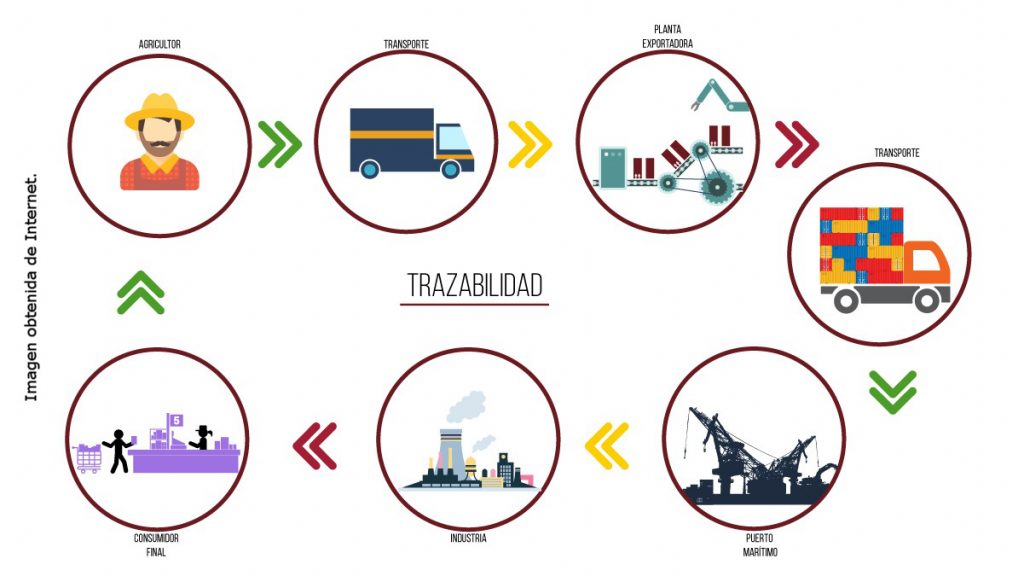
In Ancient Rome it was custom that in public buildings one could find the track of the architect who created the construction; just like the Pantheon at Rome (despite some doubt it): the façade inscription «M.AGRIPPA L:F: COS TERTIVM FECIT» is the best proof that he built it. Likewise, painters sign their works to testify about who created them, like in 1931 did the famous Spanish painter Salvador Dalí on his work The Persistence of Memory. On their part, clothes designers do the same to identify their garments, and such is the case of the designs belonging to the famous brand Armani. Do you see a pattern in this? I’ll give you a hint: traceability, that possibility of «identifying the origin and the different stages of a production and distribution process of consumer goods» (according to the definition of the Spanish Royal Academy’s Dictionary). And today this is our theme of STI Wednesday, although we won’t talk to you about fashion or art, but food safety and quality control of diverse products. A detailed description of a process According to the Spanish Food Safety and Nutrition Agency, traceability consists of being able to «find and follow the track, through all production, transformation and distribution stages of a foodstuff, a feed or ingredient». This technology is also defined as «the ability of producers, industrialists, traders, consumers and public authorities of being able to follow the track of a specific object throughout all or part of its useful life». Here, we must notice that in the past the Spanish Language Academies used to recommend the usage of trackeability instead of traceability, however, the Spanish Royal Academy decided, in its twenty-third printed edition (2014), that the correct word would be traceability, given that prevailed the influence of English language. Having said that, traceability can be considered from three different types of focuses: Ascendant traceability (backwards). Consists of distinguishing the products received at the business, with information on who produced them and where they come from. Intern or process traceability. Is the product’s move within the enterprise that produced it. Descendant traceability (forwards). Consists of identifying the products produces by the enterprise and knowing which destiny they are going to and who the clients are. One of the main development areas of traceability is food safety, which fundamental objectives are: information, processing and identification of the products, through the monitoring from the production chain beginning until the product reaches to the consumer’s plate. All this, aiming to guarantee both quality and safety of the products being consumed. From functioning perspective, traceability provides a better monitoring and control of the product, in the search of avoiding frauds by recognizing their characteristics and applied processes: producers identify their crops work and treatments employed, so they can fulfill quality systems; elaborated industry and distribution apply quality control systems, labeling, maintenance in cold, agility in transport and storage; meanwhile the consumers are in charge of using and keeping the products they acquire. The diverse fields in search of a better quality control Did you intoxicate yourself with some foodstuff and you don’t know where it comes from? Good thing is the food sector is the main work field of traceability, and there lays its importance, given that it facilitates the monitoring of products at any stage of their production, so you can know where they came from and what kind of safety problem is the one you are facing. Food included are: fish, from direct fishing, maritime and continental, like aquaculture, this one we can consider a full traceability, due to the fact that the history of the product is known, different to those from sea or river, where diseases can appear or there might be pollution; meat of livestock species, for which traceability is practically a requirement that serves as guarantee to the consumer, due to problems like encephalopathy, glossophage, swine fever, clenbuterol, etcetera; vegetable products, where we find a variety of traceability types, thanks to the different ways of conditioning, transport and commercialization, by the existence of perishable and non-perishable products, of which both need to fulfil specific safety norms or certificates of the producers. But the concept is not implemented just for foodstuff, is so versatile and limitless that other industries are providing added value to their product by applying traceability. In the pharmaceutical market the consumer will know at what moment and who produces the medication, as well as its expiration date and the whole process it goes through until reaching the final consumer. On the other hand, at mining industry, in Europe the norm REACH rules, which intention in knowing the origin and process of the minerals being exported, that thanks to traceability are known immediately. There also exists the documentation, which consists of registering the track left by the document during the process of any procedure; this includes banks, customs houses, institutions and many others. In addition to those aforementioned, traceability is present in areas such as construction, management systems and health services. Traceability’s privileges and obstacles Nowadays the market is very competitive, it is saturated of products and brands, which makes more and more complicated to get a loyal consumer; in this sense, traceability is a great allied to keep the costumer, since it provides the certainty of a scrupulously kept record of the product being consumed. Among the advantages of implementing this system for an enterprise we find: Increasing the quality of the product, as well as the brand’s image. Supporting the product’s origin. A source of investment is not necessary for its development. Approaching new technologies to the primary sector. Causing progress in the sector it is used. Taking to the realisation of collaborative processes among supplier, producer and customer. But it ain’t all benefits and advantages, there are also disadvantages and difficulties that cause these technologies not to develop in the better way, here are some: Sometimes, traceability is a difficult aspect to determine. It requires a responsibility that not every enterprise is willing to take. In
Trazabilidad, «la persecución» del producto
En la antigua Roma era costumbre que en los edificios públicos se encontrara huella del arquitecto creador de la construcción; así como en el Panteón de Roma (a pesar de que algunos dudan): la inscripción en el frontón «M.AGRIPPA L:F: COS TERTIVM FECIT» es la mejor prueba de que él la construyó. Del mismo modo, los pintores firman sus obras para dar cuentea de quién las realizó, como en 1931 lo hizo el famoso pintor español Salvador Dalí en su obra La persistencia de la memoria. Por su parte, los diseñadores de ropa hacen lo mismo para identificar sus prendas, tal es el caso con los diseños que realiza la reconocida marca Armani. ¿Ves un patrón en esto? Te daré una pista: trazabilidad, esa posibilidad de «identificar el origen y las diferentes etapas de un proceso de producción y distribución de bienes de consumo» (según la definición del Diccionario de la Real Academia Española). Y éste es hoy nuestro tema de Miércoles de CTI, aunque no te hablaremos ni de moda ni de arte, sino de inocuidad alimentaria y controles de calidad de diversos productos. La descripción detallada de un proceso Según la Agencia Española de Seguridad Alimentaria y Nutrición, la trazabilidad consiste en poder «encontrar y seguir el rastro, a través de todas las etapas de producción, transformación y distribución, de un alimento, un pienso o un ingrediente». Esta tecnología también se define como «la capacidad de productores, industriales, comerciantes, consumidores y poderes públicos de poderle seguir la pista a un determinado objeto a lo largo de toda o de parte de su vida útil». Cabe aquí mencionar que anteriormente las Academias de la Lengua Española recomendaban usar rastreabilidad en lugar de trazabilidad, sin embargo, la Real Academia Española decidió en su vigesimotercera edición impresa (2014) que la palabra correcta sería trazabilidad, dado que prevaleció la influencia del inglés traceability. Ahora bien, la trazabilidad se puede considerar desde tres tipos de enfoques diferentes: Trazabilidad ascendente (hacia atrás). Consiste en distinguir los productos que son recibidos en la empresa, con información de quiénes los produjeron y de dónde vienen. Trazabilidad interna o de proceso. Es el traslado del producto dentro de la propia empresa. Trazabilidad descendente (hacia adelante). Consiste en identificar los productos que produce la empresa y saber hacia qué destino van y quiénes son los clientes. Una de las principales áreas de desarrollo de la trazabilidad es la seguridad alimentaria, que tiene como objetivos fundamentales: la información, el procesamiento y la identificación de los productos, esto a través del seguimiento desde el inicio de la cadena (que es la producción) hasta llegar al plato del consumidor. Todo esto, a fin de garantizar tanto calidad como sanidad de los productos que se consumen. Desde el punto de vista del funcionamiento, la trazabilidad proporciona un mejor seguimiento y control del producto, en busca de evitar fraudes al reconocer sus características y procesos aplicados: los productores, identifican su trabajo de cultivo y tratamientos empleados, para cumplir con los sistemas de calidad; la industria elaborada y la distribución aplican los sistemas de control de calidad, etiquetado, mantenimiento en frío, agilidad en el transporte y almacenamiento; mientras que los consumidores son los encargados de utilizar y conservar los productos que adquieren. Los diversos campos en busca de un mejor control de calidad ¿Te intoxicaste con un alimento y no sabes de dónde proviene? Pues menos mal que el sector alimentario es el principal campo de trabajo de la trazabilidad, y de ahí su importancia, dado que facilita el seguimiento de los productos en cualquier etapa de su proceso, para que sepas de dónde vino el problema y qué tipo de problema sanitario es al que te enfrentas. Se abarcan: pescados, tanto en pesca directa, marítima y continental, como de acuicultura (esta última es la que se podría considerar trazabilidad completa, debido a que se conoce la historia del producto, a diferencia del mar o río, donde pueden presentarse enfermedades o haber contaminación; carnes de especies ganaderas, para las que la trazabilidad es prácticamente una exigencia, que sirve de garantía al consumidor, debido a problemas como encefalopatía, glosopeda, peste porcina, clembuterol, etcétera; productos vegetales, donde encontramos variedad de tipos de trazabilidad, gracias a las distintas formas de acondicionamiento, transporte y comercialización, al existir productos perecederos y no perecederos, de los cuales ambos necesitan cumplir con normas específicas o certificados sanitarios de los productores. Pero el concepto no es implementado sólo para los alimentos, es tan versátil y sin límites que otras industrias le están dando un valor agregado a sus productos al aplicar la trazabilidad. En el mercado farmacéutico el consumidor podrá saber en qué momento y quiénes produjeron el medicamento, así como su fecha de vencimiento y todo el proceso por el que pasa hasta llegar al consumidor final. Por otra parte, en la esfera minera, en Europa se rigen con la norma REACH, cuya intención es conocer el origen y el proceso de los minerales que se exportan, que gracias a la trazabilidad se conocen de manera inmediata. También existe en la documentación, que consiste en registrar el rastro que deja el documento durante el proceso de cualquier trámite; esto engloba bancos, aduana, instituciones, entre otros. Además de los mencionados en los renglones anteriores, la trazabilidad está presente en áreas como la construcción, los sistemas de gestión y de servicios de salud. Los privilegios y obstáculos de la trazabilidad Hoy en día el mercado es muy competitivo, se encuentra saturado de productos y marcas, lo que hace que cada vez sea más complicado conseguir un consumidor fiel; en este sentido, la trazabilidad es un gran aliado para mantener al cliente, pues le da la seguridad de que el producto que está consumiendo cuenta con un historial escrupulosamente cuidado. Entre las ventajas para la empresa al implementar este sistema encontramos: Aumentar la calidad del producto, así como la imagen de la marca. Respaldar el origen del producto. No es necesaria una fuerte inversión para su desarrollo. Acercar al sector primario a las
Colaboradores del PIT-UAS reciben capacitación para el uso del Centro de Maquinado Vertical HAAS
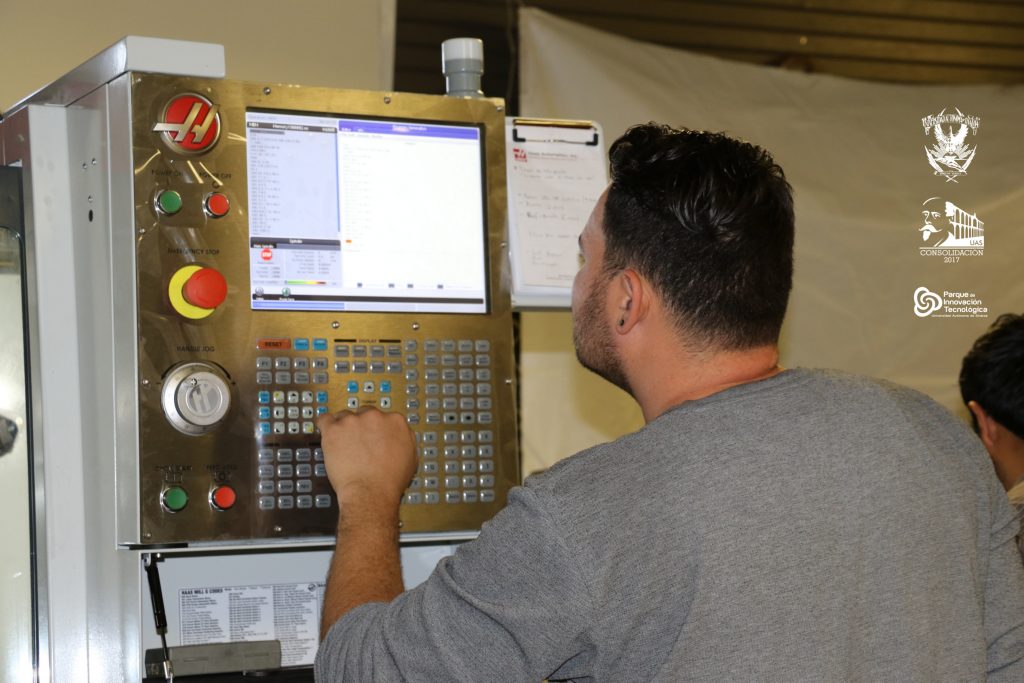
Tras la reciente adquisición del Centro de Maquinado Vertical HAAS, el ingeniero Ricardo Barrera de la empresa HI-TEC asistió a las instalaciones del Parque de Innovación Tecnológica (PIT) de la Universidad Autónoma de Sinaloa (UAS) para impartir una capacitación sobre cómo manejar dicha máquina. Un total de 10 asistentes se dieron cita en el Taller de Prototipos, destacó la participación de colaboradores del PIT-UAS como el doctor en Ingeniería en Biosistemas Carlos Duarte Galván del Laboratorio de Instrumentación en Física de Altas Energías, así como personal del Taller de Prototipos y del Laboratorio de Diseño y Modelado, además de estudiantes que actualmente colaboran en el área Desarrollo de Proyectos y estudiantes de posgrado de la Facultad de Ciencias Físico-Matemáticas de la UAS. Una fresadora CNC es una máquina cuya función consiste en realizar trabajos mecanizados con el uso de una herramienta giratoria de varios filos denominada fresa que ofrece la posibilidad de trabajar diversos materiales como acero, bronce, maderas y plásticos. El modelo recientemente adquirido por el PIT-UAS es el VF-1, que tiene un cuarto eje angular adicional, importante particularidad que permite posicionar la pieza a trabajar en diferentes ángulos para realizar más operaciones. Al hablar sobre la compra, el director del PIT-UAS, M. A. José Ramón López Arellano, enfatizó el gran apoyo brindado al Parque por la Administración Central de la Casa Rosalina para concretar la adquisición de esta maquinaria especializada. Cabe destacar que dicho equipo no sólo será para beneficio del PIT-UAS, sino de la Universidad en general, pues la fresadora será empleada en el desarrollo de proyectos de investigación aplicada que buscan dar solución a problemas específicos de las industrias sinaloenses, proyectos en los que tanto investigadores como estudiantes universitarios podrán participar y así mejorar o poner en práctica sus habilidades en el manejo de esta herramienta. En entrevista, el ingeniero Jesús Lafarga, responsable del Taller de Prototipos del Parque, especificó algunas de las ventajas que traerá la adquisición de esta maquinaria para la propia unidad organizacional rosalina a la que pertenece: «aquí en el taller hacemos prototipos, con esta máquina podemos hacer prototipos más complejos, incluso se puede llegar a la etapa final del producto». La capacitación se impartió del 27 de febrero al 03 de marzo y constó de la explicación de los principios básicos de programación y operación del Centro de Maquinado HAAS (fresadora); además, cada uno de los participantes realizó ejercicios prácticos, supervisados por el ingeniero Ricardo Barrera, responsable del curso. Alfredo Careaga (Comunicación y Difusión, PIT-UAS)
PIT-UAS collaborators receive training to use the HAAS Vertical Machining Centre
After the recent acquisition of the HAAS Vertical Machining Centre, engineer Ricardo Barrera from HI-TEC enterprise attended to the facilities of the Technological Innovation Park (Parque de Innovación Tecnológica, PIT) of the Autonomous University of Sinaloa (Universidad Autónoma de Sinaloa, UAS)to impart training on how to use this machine. A total of 10 attendees came together at the Prototypes Workshop, stood out the participation of PIT-UAS collaborators like PhD in Biosystems Carlos Duarte Galván from the Instrumentation and High Energy Physics Laboratory, as well as personnel from the Prototypes Workshop and the Design and Modelling Laboratory, in addition to students who are currently collaborating at Projects Development area and postgraduate students from the Faculty of UAS’ Physical-Mathematical Sciences. The function of a CNC milling machine is realising mechanised works by using a gyratory tool of several cutting edges called milling cutter that offers the possibility of working diverse materials like steel, bronze, woods and plastics. The model recently acquired by the PIT-UAS is the VF-1, which has an additional fourth angular axis, important particularity that allows to position the piece to be worked in different angles to realise more operations. When talking about the purchase, PIT-UAS general director, MBA José Ramón López Arellano, emphasised the great support gave to the Park by the university Central Administration in order to make the acquisition of this specialised machine. It should be mentioned that this equipment will not just be for the benefit of the PIT-UAS but also for the University’s, since the milling machine will be employed in the development of applied research projects that aim to solve specific problems of Sinaloense industry, projects in which both university researchers and students will participate and thus improve or get into practice their skills for the usage of this tool. In interview, engineer Jesús Lafarga, responsible of the Park’s Prototypes Workshop, specified some advantages brought by the acquisition of this machine for the university organisational unit he belongs to: «Here in the workshop we make prototypes, with this machine we’ll be able to make more complex prototypes, even reach the final phase of the product». The training sessions took place from February 27th to March 3rd and consisted of the explanation of basic programming and operation principles of the milling machine; besides, each participant realised practical exercises, supervised by the engineer Ricardo Barrera, responsible of the course. Written by Alfredo Careaga (Communication and Diffusion, PIT-UAS), translated by Belem Ruiz (Edition and Communication, PIT-UAS).
Student entrepreneurship, the bold process of learning to think outside the box

When we talk about entrepreneurship, we think in bold and creative individuals who, no matter how hard or practically impossible it seems, achieve success in the development of their ideas by satisfactorily taking them to the economic markets. And among these people probably one of the most famous entrepreneurs of the last times be Steve Jobs (millionaire at 26). We must thank to Apple’s former chief executive officer his visionary market intuition, which greatly contributed so the monstrous and inaccessible computers of the seventies became today’s indispensable and versatile personal computers we can find in many homes and offices. Nowadays it is difficult not to listen about entrepreneurship, there are institutions, magazines, YouTube channels and other social networks dedicated to disseminate such economic development strategy and lifestyle; there are even basic education programmes that form the little ones according to the so called education in entrepreneurship (EE). But when and where we can learn to be an entrepreneurial student?, how effective is orienting educative programmes to the conformation of an entrepreneurial culture?, what is the importance of having more entrepreneurs for society? These and other questions are the ones we will broach in this Wednesday of Science, Technology and Innovation. Education in entrepreneurship before the university Facing the significant changes brought by globalization and knowledge-based economy’s (KBE) imperatives, in 2000 the European Union (EU) presented an action plan known as Lisbon Agenda, where were gathered lineaments that aimed adapting to the new global reality and becoming «the most competitive and dynamic knowledge-based economy in the world capable of sustainable economic growth with more and better jobs and greater social cohesion». Thus, both entrepreneurship and EE started to gain importance. In countries like Germany appeared initiatives oriented to instil in university students the self-employment as a vocational alternative, in sight of the national and international difficult and narrow labour outlook. Recently in Mexico, there has even begun a gamble with the notion of implementing educative experiences to work entrepreneurship themes with basic level children; strategy that had already been worked before in other places of the world. At the beginnings of the first decade of the 21st century, there existed little rigorous research on its effects, nevertheless researchers and educators openly extolled EE’s alleged benefits. But since then was recognised the wish to participate in EE programmes expressed by high school and elementary school students; there even existed some who upholded that were precisely the years of childhood and adolescence which were the best to encourage a positive attitude towards entrepreneurship. Even so, a 2003 study revealed that Australian middle school students were more concerned about how they would direct their studies and labour experiences than about the feasibility of becoming self-employees, given that they perceived starting their own enterprise as something pretty faraway. The challenges of fostering an entrepreneurial culture at the universities With regards to higher education, according to the Global University Entrepreneurial Spirit Student’s Survey (GUESSS): more entrepreneurial intentions are perceived in men than in women; having an entrepreneurial familiar context encourage such ideology in the student; among personal reasons to be an entrepreneur, outstand (in order of importance) making come true one’s own dream, having an exciting job, liberty and independence, as well as the power to create something. A matter of utter importance is that, throughout the report, differences among developed and developing countries become evident, for example: in the first ones less importance is given to making come true one’s own dream, meanwhile in the second ones we find the less worries about the implicit risk of entrepreneurship. In most of the higher education institutions which students were surveyed for GUESSS, the results suggest that both level and presence of entrepreneurial culture in universities are insufficient, either because of the lack of fostering and support of the educative institution itself or because of the disinterest of the student body. In the particular case of countries like Mexico, is not just a matter of lack of vision or formation in teachers and directors, but in addition the lack of resources must be faced. This is, we live in societies which main majority of university students keep limiting themselves (or being deliberately limited) to highly traditional roles, either because of the nature of their career choices itself or because of ideological and financial barriers The social side of student entrepreneurship, beyond the eagerness of profit Worldwide there are success cases like the ones of US youths Jonathan Goldman and Ava Anderson, millionaires before their thirties; he is the founder of Quantum Networks, a marketing company specialised in e-commerce; she, founder of Pure Haven Essentials, e-commerce dedicated to sell organic products for personal family care and home. There is also the case of the Mexican youth Carlos Camacho, founder of Ecoshell, enterprise dedicated to the production of biodegradable packaging. But not everything within the entrepreneurial world is about becoming millionaire, it is also possible to «think outside the box» for the benefit of society. A World of Good is an hybrid organization that seeks to contribute to world poverty reduction through retail marketing channels. BlinkNow gathers funds for the orphanage , the school, the clinic, women empowerment centre and the diverse activities for environmental sustainability of Kopila Valley (Nepal), the nodal project. The Future Project assists, offers courses and applies cultural techniques in order to build will and skill in students and improving the culture of the school (United States). These, just to mention some of the very many non-profit organization that started in the hands of entrepreneurial students. Then, to undertake or not to undertake? Supports?, there are: it is just a matter of knowing to seek for them and qualifying for them. At three levels, international, national and state, exist pretty well-intentioned initiatives, inside and outside universities. Such are the cases of: Global Student Entrepreneur Awards belonging to the Entrepreneurs’ Organization, with a bag of $20 000 US dollars in cash; the InnovaUNAM Enterprises Incubator System Sistema de Incubadoras de Empresas InnovaUNAM) belonging to the