Photovoltaic solar technology, sustainable and clean energy

Clean energies are those that do not pollute air, soil or water, since they do not emit toxic sub-products during the process of energy generation. Due to the crisis of conventional or fossil energies, such as gas and petroleum, as well as the harmful effect that the exploitation of these has on the environment, nowadays clean energies like geothermal, wind, hydro and solar, bit by bit, are gaining importance in more and more regions of the planet. Worldwide, solar is the third most important source of sustainable energy, it consists of converting the energy generated by the sun into electrical energy and the most well-known method to carry out this process is through solar cells. In addition to the photovoltaic devices generating no noise when converting sunlight into electric energy, they are robust, reliable and long lasting. Nowadays, some of their applications are: telecommunications, rural electrification, farming, cattle raising, public lighting, signaling, control, rural development, voltage out of range, network outage, network lag, among others. This kind of energy is generated by the photovoltaic process, which starts with the photons emitted by the sun, that are captured by the photovoltaic solar panels, those photons are converted into direct current; this, through an inverter, is transformed into the alternate current which is poured on the net and is ready to use. We must make a precision: the photovoltaic solar panels are composed by cells or solar cells; in terms of generation, the solar cell turns sunlight in electricity but is not capable of generate large masses to connect to the net, a photovoltaic solar panel is a group of cells that together generate large amounts of energy. According with the engineer Jaime Agredano Díaz from the National Institute of Electricity and Clean Energy, around eight years ago the silicon solar cells started to take over the market, in 2008 they reached close to 90% of the modules that were manufactured around the world. The solar cells are mainly manufactured based on silicon, a material that although is abundant on Earth compared to others, is insufficient to cover the prospected demand for the manufacture of photovoltaic solar panels. Today materials such as copper, indium, selenite, cadmium, telluride, and gallium arsenide are also used, among others, and the research to discover new ways and materials to manufacture solar cells continues. In the mid-seventies, the first terrestrial applications of the photovoltaic technology were made, in consumer products such as watches, toys, calculators, among other devices that required a low supply to function. Once the efficiency of the solar cells was proved, technology itself and its prices started to improve, also it started to venture in areas such as signaling devices energizing, control and monitoring processes, and rural electrification. In his text, Agredano Díaz noted that over two million people around the world do not have electrical services, which turns out to be a big problem on rural areas of the developing countries. Now, in Mexico, it has taken advantage of the great growth potential for the photovoltaic energy that the rural communities have, where it is used not only with purposes of electrification, but it is also applied to energize stations of telecommunications rebroadcasting, in telesecondaries and rural clinics. After obtaining encouraging results on their first applications, in the late nineties a new application that started to revolutionize this market was ventured: photovoltaic system connected to the grid. The photovoltaic systems are connected in parallel to the network and have as main advantage that the same consumer generates totally or partially the energy he consumes, this is, the photovoltaic generator captures the sun radiation, which transforms it into electrical energy through an inverter network connection and is used for consumption. In Mexico, thanks to the bidirectional meters of the Federal Electricity Commission (Comisión Federal de Electricidad, CFE), is possible to obtain the benefits of the general utility scheme to the use and payment of the electrical resource known as net balance. The entirety of the photovoltaic system production is poured on the network of the CFE and later, on the date of the billing cut, the produced sum is subtracted to the total consumption, it is taken into account for the emission of the bill: if your photovoltaic system produced 20 kilowatts and you consumed 50 kilowatts, you will only pay 30 kilowatts. By regard to obtaining the maximum performance of photovoltaic technology, different factors affect the actual daily production: the positioning of the photovoltaic system, the orientation, the geographical latitude where it is installed and the shade it receives (because of the clouds or taller buildings around). In places with little space available for the installation of photovoltaic modules, the system can be complemented with solar trackers, which increase the daily energy production up to 30% . Finally, we leave two lists, one with the advantages of this technology and other with the disadvantages. Advantages: It is a source of renewable energy, its resources are unlimited. No emissions (it does not noticeably contribute to the pollution or global climate change). Low operation costs. High reliability and durability in modules (over 20 years). It can integrate to the structures of a new construction or one that already exists. High public acceptance. Great security level. The cost decreases as the technology improves. Disadvantages: Diffuse fuel source (sunlight is a relatively low density energy). High installation costs, it requires a strong initial investment. Lack of economic and reliable energy storage devices. In order to recollect solar energy on a great scale, big extensions of land are required. It has some limitations respecting the consumption because, during periods where there is no sun, it cannot use more energy than the one accumulated. The places with more solar radiation are desert and far from the cities. Written by Alfredo Careaga (Communication and Diffusion, PIT-UAS), translated by Belem Ruiz(Edition and Communication, PIT-UAS).
Director del PIT-UAS dará seguimiento a proyecto de investigación en Alemania
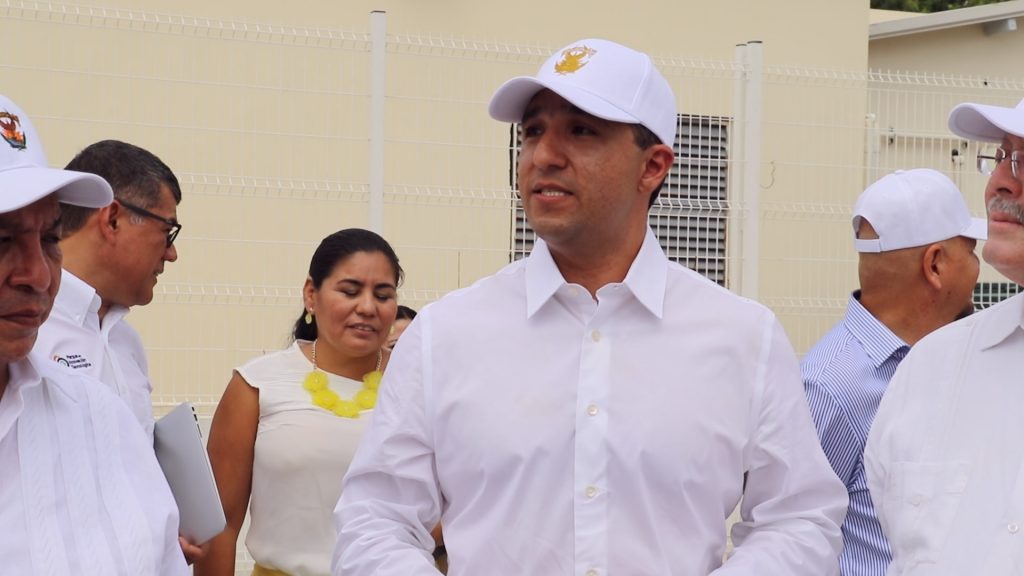
Como parte de una segunda etapa de un proyecto de investigación conjunto con la Universidad de Oldemburgo, el director del Parque de Innovación Tecnológica (PIT), de la Universidad Autónoma de Sinaloa (UAS), José Ramón López Arellano, realizará una estancia en Alemania. El directivo detalló que se trata de un proyecto para la formulación de una estructura institucional para la Universidad, en la aplicación y desarrollo de programas de investigación, que tiene como meta final transmitir los conocimientos y técnicas que se utilizan en los centros educativos alemanes con las universidades de todo el mundo. Explicó que esta etapa presencial es donde se ven los desarrollos y avances que se han tenido en este tiempo, además de recibir la asesoría de los expertos de la Universidad de Oldemburgo para poder alinear a mejores prácticas del proyecto y presentar los avances ante los diversos actores de la universidad europea y ver las recomendaciones, para posteriormente regresar, mejorar y aplicarlo. López Arellano destacó que este es un logro importante a nivel nacional para la UAS, pues el proyecto del PIT fue seleccionado entre más de 300 universidades del mundo, y sólo son tres los participantes mexicanos, siendo este el único proyecto que involucra investigación aplicada, ya que los otros dos están enfocados a otro tipo de programas. Enfatizó que la Casa Rosalina pone un precedente importante sobre lo que son los proyectos de investigación, acentuando la vinculación que se tiene con el sector empresarial enmarcado en el Plan de Desarrollo Consolidación 2017 que encabeza el Rector, doctor Juan Eulogio Guerra Liera. Finalmente, informó que la idea es implementar esta propuesta sobre las metodologías y técnicas a seguir para el desarrollo de los procesos, ubicando a la UAS como una de las primeras universidades que cuenta con un proceso en investigación desarrollo de proyectos certificados a nivel internacional, avalado por una de las universidades enfocadas en lo que es la investigación aplicada, como es la Universidad de Oldemburgo. Fuente: Dirección de Comunicación Social UAS http://dcs.uas.edu.mx/index.php?sec=3&op=2&tipo=i&id_noticia=6957.
General director of the PIT-UAS will follow up research project in Germany
As part of a second phase of a research project along with the University of Oldenburg, the general director of the Technological Innovation Park (Parque de Innovación Tecnológica, PIT) of the Autonomous University of Sinaloa (Universidad Autónoma de Sinaloa, UAS), José Ramón López Arrellano, will make a stay in Germany. The director explained that the project is about the formulation of an institutional structure to the University, in the implementation and development of research programmes, which final goal is to transmit the knowledge and techniques used in German educative centres with universities around the world. He explained that this in-person stage is where developments and advances obtained in this time are reviewed, in addition to receive advice from experts belonging to the University of Oldenburg, in order to align with best practices and to present the advances to the different actors of the European university, also to see the recommendations, to return later, improve and apply it. López Arellano pointed out that this is an important achievement on a national scale to the UAS, because PIT’s project was selected from over 300 universities in the world, and there are only three Mexican participants, being this one the only project involving applied research, as the other two are focused in other kind of programmes. He emphasized that Casa Rosalina (UAS) sets an important precedent on what are the research projects, accentuating the linkage with the business sector framed in the Consolidation Development Plan 2017 leaded by the rector, PhD Juan Eulogio Guerra Liera. Finally, he informed that the idea is to implement this proposal about the methodologies and techniques to be follow for the development of the processes, placing UAS as one of the first universities to count with a process in research, development of projects certified on an international level, endorsed by a university focused on applied research, like the University of Oldenburg is. Source: UAS Social Communication Directorate http://dcs.uas.edu.mx/index.php?sec=3&op=2&tipo=i&id_noticia=6957. Translated by Belem Ruiz (Edition and Communication, PIT-UAS).
Talento sinaloense en el CERN
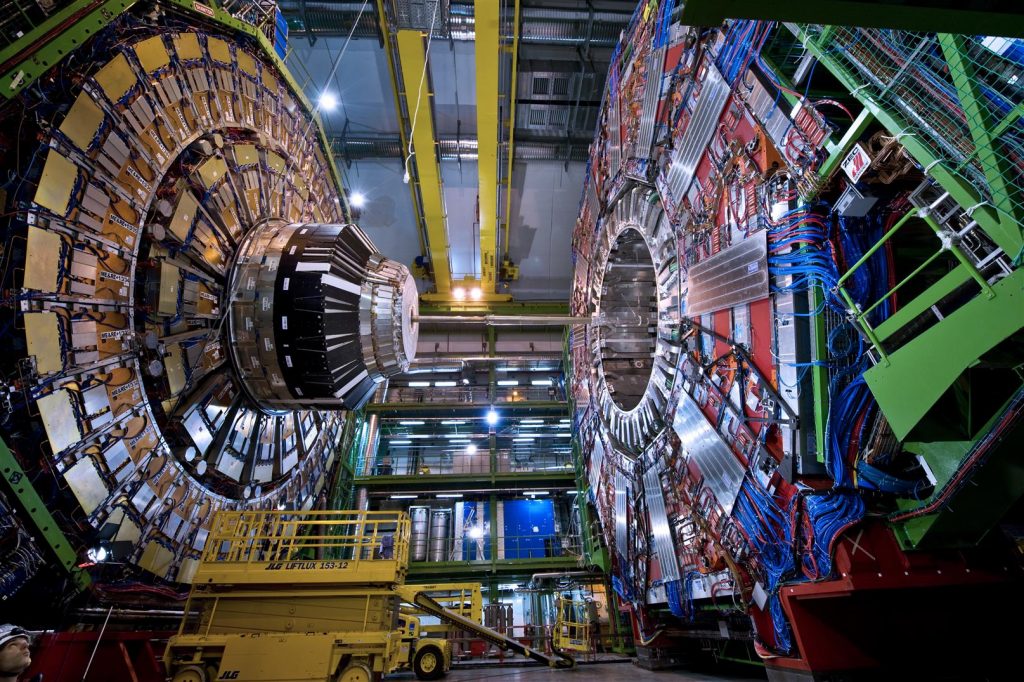
Científicos de 29 países del mundo hacen equipo para recrear la explosión que dio vida al universo. Entre ellos se encuentran los mexicanos Gerardo Herrera Corral, doctor en física por la Universidad de Dortmund, y el doctor Ildefonso León Monzón, de la Universidad Autónoma de Sinaloa (UAS) y nivel II del Sistema Nacional de Investigadores (SNI). Ambos colaboran en el proyecto ALICE del Gran Colisionador de Hadrones (LHC, por sus siglas en inglés), ubicado en la Organización Europea para la Investigación Nuclear (CERN, siglas en francés de Conseil Européen pour la Recherche Nucléaire). León Monzón es responsable del detector ALICE (A Large Ion Collider Experiment), diseñado para la colisión de iones pesados. Las aportaciones de su equipo de trabajo lograron la prolongación de la investigación hasta el año 2022 y con ello la oportunidad de que cada vez más estudiantes de posgrado de la UAS puedan sumarse. Su equipo diseñó y construyó un detector denominado AD (ALICE Diffractive), que amplía la eficiencia del detector ALICE para un tipo de física al que se llama física difractiva. Alumnos de la UAS participaron en el levantamiento de un Laboratorio de Electrónica de Circuito Impreso, y actualmente tres investigadores trabajan en el proyecto ALICE, junto a dos estudiantes del área de la Facultad de Informática, otro más del área de Electrónica y dos estudiantes más de posgrado en física; entre ellos, Solangel Rojas Torres y Juan Carlos Cabanillas Noris, del doctorado en la Facultad de Físico Matemáticas y de Ciencias de la Información de la Facultad de Informática de la UAS, respectivamente. Sus tesis de maestría y doctorado han encajado con las líneas de investigación del proyecto ALICE Diffractive. Solangel Rojas Torres Estudia el doctorado en la Facultad de Físico Matemáticas de la UAS. En 2013, mientras cursaba el segundo grado de maestría, recibió la invitación de León Monzón para sumarse al trabajo en la parte de detectores. Al principio, señala el estudiante de 28 años, no tenía una idea clara sobre el Gran Colisionador y comenzó a estudiar todo lo relacionado con el experimento. “Fue algo muy duro. Conocía a grandes rasgos lo que era el Gran Colisionador de Hadrones, pero tenía unas ideas bastante erradas. Comencé a leer sobre lo que era, busqué documentos técnicos y literatura científica. Me di cuenta que era algo totalmente diferente a lo que yo me esperaba. Fue algo duro integrarme a todo esto”, comentó. Solangel confesó haber imaginado que el Gran Colisionador era una especie de túnel, donde se encontraba el acelerador circular, y que técnicos, científicos e investigadores trabajaban siempre dentro de él, a 100 metros bajo tierra. “En realidad no es así. Sí existe el túnel, pero solo los investigadores, la gente especializada en la parte del túnel trabaja ahí. Alrededor de todo eso hay una gran cantidad de cosas: sistemas y diversas áreas”, explicó. Además, recordó, existen 19 detectores, cada uno integrado por múltiples especialistas —investigadores, teóricos, técnicos e ingenieros— de varios países. La invitación a sumarse al proyecto más ambicioso del mundo, recordó, surge de forma natural, como una necesidad al formar parte de los proyectos en los que se involucró, pues durante sus estudios de maestría trabajó en la caracterización de materiales utilizados para la realización de detectores de radiación y que se utilizan con gran frecuencia en los detectores del Colisionador. Su arribo al CERN fue en abril de 2014. La estancia fue de un mes. Acudió como apoyo de los doctores León Monzón y Herrera Corral para realizar un cambio de sensores del detector V0. Los aportes al experimento ALICE El detector culminó en un año, por lo que el trabajo fue intenso. Solangel se sumó cuando este proyecto era apenas una propuesta. “Había juntas donde se proponían materiales, geometrías y se discutía sobre la construcción. Después fue el tema de la construcción del detector. Mi aportación directa fue, en parte, en la construcción y en la instalación, con el doctor Ildefonso León y Juan Carlos Cabanillas, junto a ellos y otros colegas de Alemania, también del sur de Francia. El detector quedó instalado en diciembre de ese año”, comentó. La tarea, recordó, no fue simple. Los sistemas y protocolos de seguridad requerían rigurosas planeaciones, debido a los tiempos limitados. Tenía apenas dos días para culminar cualquier proyecto. Su principal trabajo y aporte a este proyecto, añadió, comenzó en septiembre de 2015. “Se sometió un prototipo del detector a un haz de partículas para estudiar su comportamiento de una forma más controlada. Tuvimos muchos resultados y datos. Trabajé directamente con los resultados de esta prueba: analizando el comportamiento del detector y entendiendo toda la información que arroja al experimento”, dijo. Ese detector, indicó, fue diseñado para hacer estudios de física difractiva, el tipo de física que ocurre cuando dos partículas pasan entre sí, pero no colisionan. “Es abrumador trabajar en un proyecto de tal envergadura. Al final te das cuenta de todo lo que aprendes. Te pones límites muy altos. He pensado seguir en esto, irme al posdoctorado. Cuando sea el momento lo buscaré. La investigación me gusta bastante”, expresó. Juan Carlos Cabanillas Noris Juan Carlos tiene 36 años, es estudiante del doctorado en ciencias de la información en la UAS. Fue invitado en 2014 por León Monzón a sumarse al Proyecto ALICE, en el área de Sistemas de Control, desarrollada durante un semestre. Su participación se encuentra en el detector número 19, mismo que busca expandir la lectura de eventos difractivos en colisiones plomo-plomo y protón-protón en el denominado Room 2, del LHC. Fue en diciembre de ese año cuando fue instalado ese detector. Se denominó ADA. Realiza estudios para física difractiva. Consta de dos detectores instalados en los extremos del experimento, uno en el lado A (ADA) y otro en el lado C (ADC); ambos conforman el detector AD. Posterior a la instalación continuó la etapa de montaje de los subsistemas o sistemas en línea. “Lo que hace es expandir el ángulo de seudorrapidez. Cuando internamente hay un choque de haces dentro del experimento, al
Sinaloense Talent at CERN
Scientists from 29 countries around the world team up to recreate the explosion that gave life to the Universe. Among them are the Mexicans Gerardo Herrera Corral, PhD in Physics by the University of Dortmund, and PhD Ildefonso León Monzón, from the Autonomous University of Sinaloa (Universidad Autónoma de Sinaloa, UAS) and level ll of the National System of Researchers (Sistema Nacional de Investigadores, SNI). Both of them will collaborate in ALICE project, that is part of the Large Hadron Collider (LHC), located at the European Organization for Nuclear Research (CERN, the French acronym for Conseil Européen pour la Recherche Nucléaire). León Monzón is responsible for the detector ALICE (A Large Ion Collider Experiment), designed for heavy ion collision. The contributions of his team made possible the prolongation of the research until 2022, and along with that the opportunity for more postgraduate student from UAS to join the project. His team designed and built a detector called AD (ALICE Diffractive), which extends ALICE detector efficiency for a type of physics called diffractive physics. Students from UAS participated in the establishment of an Electronics of Printed Circuit Laboratory, and nowadays 3 researchers work in the ALICE project, along with two students belonging to the Informatics Faculty, another one in the area of Electronics and two more are postgraduate students in Physics; among them, Solangel Rojas Torres and Juan Carlos Cabanillas Noris, from the doctorate at the Faculty of Physical-Mathematical Sciences and Information Sciences at the Informatics Faculty of UAS, respectively. Their thesis of master and doctor degree have corresponded with the investigation lines of the ALICE Diffractive project. Solangel Rojas Torres Studies the doctorate at UAS’ Faculty of Physical-Mathematical Sciences. In 2013, while he was on his second grade of master, he received an invitation from León Monzón to be part of the team in the detectors area. At first, points out the 28 year old student, he had no clear idea about the Large Hadron Collider and he started to study everything related to the experiment. “It was a hard thing. I roughly knew about the Large Hadrons Collider and had some pretty wrong ideas. I started reading about what it was, searched for technical documents and scientific literature. I realized it was something completely different from what I expected. It was tough to integrate to all this”, he said. Solangel confessed having imagined that the Large Hadron Collider was a kind of tunnel, where there was the circular accelerator, and were technicians, scientists and researchers always working inside of it, 100 meters underground. “It’s not really like that. There is a tunnel, but only researchers, people specialized in the tunnel part work there. Around that there is a huge amount of things: systems and different areas”, he explained. Also, he remembered, there are 19 detectors, each one integrated by multiple specialists —researchers, theorists, technicians and engineers— from various countries. The invitation to join the most ambitious project in the world, he reminisced, comes naturally, as a need to be part of the project in which now he is involved, because during his master studies he worked in the characterization of materials used for making radiation detectors and are frequently used in the Collider’s detectors. He arrived to CERN on April 2014. He stayed one month. He went as a support to PhD León Monzón and PhD Herrera Corral, to perform a change of sensors at the V0 detector. The contributions to ALICE project The detector was finished in a year, so the work was intense. Solangel joined when the project was just a proposal. “There were meetings where they proposed materials, geometries and discussed about the construction. Then the subject was the construction of the detector. My direct contribution was, partly, in the construction and installation, with PhD Ildefonso León and Juan Carlos Cabanillas, with them and another colleagues form Germany and southern France. The detector was installed on December that year”, he said. The task, he said, was not easy. The systems and security protocols required strict planning, due to the limited time. He had barely two days to finish any project. His main job and contribution to this project, he added, started on September 2015. «A prototype of the detector was subjected to a particle beam to study its behaviour on a more controlled way. We had a lot of results and facts. I worked directly with the results of this test: analysing the behaviour of the detector and understanding all the information the experiment throws», he said. That detector, he pointed out, was designed to make studies of diffractive physics, the kind of physics that occur when two particles pass each other, but do not collide. «It is overwhelming to work in a project of this magnitude. In the end, you realize everything you learn. You set the limits very high. I have thought on keep doing this, going to the post doctorate. When the moment comes I will seek it. I really like research”, he expressed. Juan Carlos Cabanillas Noris Juan Carlos is 36 years old, he’s a student of UAS’ Information Science doctorate. He was invited to join ALICE project in 2014 by León Monzón, within the area Control Systems, developed during a semester. His participation is in the detector number 19, which aims to expand the reading of the diffractive events in collisions lead-lead and proton-proton in the so-called Room 2, of the LHC. It was in December of that year when that detector was installed. It was called ADA. It conducts studies of diffractive physics. It consists of two detectors installed at the ends of the experiments, one on side A (ADA) and the other on side C (ADC); both conform the detector AD. After the installation, continues the assembly stage of the subsystems or online systems. “What it does is to expand the angle of pseudo rapidity. When there is a clash of beams inside the experiment, when hitting the “group of beams” it generates a series of
Acompañado de autoridades universitarias, el gobernador electo de Sinaloa recorre las instalaciones del PIT-UAS
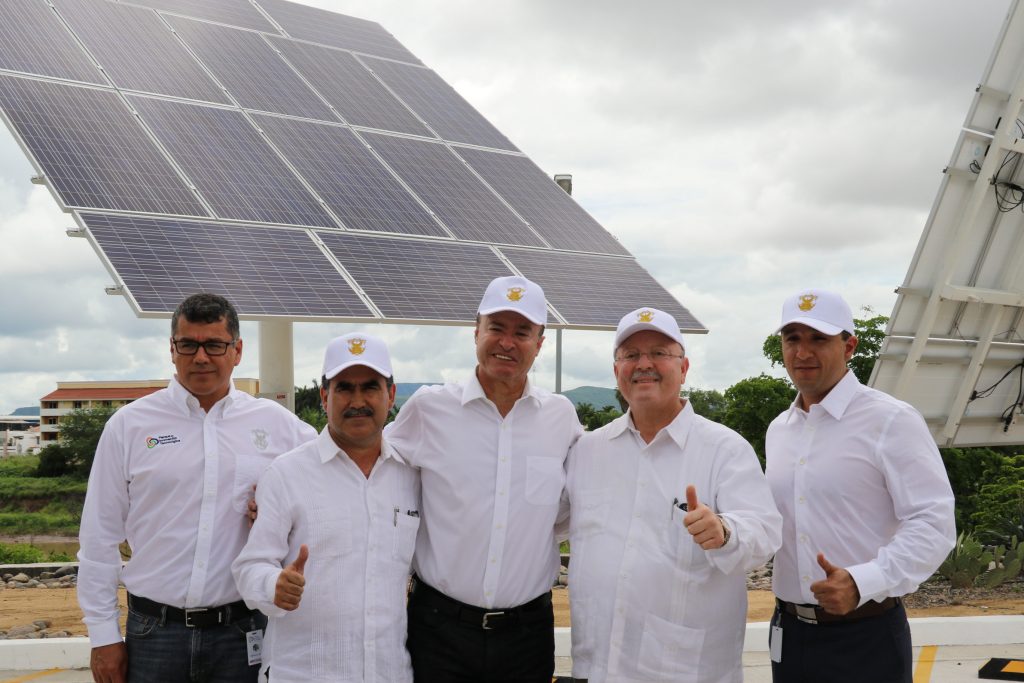
Este lunes 22 de agosto, el gobernador electo del estado de Sinaloa, Quirino Ordaz Coppel, acompañado por autoridades de la máxima casa de estudios sinaloense, fue recibido por el director general Parque de Innovación Tecnológica (PIT) de la Universidad Autónoma de Sinaloa (UAS), el maestro José Ramón López Arellano, quien dio a los visitantes un recorrido por las instalaciones del centro universitario de innovación que preside. Durante el recorrido, el doctor Juan Eulogio Guerra Liera, rector de la UAS, comentó con Ordaz Coppel la inversión inicial para la conformación del PIT-UAS, que consistió en aportaciones del Consejo Nacional de Ciencia y Tecnología y de la universidad; asimismo, Guerra Liera respondió las preguntas del gobernador electo acerca de la importancia de esta unidad organizacional que depende de la Rectoría de la UAS. Por su parte, el director general del PIT-UAS se encargó de guiar la visita, explicó la metodología y el funcionamiento de los distintas laboratorios, áreas y talleres visitados, donde convergen los conocimientos de investigadores con alta formación, además de estudiantes de licenciatura y posgrado para dar solución a problemáticas específicas de la iniciativa privada y pública, para beneficio de la sociedad sinaloense en general. El licenciado Ordaz Coppel se mostró interesado en los proyectos que se desarrollan actualmente en el Parque, entre los que destacan investigaciones aplicadas en las áreas de agricultura, ciencias de la información, energías limpias, física de altas energías y salud. Además tuvo particular interés en las proyecciones científico-tecnológicas que a futuro podrían llevar a cabo los colaboradores del PIT-UAS, específicamente en los rubros de bioinformática, robótica e impresión y modelado 3D. Así, en el marco del regreso a clases y como gesto de confirmación de la colaboración pactada entre la casa rosalina y el Gobierno 2016-2019, este recorrido del gobernador electo de Sinaloa por las instalaciones del Parque formó parte de una jornada de visitas guiadas que el rector dio al empresario y político por diferentes unidades organizacionales y académicas de las UAS, a fin de darle a conocer la oferta educativa y de servicios de la UAS, así como el gran potencial universitario. Belem Ruiz (Edición y Comunicación, PIT-UAS).
Accompanied by university authorities, Sinaloa’s elected governor visits the PIT-UAS’ facilities
This Monday, August 22nd, Sinaloa’s state elected governor, Quirino Ordaz Coppel, accompanied by authorities from the largest university of Sinaloa, was received by the general director of the Technological Innovation Park (Parque de Innovación Tecnológica, PIT) belonging to the Autonomous University of Sinaloa (Universidad Autónoma de Sinaloa, UAS), José Ramón López Arellano gave the visitors a tour through the university’s innovation centre facilities. During the tour, PhD Juan Eulogio Guerra Liera, UAS’ rector, commented with Ordaz Coppel about the initial investment for the PIT-UAS conformation, which consisted in contributions made by the National Council of Science and Technology (Consejo Nacional de Ciencia y Tecnología, CONACyT) and the university; Guerra Liera also responded to several questions made by the elected governor about the importance of this organizational unit that depends from UAS Rectory. Meanwhile, PIT-UAS’ general director guided the tour, explaining the methodology and functioning of the different labs, areas and workshops visited, where highly trained researchers’ knowledge converge, as well as undergraduate and graduate students, in order to give solutions to specific problems of the private and public sectors, for Sinaloa’s society benefit. MPA Ordaz Coppel showed interest on the projects currently developing at the Park, among them the applied researches in areas like agriculture, information sciences, clean energies, high energy physics and health. He also took special interest on the scientific-technological forecasts that could take place with PIT-UAS collaborators, specifically in the bioinformatics, robotics and 3D printing and modelling areas. Thus, during the back to school period and as a confirmation gesture to the agreed collaboration between Rosalina House (UAS) and the 2016-2019 government, this Sinaloa elected governor’s tour through the Park facilities took part of a guided visits day that the rector gave to the businessman and politician through the different UAS’ organizational and academic units, with the finality of showing him the UAS’ educational and service offer, as well as the great university potential. Written and translated by Belem Ruiz (Edition and Communication, PIT-UAS).
A specialization course about the FANUC controller for computer numerical control lathes is imparted at PIT-UAS
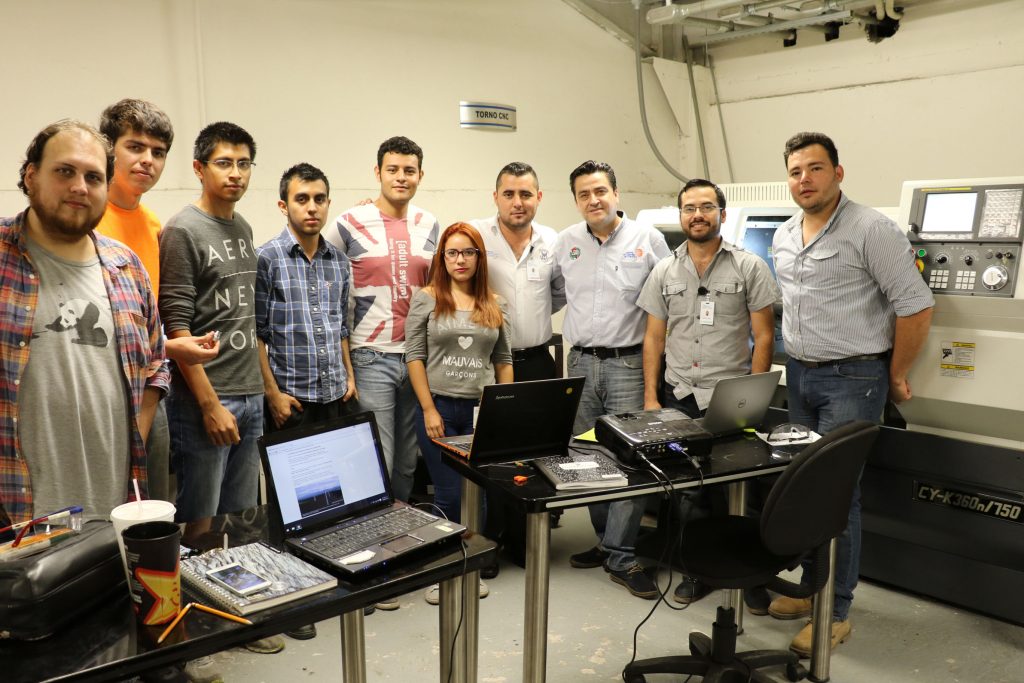
From July 9th to 14th of 2016, with the propose of professionalize and specialize even more the staff belonging to the Technological Innovation Park (Parque de Innovación Tecnológica, PIT), took place the course named Usage and Programming of Computer Numerical Control Lathe with FANUC Controller, imparted to PIT-UAS employees and collaborators, by engineer Jesús Armando Gámez Wilson, from the Sinaloa Science Centre (Centro de Ciencias de Sinaloa, CCS). The 8 collaborators who attended to the seminar sessions learned about theoretical (CNC machine and G Code) and practical lessons (FANUC controller usage, CAD/CAM simulator and automatic code G creation). In the course given by Gámez Wilson, students from different disciplines participated, these students currently develop their initiatives at the Park’s Projects Development area, and possess knowledge on industrial processes, electronics and sustainable energies; additionally, the Design and Modelling Lab’s manager, the Robotics and Virtual Reality Lab’s responsible, as well as mechatronics engineers from the PIT-UAS’ Prototypes Workshop, also attended to the seminar. Finally, it is important to mention that all the knowledge acquired by the PIT-UAS’s staff through this course will be applied for the creation of prototypes for the interdisciplinary applied research projects that take part at the university’s innovation centre. Written and translated by Belem Ruiz (Edition and Communication, PIT-UAS).
Se imparte en el PIT-UAS curso de especialización sobre el controlador FANUC para tornos de control numérico computarizado
Del 9 al 14 de julio de 2016, con el fin de profesionalizar y especializar cada vez más al personal del Parque de Innovación Tecnológica, se llevó a cabo el curso Manejo y Programación de Torno de Control Numérico con Controlador FANUC, impartido a empleados y colaboradores del PIT-UAS, por el ingeniero Jesús Armando Gámez Wilson, del Centro de Ciencias de Sinaloa (CCS). A las sesiones del seminario asistieron 8 colaboradores del PIT-UAS, quienes aprendieron sobre temas teóricos (Máquina CNC y Código G) y prácticos (Manejo de controlador FANUC, Simulador de CAD/CAM y Creación de Código G Automatizado). En el curso impartido por Gámez Wilson participaron estudiantes de diferentes disciplinas que actualmente desarrollan sus iniciativas en el área Desarrollo de Proyectos del Parque, quienes cuentan con conocimientos en procesos industriales, electrónica y energías renovables; asimismo, el encargado del Laboratorio de Diseño y Modelado, el responsable del Laboratorio de Robótica y Realidad Virtual, así como ingenieros en Mecatrónica del mismo Taller de Prototipos del PIT-UAS. Por último, cabe destacar que los conocimientos adquiridos por el personal del PIT-UAS a través de este curso serán aplicados en la realización de prototipos que forman parte de los proyectos interdisciplinarios de investigación aplicada que se llevan a cabo en el centro universitario de innovación. Belem Ruiz (Edición y Comunicación, PIT-UAS).
PIT-UAS’ staff participates with talk about 3D printing material recycling and environmental care, as part of the summer course My Vacations at the Library
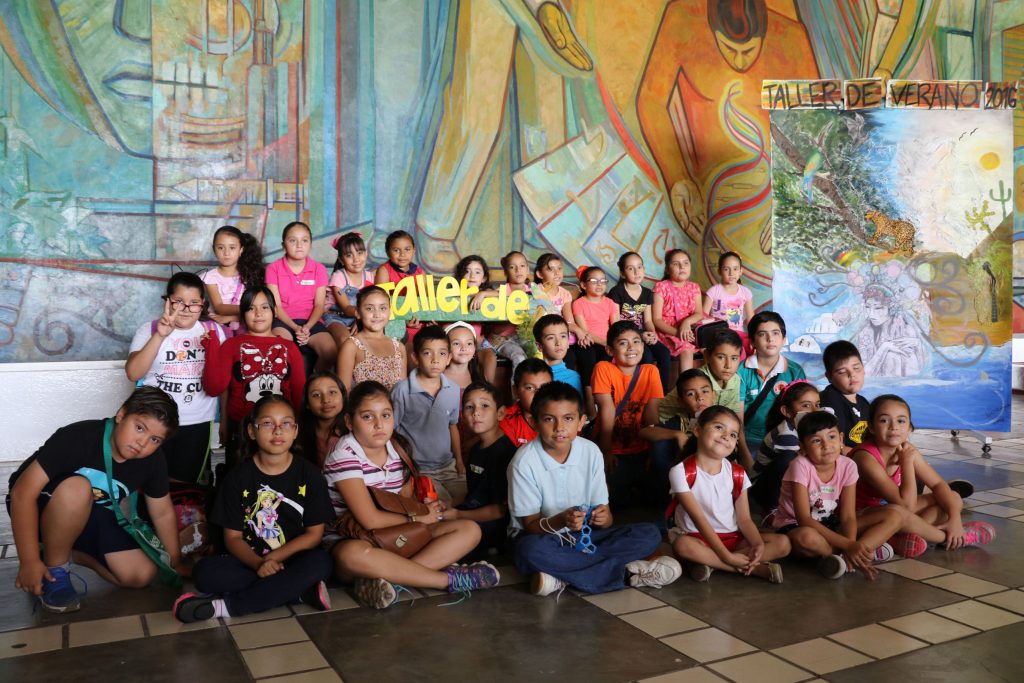
Last June 11th, among laughs, questions and the characteristic curiosity that only children possess, staff belonging to the Technological Innovation Park (Parque de Innovación Tecnológica, PIT) of the Autonomous University of Sinaloa (Universidad Autónoma de Sinaloa, UAS) participated in My Vacations at the Library (Mis Vacaciones en la Biblioteca), the traditional courses for children that every summer take place at the Licenciado Eustaquio Buelna Pérez Central Library and are organized by the University’s General Direction of Libraries and University Welfare Unit. The talk was imparted by young students belonging to UAS’ engineering careers, youths who currently collaborate at PIT-UAS in the Projects Development area, where for over a year has been taking place the design of a 3D printing system that includes a machine that will allow to recycle waste of material used for the printing process. During the youngsters’ relevant intervention, not only the topics of 3D printing and its applications were addressed, but there was also emphasis placed on the ecological side of this technology, from the point of view of the recycling of materials used for 3D printing. This, due to the fact that in the 2016 edition of the courses the main topic was «Biodiversity: shared values for a better future, learning, teaching, and conserving». The person in charge of the Central Library children’s area, Sandra Salazar Villa, mentioned that the goal of the courses were that «…the children can learn values about taking care of the environment and to know how to defend themselves for future times». Lastly, is important to emphasize that the work carried out by the university innovation centre goes beyond the development of collaborative interdisciplinary projects, since it also consists in helping so society in general appropriate the notions of sustainability and biodiversity protection, which also are the main topics of several projects developed at PIT-UAS. Written by Moroni Arellano (Communication and Diffusion, PIT-UAS), translated by Belem Ruiz (Edition and Communication, PIT-UAS).